Buying Guide
Choosing among the best 3-way dimmer switches starts with the circuit, not the appearance. A 3-way setup controls one light from two locations, but the dimmer may need a compatible companion switch, a kit-specific second unit, or a wireless remote. Confirm the wiring arrangement and bulb type before comparing control styles.
Conventional or smart control
Conventional models are generally the simpler category to compare. The Lutron Diva, Ariadni/Toggler, Skylark, and the three Leviton models use physical controls and are listed for ordinary 3-way applications. They are useful when the goal is adjustable brightness without adding app accounts, wireless networks, or hubs.
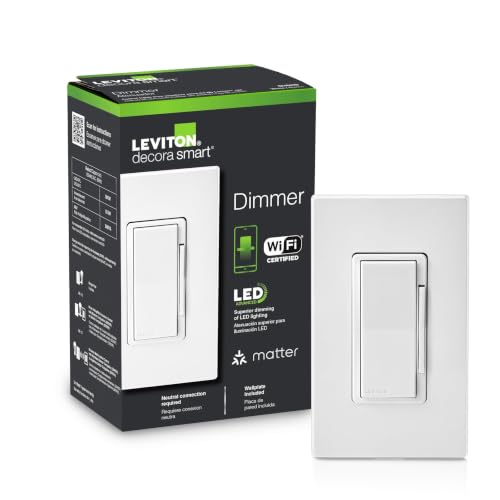
Smart kits add remote control, schedules, voice commands, or platform integration. The Kasa KS230 requires neutral wiring, 2.4 GHz Wi-Fi, and its app. The Tapo S515D also requires neutral wiring and 2.4 GHz Wi-Fi, but its Matter certification is intended to improve compatibility across major smart-home platforms. The Caseta kit takes a different approach: it uses a Pico wireless remote and requires a Lutron Smart Hub for its connected features. Its listing says no neutral wire is required.
Check the 3-way hardware arrangement
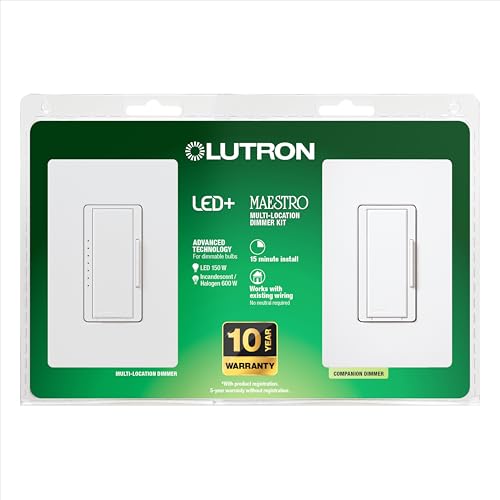
A product titled for 3-way use does not always mean that two identical dimmers should be installed. The Maestro listing explicitly includes a companion dimmer and says additional companion dimmers can be used for three or more locations. Caseta uses a dimmer and wireless Pico remote to add a control point. The Kasa and Tapo products are described as kits intended for two-location control.
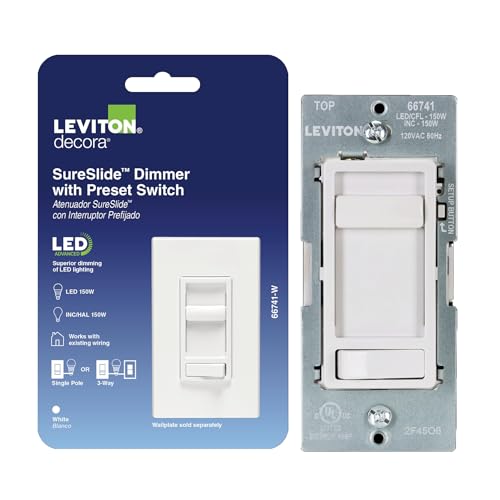
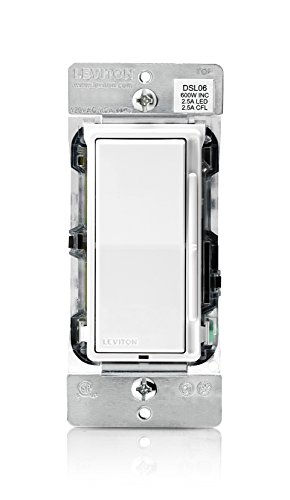
For conventional products, read the compatibility language carefully. The Diva supports single-pole and 3-way applications, while the Ariadni/Toggler is described for use with a regular toggle switch. Leviton’s SureSlide, Toggle Slide, and Decora Slide models document standard 3-way and 4-way wiring, but each says to pair the dimmer with compatible additional switches. That distinction matters in circuits with more than two control locations.
Match the bulb type and load
LED compatibility is a central specification because dimmable LEDs can require an appropriate dimmer. The Lutron models describe LED-focused testing or optimization, and the Leviton models describe smooth LED control with adjustable brightness settings. Still, a product listing is not a substitute for checking the bulb manufacturer’s compatibility information.
Some products provide useful load figures. Skylark is listed for up to 150 watts of dimmable LED/CFL bulbs or 600 watts of incandescent/halogen bulbs. The Kasa kit lists up to 150 watts for dimmable LEDs and 300 watts for incandescent bulbs. The Maestro listing identifies a 150-watt specification in its title. Other selected models document bulb categories but do not provide a wattage figure in the supplied evidence. Do not infer a capacity where one is not stated.
Compare adjustment and control styles
Paddle, toggle, and slide controls offer different physical interfaces. Diva uses a paddle with a trim lever. Ariadni/Toggler uses a toggle and small slider, while Skylark combines a rocker with a slider. Leviton’s Toggle Slide model is aimed at users who want toggle hardware with slide adjustment. Decora Slide emphasizes a coordinated Decora-style appearance.
Adjustment details can be more important than the face style. Ariadni/Toggler lists more than 250 lighting levels and low-end trim. Skylark lists more than 150 levels. Diva provides a trim lever, while Leviton’s advanced models allow minimum and maximum brightness adjustments; Decora Slide also lists fade-on-rate and locator-light settings. Smart choices such as Kasa and Tapo provide full-range controls through their apps, with Kasa stating 1%-100% dimming and Tapo stating 0%-100%.
Consider neutral-wire requirements
Several conventional selections state that no neutral wire is required, including Diva, Ariadni/Toggler, Skylark, and the Leviton advanced models. That can broaden their suitability for older wiring, although installation should still follow the product instructions and local electrical requirements. The Caseta listing also states no neutral is required.
By contrast, Kasa and Tapo specifically require neutral wiring. Their app-guided setup may help explain the process, but the supplied listings recommend consulting an electrician when wiring is unfamiliar. Treat the neutral requirement as a selection filter rather than a minor detail.
Look at smart-home dependencies
Connected features vary substantially. Kasa uses the Kasa or Tapo app and supports Alexa and Google Assistant. Tapo adds Matter, voice control through several ecosystems, energy monitoring, schedules, fade transitions, and away mode. Caseta supports Alexa, Apple HomeKit, Google Home, Ring, and other listed integrations, but requires a Lutron hub.
A smart kit may be worthwhile when remote access or scheduling is a priority. If you only need local brightness control from two wall locations, a conventional dimmer has fewer documented dependencies. The best 3-way dimmer switches for one household may therefore be different from those for a connected-home renovation.
Final Recommendation
Lutron Caseta 3-Way Smart Dimmer Kit ranks first overall in this specification-based comparison under the published weighted criteria.
The final choice among the best 3-way dimmer switches depends on the documented features that match your intended use.
Lutron Maestro LED+ Dimmer Switch Kit is the highest-scoring returned product and the first overall specification-based choice for a documented multi-location installation. Its included companion dimmer, LED setup features, and additional-location support give it a particularly complete conventional kit specification.
Choose Lutron Diva LED+ if a paddle format and no-neutral installation matter most. Lutron Ariadni/Toggler is the better fit for a toggle appearance with more than 250 stated lighting levels, while Skylark offers especially clear bulb-load figures. Among the Leviton options, SureSlide is the most circuit-flexible because its listing covers both 3-way and 4-way wiring; Toggle Slide and Decora Slide let you prioritize surrounding switch style.
For smart control, Lutron Caseta is the wireless-retrofit choice when a hub is acceptable. Kasa is a strong scheduling-oriented kit with stated load limits, while Tapo is the most feature-rich Matter-oriented option in the comparison. Those are compelling top 3-way dimmer switches for connected homes, but their wiring and network requirements should be confirmed first.
This is a public-listing specification comparison, not a hands-on test. Verify bulb compatibility, circuit wiring, box space, and local installation requirements before purchasing or installing any dimmer.
Frequently Asked Questions
What should I check before buying the best 3-way dimmer switches?
Confirm that the product supports a 3-way circuit, identify whether a neutral wire is available, and check the bulb type and total load. Also determine whether the package includes a companion dimmer, requires a compatible mechanical switch, or uses a wireless remote. For smart models, check Wi-Fi, app, hub, and platform requirements.
Can I use two dimmers in one 3-way circuit?
Do not assume that two identical dimmers are appropriate. The Maestro listing specifies an included companion dimmer and allows additional companion dimmers for more locations. Other conventional models describe pairing one dimmer with a compatible 3-way or 4-way switch. Follow the specific wiring instructions for the selected model.
Which selected dimmers work without a neutral wire?
The supplied evidence states that Diva, Ariadni/Toggler, Skylark, Caseta, SureSlide, Toggle Slide, and Decora Slide do not require a neutral wire. Kasa and Tapo explicitly require neutral wiring. Wiring conditions should be verified before installation, and an electrician is appropriate when the circuit is unfamiliar.
Are smart 3-way dimmers better than conventional models?
They are better suited to needs such as remote access, schedules, voice control, or smart-home integration. Kasa, Tapo, and Caseta document those functions in different ways. Conventional products may be preferable when local physical control, fewer dependencies, or no-neutral installation is the priority. The right choice depends on the existing circuit and desired controls.
Do all dimmable LEDs work with every selected switch?
No. Several listings describe LED testing or optimization, but compatibility can still vary by bulb and load. Check the dimmer manufacturer’s compatibility information and the bulb documentation. A stated wattage limit is also important; do not exceed the documented capacity or assume one model’s limit applies to another.