Buying Guide
A 9 inch angle grinder is a serious power tool designed for heavy material removal, large-scale cutting, and aggressive surface preparation. Because the disc diameter is substantially larger than the common 4.5-inch or 7-inch formats, these grinders demand more motor torque, stronger guards, and more deliberate handling. Whether you are cutting rebar, grinding welds on thick steel, or resurfacing concrete, choosing the right machine means matching capacity to the task without overspending on features you will never use.
Sizing and Capacity
The 9-inch wheel size defines the grinder’s reach and depth of cut. A larger disc lets you slice through thicker stock in a single pass and cover more surface area when grinding, but it also creates more friction and requires a motor that can maintain RPM under load. Look for models that explicitly list 9-inch compatibility, and verify that the arbor size matches your preferred wheels. Most 9-inch grinders use a 7/8-inch arbor, though some industrial options may differ. If you need flexibility, certain large angle grinders accept both 7-inch and 9-inch wheels, giving you a wider range of abrasives without buying a second tool.
Motor output is just as important as wheel size. Horsepower and amp ratings tell you how much sustained power the tool can deliver. For occasional fabrication, a 3-horsepower to 4-horsepower motor may suffice. For daily demolition, thick-metal cutting, or concrete work, a 4.7-horsepower to 5.3-horsepower motor will resist stalling and keep the disc spinning at the rated no-load speed, typically between 6,000 and 6,600 RPM.
Feature Tradeoffs
Not every 9 inch angle grinder is built the same, and the differences often come down to control versus raw power. Lock-on switches allow continuous operation without squeezing the trigger, which reduces hand fatigue on long cuts but introduces a safety concern if the tool is dropped or mishandled. Some models deliberately omit a lock-on switch to prevent accidental engagement, which is worth considering if you work in tight spaces or overhead.
Dust ejection systems are another differentiator. Large grinders move enormous amounts of debris, and that dust can settle inside the motor housing and grind down bearings over time. Models with sealed switches, labyrinthine dust paths, or active ejection ports tend to last longer in abrasive environments. If you regularly cut masonry or strip paint, this feature should be high on your list.
Vibration control matters more on a 9-inch tool than on smaller grinders because the larger disc generates greater oscillation. Anti-vibration side handles and dampened housings reduce fatigue and lower the risk of hand-arm vibration syndrome during all-day use. Professional-grade models often invest heavily in these ergonomics, while budget options may offer basic handles that still get the job done but require more frequent breaks.
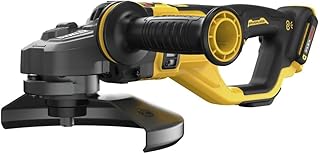
Corded versus cordless is another key decision. Corded 9 inch angle grinders provide unlimited runtime and generally deliver higher sustained horsepower, making them the default for shop and stationary work. Cordless large angle grinders have improved dramatically, with high-voltage battery platforms now capable of spinning 9-inch discs at useful speeds. The tradeoff is weight, battery current Amazon listing detail, and the need to keep spare packs charged. If mobility is essential and you already own compatible batteries, a cordless unit can be a productive addition. If you need uninterrupted power for production work, corded remains the safer bet.
Installation and Setup Considerations
Before you use any 9 inch angle grinder, confirm that the guard is properly seated and adjustable. Large wheels throw more sparks and debris, so a well-positioned guard is critical for safety. Some grinders ship with quick-adjust guards that rotate without tools; others require a wrench. If you switch frequently between cutting and grinding, tool-free adjustment will save time.
Handle position is another setup detail that is easy to overlook. Multi-position side handles let you orient the grip for left-hand or right-hand dominance and for vertical or horizontal cuts. A rotatable handle also helps when the tool’s bulk would otherwise block your line of sight. When installing a new wheel, always use the correct flange and ensure the disc is rated for the grinder’s maximum RPM. Never install a 9-inch wheel on a tool with a lower speed rating than the disc specifies.
Dust collection is harder to solve on a 9-inch grinder than on smaller tools because the disc circumference creates a wide debris plume. If you work indoors or in regulated environments, consider pairing the grinder with a surface grinding shroud and a vacuum system. Not every grinder accepts third-party shrouds easily, so check compatibility before you buy accessories.
Maintenance and Reliability Signals
Large angle grinders live hard lives, and simple maintenance routines will extend their service intervals. Carbon brushes wear down over time and are usually the first component to fail on a corded model. Grinders that include spare brushes in the box, or that offer tool-free brush replacement, minimize downtime. Check brush access periodically and replace them before they wear to the limit line, since damaged brushes can score the commutator and ruin the motor.
Bearings and gears should be inspected if you notice unusual vibration, noise, or heat. A grinder that runs hot after ten minutes of moderate use may have inadequate ventilation or failing internals. Keep the air vents clear of dust buildup, and avoid pushing the tool so hard that the motor stalls repeatedly. Stalling generates heat and can trip internal overload protectors.
Cord integrity is another reliability factor. On corded models, inspect the strain relief where the cable enters the housing. On cordless models, inspect battery terminals for corrosion or debris. Store batteries in a cool, dry place and avoid leaving them in the charger indefinitely.
How to Compare Reviews
When reading owner feedback on 9 inch angle grinders, focus on context. A one-star review complaining about weight is less relevant if you need maximum power and already expect a heavy tool. Conversely, multiple reviews mentioning premature switch failure or melted guards should raise red flags regardless of the motor’s horsepower.
Look for patterns in long-term reviews. Grinders that still perform well after a year of commercial use are likely built with better gears and seals. Pay attention to comments about trigger feel, handle comfort, and guard rigidity, because these factors determine whether the tool is pleasant to use for extended periods. If a model has very few reviews, treat the average rating with caution; a small sample size can skew results dramatically.
Also consider the reviewer’s application. A fabricator cutting tube all day will have different priorities than a mason grinding concrete edges. Try to find feedback from users whose work resembles your own.
Final Recommendation
If you want the most versatile corded option, choose a dual 7-inch/9-inch grinder with a high-horsepower motor and a strong history of verified reviews. It gives you the flexibility to run smaller wheels for detail work and large discs for heavy cuts. For professionals who prioritize smooth handling and long service life, a 9-inch model from an industrial brand with anti-vibration technology and a robust 15-amp motor is worth the investment.
If you need freedom from extension cords and already own a compatible high-voltage battery platform, a cordless 7-inch/9-inch large angle grinder is a compelling modern choice. It will not match the sustained output of the biggest corded units, but it removes trip hazards and lets you work remotely without sacrificing wheel size.
For occasional heavy-duty tasks or budget-conscious buyers, a straightforward corded 9-inch grinder with a 3-horsepower to 4-horsepower motor and a solid side handle will handle most cutting and grinding jobs. Just be sure to verify that the model includes adequate guarding and that replacement brushes are easy to source.
No matter which unit you select, match the grinder to the wheel, respect the RPM limits, and invest in quality abrasives. A well-chosen 9 inch angle grinder will outlast dozens of discs and pay for itself in speed and capacity.