Buying Guide
Choosing among the best address books starts with understanding how you plan to use the organizer. Some buyers want a permanent household reference that stays on a desk, while others need a compact log they can drop into a tote bag. Before you decide, consider capacity, layout, binding style, and any extra features that streamline contact management.
Sizing and Capacity
Address books typically range from pocket-sized models around 3 x 4 inches up to larger editions exceeding 8 x 5 inches. A compact book travels well and fits cramped kitchen drawers, but the entry lines are shorter and the total contact count is lower. If you maintain a long client list or an extended family directory, a larger format with wide columns will prevent handwriting from crowding the page. Look for titles that specify the number of entry spaces or the dimensions in inches so you can match the book to your list length and storage space.
Alphabetical Tabs and Navigation
Alphabetical tabs are the single most useful feature in any address book. They divide the pages by letter so you can flip directly to the right section without thumbing through every page. Some books use colored tabs, which add a visual cue that speeds up lookups. If you are buying for a senior or anyone with vision concerns, large-print editions with high-contrast tab labels reduce frustration. Make sure the tabs are sturdy; thin paper dividers can tear after a few months of regular use, whereas laminated or card-stock tabs hold up far longer.
Binding and Cover Material
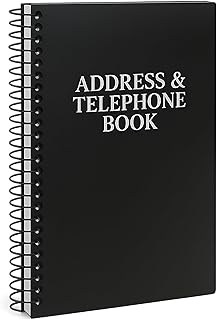
Hardcover books protect pages from spills and creases, making them ideal for a desktop or bedside table. They also tend to lie flatter as the spine breaks in, though they are slightly heavier. Spiral-bound and hardcover-spiral hybrids offer the best of both worlds: the cover shields the pages, while the coil lets the book fold back on itself for one-handed writing. Pure spiral bindings without a hard cover are lighter and more flexible, but the coils can snag in bags and the covers may bend if tossed into a crowded purse. Think about where the book will live most of the time, then choose the binding that matches that environment.
Extra Fields and Modern Features
The best address books today often do more than store names and phone numbers. Many include columns for email addresses, cell numbers, and important dates such as birthdays and anniversaries. A growing number also add password sections or website login pages, turning the book into a low-tech backup for digital credentials. If you already use a password manager, these fields may be redundant, but for anyone who prefers paper records or needs a backup in case of device failure, an integrated password log is a welcome addition. Just be sure you have a secure place to store the book if it contains sensitive login data.
Readability and Print Size
Large-print address books use bigger fonts and wider line spacing, which helps anyone who finds standard text hard to read. This feature is especially valuable if multiple people in the household share the same book. Before you buy, check the product description for mentions of large print or senior-friendly formatting. Even if your eyesight is fine now, a larger font can reduce strain during quick lookups under dim kitchen or hallway lighting.
Maintenance and Longevity
Paper quality matters more than you might expect. Thin pages allow ink to bleed through, forcing you to skip the back side of each sheet and effectively cutting capacity in half. Heavier paper, often described as thick or premium stock, supports ballpoint, gel, and even fountain pen ink without ghosting. Hardcover books with reinforced spines also resist the gradual loosening that plagues cheaper perfect-bound notebooks. If you expect to update entries frequently, choose a spiral or hardcover-spiral format so you can write comfortably near the gutter without cracking the spine.
How to Compare Reviews
When reading customer feedback, focus on comments that mention durability after several months of use. Initial impressions about cover art are helpful, but they do not reveal how well the binding or tabs survive daily handling. Look for recurring themes: if multiple reviewers mention that tabs tear or that the book does not lie flat, those are reliability signals worth noting. Also pay attention to feedback about print size; buyers often confirm whether large-print claims hold up in real-world use. A high average rating backed by thousands of reviews generally indicates consistent manufacturing quality, while a perfect score with only a handful of ratings may reflect limited testing.
Final Recommendations
If you want one book that handles contacts, passwords, and special dates in a durable hardcover shell, the tabbed organizer with password storage is a strong starting point. Buyers who prioritize readability for seniors or anyone with vision needs should gravitate toward the colorful hardcover edition with large-print formatting and color-coded tabs. For those who need maximum portability, the compact spiral-bound option slips into small spaces while still offering alphabetical dividers and extra fields for passwords. If aesthetics matter as much as function, the celestial or floral hardcover designs double as attractive desk accessories. Finally, anyone managing hundreds of entries should consider the high-capacity spiral-bound reference with hundreds of contact slots and a proven track record from a large review base. Match the book’s size, binding, and bonus features to your daily routine, and you will end up with an organizer that stays useful for years.