Buying Guide
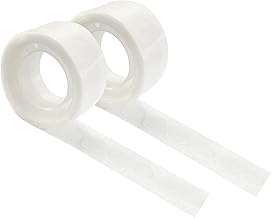
Adhesive dots are one of the simplest ways to bond lightweight materials without waiting for liquid glue to dry. Because they come pre-measured and double-sided, they eliminate guesswork and reduce mess. Still, not every dot performs the same on every surface. Understanding capacity, tack type, and application method will help you choose the right product the first time.
Sizing and Capacity
Dot diameter matters more than most buyers expect. Small 3/16-inch mini dots excel at precision work, such as attaching sequins, small paper cutouts, or jewelry box lining. Medium 3/8-inch and 1/2-inch dots cover the widest range of household tasks, from scrapbooking to mounting lightweight signs. Larger 0.5-inch and 20 mm dots spread stress across a bigger area, making them better for slightly heavier objects or uneven surfaces.
Capacity is equally important. A pack of 200 dots may last a casual crafter months, while a 1,000-dot bulk roll is more economical for party planners, teachers, or retail display teams. If you only decorate seasonally, avoid oversized bulk packs that may lose tack before you finish them. Adhesive dots age best when stored in a cool, dry place away from direct sunlight.
Feature Tradeoffs: Permanent vs. Removable
Permanent adhesive dots form a lasting bond on paper, foam, wood, and many plastics. They are ideal for memory books, gift assembly, and signage meant to stay in place indefinitely. Removable or repositionable dots, on the other hand, are engineered to release cleanly from walls, glass, and painted surfaces. These are the better choice for renters, event decorators, and classroom teachers who change displays often.
Some manufacturers offer a middle-ground tack level labeled as poster or photo-safe. These formulas hold firmly enough for daily use but can usually be lifted without tearing paper or leaving oily residue. If your project involves both temporary and long-term elements, consider a variety pack that includes multiple tack levels in one purchase.
Installation and Setup Considerations
Application is straightforward, but a few setup habits improve results. First, ensure the surface is dry and free of dust or oils. Even the strongest dot will struggle on a greasy kitchen wall or a dusty window sill. Press the dot firmly for several seconds after placement; pressure-activated adhesives need that contact time to reach full strength.
Temperature also affects performance. Most adhesive dots are designed for indoor climates between 60°F and 80°F. Applying them in very cold garages or hot vehicles can weaken the initial tack. If you must use dots in an extreme environment, look for products that explicitly mention temperature resilience or waterproof ratings.
Dispensers versus loose rolls represent another setup choice. Loose dots require you to peel backing paper, which can be fiddly if you have long nails or limited dexterity. Handheld dispensers roll the dot directly onto the surface and separate it from the liner automatically. Dispensers current Amazon listing detail slightly more per dot, but they save time and keep fingerprints off the adhesive.
Maintenance and Storage
Unlike liquid glue, adhesive dots do not dry out in a bottle, but they can collect dust or lose tack if the liner is damaged. Keep unused dots in their original packaging until needed. If you transfer them to a craft box, use a small zip-seal bag to prevent lint from sticking to the edges.
If a dot loses its stickiness before use, it is usually due to heat exposure or liner separation. Do not try to revive it with water or solvent; simply replace it with a fresh dot. For long-term mounted items, inspect the bond every few months in high-humidity rooms such as bathrooms or basements. Condensation can weaken the adhesive over time, so re-apply if you notice sagging.
Reliability Signals and How to Compare Reviews
When shopping online, star ratings offer a quick snapshot, but the review text reveals far more. Look for feedback that mentions your specific use case. A product with thousands of scrapbooking reviews may not perform the same way on textured walls or outdoor balloons. Pay attention to comments about liner difficulty; if multiple buyers say the backing tears or the dot curls, expect some frustration during application.
Review count itself is a reliability signal. Listings with several thousand ratings have survived broad real-world testing across many surfaces and climates. Newer listings with only a few dozen reviews can still be excellent, but they carry more uncertainty. Check the “bought in past month” metric as well. Strong ongoing sales usually indicate that a product is restocked regularly and that buyers continue to trust it.
Finally, watch for brand-specific patterns. Established adhesive companies tend to use consistent photo-safe and acid-free formulas, which matters for archival projects. Generic bulk packs often deliver good value, but quality can vary between shipments. If archival safety is critical, lean toward brands that explicitly label their products as photo-safe or acid-free.
Final Recommendation
If you need one versatile adhesive dot for everyday crafts and paper projects, choose a permanent 1/2-inch craft dot from a well-reviewed brand. It covers the widest range of tasks without being too large or too small. For party decorators and teachers who change displays frequently, a removable bulk pack offers the quantity and clean removal you need at a lower current Amazon listing detail per dot. If you handle a mix of temporary posters and permanent keepsakes, a dispenser set with multiple tack levels keeps everything organized in one compact package.
For heavy-duty bonding on wood, metal, or glass, look for larger-diameter permanent dots from manufacturers known for industrial-strength adhesives. And if precision is your priority—such as in card making or model building—mini dots in a value pack give you the control that standard sizes cannot match. Match the dot size, tack level, and pack quantity to your most common project, and you will spend less time re-applying and more time creating.