Buying Guide
Choosing among the best African dramas plays books requires more than checking a star rating. Readers arrive with different needs—academic study, performance preparation, book-club discussion, or personal enrichment—and each play or anthology offers a distinct balance of length, editorial support, and cultural scope. This guide breaks down the practical factors that separate a worthwhile purchase from a shelf ornament.
Scope and Capacity: Single Play vs. Anthology
The first decision is whether you need a deep dive into one work or a panoramic view of a tradition. Single-play editions, such as Death and the King’s Horseman or Fences, typically provide focused reading experiences. They are lighter to carry, easier to annotate, and often include production histories or playwright interviews that anthologies omit. If you are memorizing lines, directing a scene, or writing a concentrated critical essay, a standalone volume is usually the better tool.
Anthologies like Contemporary African Plays or Black Theatre, USA function as reference libraries. They let you compare how different playwrights handle similar themes—colonialism, migration, family ritual—without purchasing a dozen separate books. For educators building syllabi or readers who want to sample voices before committing to a full collection, anthologies deliver greater capacity. The tradeoff is size: these volumes are thicker, sometimes heavier, and may sacrifice individual play introductions for breadth. Consider your shelf space and whether you will actually read the majority of included works.
Feature Tradeoffs: Scholarly Apparatus vs. Clean Text
Not every edition is created equal. Some paperbacks present the script alone, optimized for actors who need clean pages with minimal distraction. Others layer in footnotes, critical essays, and timelines that help students unfamiliar with Yoruba cosmology, Jim Crow labor practices, or Pittsburgh’s Hill District geography. If you are new to African dramatic literature, look for editions that contextualize the action rather than dropping you into dialogue without a map. Conversely, if you already know the historical backdrop, a clutter-free text may read more fluidly.
Audio formats appear occasionally in this category, but most serious drama readers prefer print. Plays are built on line breaks, stage directions, and spacing; these visual cues disappear in audio. Reserve audiobooks for novels or memoirs, and choose paperbacks or mass-market editions when your goal is to study the architecture of the scene.
Setup and Reading Context
“Installation” for a book means preparing the environment in which it will be used. Drama reads differently in a quiet study than in a rehearsal room. If you plan to read aloud with a group, check the trim size of the paperback. Smaller mass-market editions are portable but can have tight margins that resist highlighting. Larger trade paperbacks lie flatter on a music stand and accommodate sticky notes.
For classroom use, verify whether the edition includes a bibliography or discussion questions. Some modern collections, especially those aimed at the educational market, add teaching aids that home readers may ignore but instructors desperately need. If you are buying for a teenager or undergraduate, a volume that opens with a clear timeline of the playwright’s life can reduce the intimidation factor.
Maintenance and Longevity
Paperback plays endure repeated handling if you choose quality bindings. Perfect-bound glue spines can crack if you press a book flat too aggressively; sewn bindings last longer but are rarer in modestly priced drama editions. If you expect to return to a script for years—perhaps as a director who revisits August Wilson’s cycle—investing in a sturdier copy or a second backup makes sense. For casual one-time reads, standard paperback construction is sufficient.
Keep drama collections away from direct sunlight and humidity, especially if you live in climates where paper warps easily. Because many of these titles move between backpacks, rehearsal spaces, and desks, a simple clear cover can extend the life of a frequently referenced anthology.
Reliability Signals: How to Evaluate Reviews
When comparing the best African dramas plays books, review count matters, but so does review texture. A title with thousands of ratings and a 4.5-star average usually indicates broad accessibility. A title with fewer than twenty reviews but a 4.8 average may be excellent yet niche—perhaps assigned in university courses and adored by specialists but unknown to general readers. Neither profile is inherently superior; match the review pattern to your own expertise.
Read the critical reviews, not just the five-star praise. Complaints about tiny font, missing pages, or editions that turn out to be screenplays rather than stage plays are common in drama listings. If multiple reviewers mention that a book is “just the script with no notes,” decide whether that matches your need. Similarly, watch for confusion between the play and its film adaptation; some buyers expect a novelization and receive stage directions instead.
How to Compare Across the Ranked Selection
Start by identifying your primary use case. If you need a cornerstone text for African theatre specifically—not the broader African-American canon—prioritize Death and the King’s Horseman or Contemporary African Plays. These carry the highest relevance to the continent’s dramatic output and offer cultural specifics that diaspora collections may only reference in passing.
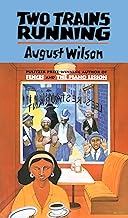
If your interest spans the full African diaspora, August Wilson’s plays dominate the middle of this ranking for good reason. They are widely produced, extensively reviewed, and supported by decades of scholarship. Between Fences, Joe Turner’s Come and Gone, and Two Trains Running, you cannot go wrong, but each occupies a different decade of Wilson’s century cycle. Choose based on the historical period you wish to explore first.
For readers seeking contemporary voices that challenge form, Fairview and The Brother/Sister Plays represent newer theatrical generations. They read more experimentally than mid-century classics, so they suit adventurous readers better than traditionalists. Meanwhile, Intimate Apparel/Fabulation offers two plays by a single Pulitzer-winning voice, making it efficient for readers who want thematic cohesion across multiple works.
Final Recommendation
There is no single best African dramas plays book for every reader, but there is a clear path to the right choice. Begin with Death and the King’s Horseman if you want a universally acknowledged masterpiece rooted in African cultural specificity. Choose Contemporary African Plays if you need breadth and comparative context. If your focus is the African-American theatrical tradition, Fences remains the most reliable entry point thanks to its balance of narrative clarity, critical acclaim, and reader volume. August Wilson devotees should work through the cycle chronologically or thematically, starting with whichever decade resonates most. Finally, if you are buying for a classroom or book club, lean toward anthologies and double-play editions that generate richer discussion through contrast. Match the book to your purpose, and the drama will do the rest.