Buying Guide
Choosing the right aftermarket tire pressure monitoring system depends on more than just sensor count. Your vehicle type, typical load, and travel habits all shape which TPMS will deliver the most useful alerts without becoming a maintenance burden. This guide breaks down the practical factors to weigh before you buy.
Sizing and Sensor Capacity
Start by counting every tire position you need to monitor. A standard car or SUV typically needs four sensors, but RVs, campers, and dually trucks often require six, eight, or even ten sensors to cover the tow vehicle and every axle on the trailer. Some systems ship with four sensors but allow expansion to ten or twelve, which is valuable if you plan to upgrade from a travel trailer to a fifth wheel later. Check the maximum sensor limit listed for the monitor, and confirm whether additional sensors are available from the same manufacturer to avoid compatibility issues.
Pressure range matters just as much as sensor count. Light-duty cars and crossovers usually operate well below 50 PSI, while heavy-duty trucks and RVs can run north of 80 PSI. If you tow or haul, look for an aftermarket TPMS that supports at least 87 PSI, and preferably up to 144 PSI, so you do not outgrow the system when moving to larger tires.
Feature Tradeoffs
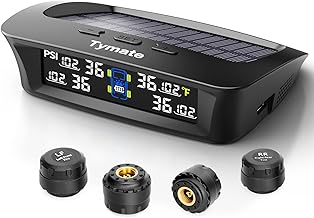
Displays come in several forms: standalone LCD monitors, windshield-mounted units, and smartphone- or head-unit-integrated kits. Standalone color LCDs with solar charging are popular because they install quickly and move easily between vehicles. Windshield mounts keep the screen in your peripheral vision but require a stable suction cup and clear sightlines. Android-head-unit systems offer seamless dashboard integration, yet they depend on your stereo remaining powered and compatible.
Alarm modes are another differentiator. Most quality kits include alerts for high pressure, low pressure, rapid air loss, and high temperature. Some add slow-leak warnings or audible panic alarms. More modes generally mean earlier awareness, but the interface should still let you adjust thresholds so you are not bombarded by false alerts on rough roads.
Transmission range becomes critical on long rigs. Standard wireless kits may struggle on 35-foot or longer RVs, which is why a few models include a signal repeater or booster. If you drive a motor home or tow a long trailer, prioritize systems that explicitly mention extended range or repeater support.
Installation and Setup Considerations
External sensors screw onto the valve stem and usually take only a few minutes per tire to install. They are easy to swap when the battery dies, but they add slight protrusion that can be vulnerable to theft or curb damage. Internal sensors sit inside the tire and offer cleaner aesthetics and better security, yet they require tire dismounting for installation and battery replacement. Every kit in this roundup uses external sensors, which aligns with the DIY-friendly nature of most aftermarket TPMS buyers.
Pairing sensors to the monitor is normally automatic or semi-automatic. Systems with auto calibration reduce the chance of human error during setup. Before finalizing placement, test the monitor at the driver’s seat to confirm it receives clear signal from the farthest tire. If you notice dropouts, a repeater or a monitor relocation usually solves the issue.
Maintenance and Reliability Signals
Aftermarket TPMS units are generally low maintenance, but a few habits extend their lifespan. Keep solar panels free of dust and windshield film so the display stays charged during daylight driving. Check sensor batteries annually; many external sensors use replaceable coin cells that last one to two years. If a sensor begins reporting erratically, clean the valve threads and confirm the seal is tight.
Reliability also shows up in customer feedback patterns. Look for reviews that mention stable long-range performance over months of use, not just easy first-day setup. Consistent praise for alert accuracy and display readability under sun glare usually indicates a well-made unit. Conversely, repeated complaints about signal loss on large trailers suggest the kit may be better suited to smaller vehicles.
How to Compare Reviews
When reading reviews for the best aftermarket tire pressure monitoring systems TPMS, focus on context that matches your use case. A sedan owner praising a four-sensor kit may not address how that same kit performs on a 40-foot RV. Filter for reviews that mention your vehicle class, load weight, and typical trip duration.
Pay attention to review dates. Older reviews may reflect firmware or hardware that has since been revised. Recent 2024 and 2025 updated models often fix earlier Bluetooth pairing or display contrast issues. A product with a slightly lower overall star rating but a recent uptick in positive feedback can be a better bet than a stagnant legacy model.
Final Recommendation
If you want a balanced, proven option for mixed driving and towing, the top-ranked wireless kit with a colorful display and 144 PSI range offers the broadest appeal. RV owners who need room to grow should look at expandable monitors that accept up to ten or twelve sensors. Those running long motor homes or multi-trailer setups will benefit most from a system with a built-in repeater and multiple trailer memory banks. For dually trucks and heavy haulers, prioritize six-sensor coverage and a high PSI ceiling. By matching sensor count, pressure range, and signal strength to your actual rig, you will end up with an aftermarket TPMS that provides real safety value mile after mile.