Buying Guide
Choosing among the best air gun tools starts with understanding how you will use compressed air. A woodworker clearing sawdust from a router table has different priorities than an auto detailer drying door jambs. This guide breaks down the practical factors that separate a tool you use once from one you reach for every day.
Sizing and Capacity
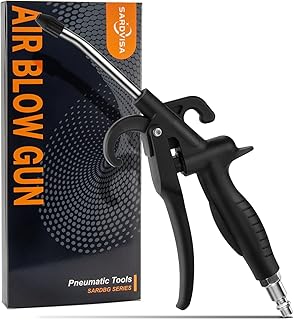
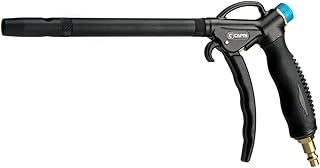
Length is the first specification to check. Short 4-inch and 5-inch blow guns fit comfortably inside vehicle interiors, electrical panels, and compact machinery where a long barrel becomes a liability. When you need to push air through deep engine bays, behind radiators, or into ductwork, 12-inch extensions or dedicated long-nozzle models keep your hands clear while extending reach. If your work spans both extremes, consider a kit that includes multiple barrel lengths rather than relying on a single compromise size.
Nozzle diameter also affects capacity. A wider tip spreads airflow over a broader area, making it ideal for drying large flat panels or sweeping floors. A narrow jet concentrates pressure into a tight stream that dislodges packed debris from corners and threaded holes. Some models ship with interchangeable tips so you can switch profiles without swapping the entire tool.
Feature Tradeoffs
Adjustable airflow is a feature worth prioritizing if you clean sensitive surfaces. Brass needle valves or variable trigger mechanisms let you throttle from a gentle puff to a full-pressure blast. Fixed-flow guns are simpler and often more affordable, but they can launch debris with enough force to damage electronics or scratch paint if you are not careful.
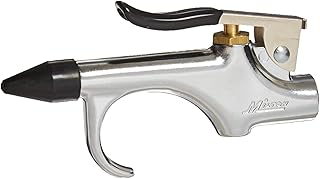
Rubber guards and tip protectors are not mere accessories; they are insurance against accidental contact. When working near automotive clear coat, polished metal, or glass, a rubber-tipped nozzle prevents the hard brass or steel barrel from marring the finish. Bent or angled nozzles reduce wrist strain during extended sessions, though they can slightly reduce maximum airflow compared to straight barrels.
Lever triggers versus button triggers come down to ergonomics. Lever designs distribute pressure across two or three fingers and can be easier to hold open for long blowing cycles. Button triggers offer precise momentary bursts but may fatigue the index finger during continuous use. If you suffer from hand strain, test the actuation style before committing.
Installation and Setup Considerations
Nearly all pneumatic blow guns connect via a standard ¼-inch NPT female inlet, but the quality of that connection matters. Tools with solid brass or steel threaded inlets resist cross-threading better than pot-metal alternatives. Pair your gun with a high-flow quick-connect fitting to minimize pressure drop between the hose and the nozzle. If your compressor lives at the far end of a long hose run, every restriction steals performance.
Before first use, thread-seal the inlet with proper PTFE tape or a liquid thread sealant rated for pneumatic systems. Avoid over-tightening, which can crack cast housings. Once connected, cycle the trigger several times without a nozzle attached to purge manufacturing debris from the barrel. If your gun includes multiple tips, verify that each one seats fully and locks in place; a loose nozzle can become a projectile at high pressure.
Maintenance and Reliability
Air gun tools require minimal maintenance, but neglect shortens their lifespan. Drain your compressor tank daily to prevent moisture from traveling through the hose and corroding internal valve components. If you work in a humid climate, install an inline desiccant filter or water separator near the tool end of the hose.
Inspect rubber safety tips monthly for tears or hardening. A compromised tip can expose the metal barrel underneath and scratch surfaces. Check threaded nozzles and extensions for galling, especially if you swap accessories frequently. A drop of pneumatic tool oil on the trigger pivot point twice a year keeps actuation smooth and prevents rust.
Reliability signals in listings include all-metal construction, brass valve cores, and steel barrels. Plastic bodies are lighter and often adequate for light household duty, but they degrade under UV exposure and can crack if dropped on concrete. User reviews that mention years of daily shop use without leakage are strong indicators of a durable design.
How to Compare Reviews
When reading feedback on air gun tools, look beyond the star average. A 4.7-star rating based on several thousand reviews usually indicates consistent manufacturing quality and accurate product descriptions. A similarly high score from only a handful of reviewers may reflect a limited sample size and could shift as more buyers weigh in.
Pay attention to recurring themes. If multiple users report leaking around the trigger after a few weeks, that suggests a weak seal design. Conversely, praise for comfortable grips, predictable airflow, and solid fittings points to thoughtful engineering. Photos in reviews are especially valuable because they show how the nozzle size compares to common fittings and whether the finish holds up after months of shop grime.
Recent reviews carry more weight than older ones because they reflect the current production batch. A product that earned glowing feedback three years ago but now shows complaints about thinner materials or stripped threads may have undergone a manufacturing change. Cross-reference the most recent fifty reviews with the overall average to spot downward trends.
Final Recommendations
If you need one blow gun that handles everything from bench cleanup to engine detailing, choose an industrial-grade model with adjustable airflow and steel extensions. The flexibility to lengthen the barrel or throttle the blast makes it the most adaptable investment for a home shop or professional garage.
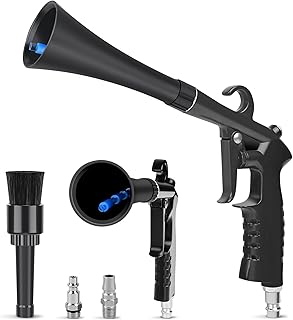
For dedicated automotive detailers, a high-pressure car cleaning gun with a narrow nozzle profile will save time and reduce the need for repeated wiping. These tools excel at blasting water from mirrors, emblems, and grillework after a wash.
When budget is the primary concern and your tasks are light-duty, a simple lever-actuated gun with a rubber safety tip still delivers reliable performance. Just verify that the inlet threads are brass or steel rather than plastic to ensure it survives the first over-tightened fitting.
Finally, if you manage a busy workspace where multiple employees share tools, a two-pack or multi-piece kit ensures you always have a backup. Lost nozzles and worn tips are inevitable in high-use environments, so having spares on hand prevents downtime. Match your choice to your compressor’s output, your typical cleaning tasks, and the level of surface protection your work demands, and you will end up with an air gun tool that earns its place in your hand every single day.