Buying Guide
Choosing the right airsoft magazines is about more than simply finding a box that holds BBs. Capacity, build material, platform compatibility, and maintenance all affect how smoothly your replicas run during a match. This guide breaks down what matters most so you can match a magazine to your play style and avoid common pitfalls.
Sizing and Capacity
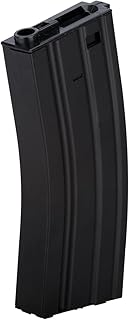
Airsoft magazines generally fall into three capacity classes: low-cap, mid-cap, and high-cap. Low-caps typically hold under 100 rounds and appeal to milsim players who want realism and minimal BB rattle. Mid-caps range from roughly 120 to 160 rounds and use a spring-driven follower rather than a winding wheel, which keeps them quieter and more reliable in many AEGs. High-caps can store 250 to 300 or more rounds and usually rely on a wheel or ratchet system to maintain tension. If you prefer sustained fire without frequent reloads, a 300-round hi-cap steel magazine is a practical choice. If you value stealth and realism, a 120- to 140-round mid-cap polymer magazine usually serves you better.
Always verify that the magazine length and feed-lip geometry match your replica. M4 and M16 AEG magazines are largely standardized, but some receivers have slightly tighter or looser mag wells. Reviews that mention easy insertion and positive lock-up are good reliability signals.
Feature Tradeoffs
Transparent or windowed magazines let you check your remaining ammo count quickly. That feature is especially useful in mid-cap designs where there is no wheel to tension and you want to avoid dry-firing. On the downside, windows can scratch over time and may weaken the magazine body if the polymer is too thin.
Steel and full-metal magazines offer excellent drop resistance and a satisfying weight that can improve realism. However, they add ounces to your loadout, and if the finish is rough, they can wear the inside of a polymer mag well. Polymer magazines are lighter and often less expensive, making them popular for players who carry multiple spares. The best airsoft magazines for you will balance these traits against how aggressively you move and how many spares you plan to carry.
Some newer designs include tension wheels, high-tension springs, or visual fuel-gauge indicators. A tension wheel can help maintain consistent feeding as the magazine empties, while a fuel gauge gives an at-a-glance status check. These extras add utility but can also add complexity, so consider whether the benefit aligns with your field routine.
Installation and Setup Considerations
Most AEG magazines drop free and lock in with the standard magazine catch, but not every magazine releases smoothly from every receiver. Before your first game, test insertion, lock-up, and release with the magazine both full and empty. If the fit is tight, a small amount of non-permanent lubricant on the contact surfaces can help, but avoid sanding or modifying the magazine until you have confirmed the issue is not with the replica itself.
For high-capacity magazines, you will need to wind the wheel or ratchet before use and often between reloads. Learn how many rotations are required to bring the follower to full tension without over-winding, which can damage the spring. Mid-caps require loading with a speedloader or loading rod; plan to carry one in your kit if you run mid-caps exclusively.
If you own gas pistols or CO2 replicas, remember that pistol magazines involve seals and valves that AEG magazines do not. While this guide focuses primarily on AEG rifle magazines, the same discipline applies: test fit, check for wobble, and verify that the valve interfaces cleanly with your replica.
Maintenance and Longevity
Magazines spend a lot of time on the ground, in pouches, and exposed to dust. After each game day, empty them completely. Leaving BBs under spring compression for weeks can weaken the spring and reduce feeding pressure. Wipe down the exterior to remove grit, and inspect the feed lips for cracks or deformation. On metal magazines, check for surface rust if you play in wet conditions and touch up any bare spots with a light oil.
For polymer magazines, avoid leaving them in direct heat inside a vehicle, as extreme temperatures can warp the body or cause the follower to bind. If a magazine starts to misfeed, disassemble it if the design allows, clean the follower track, and ensure the spring is not kinked. Many feeding issues are resolved with simple cleaning rather than replacement.
Reliability Signals and How to Compare Reviews
When reading owner feedback, look for recurring themes rather than isolated complaints. A few reports of misfeeding in a specific replica may indicate a compatibility issue rather than a universal defect. Conversely, if dozens of reviewers praise consistent feeding and easy seating across multiple brands of M4 AEGs, that is a strong reliability signal.
Review count matters. A magazine with several hundred reviews and a high average rating has usually survived enough real-world use to reveal any systemic weaknesses. Pay attention to comments about long-term durability, especially for the magazine catch notch and feed lips, since those areas take the most stress.
Also consider recent purchase velocity. Magazines that continue to sell steadily month after month tend to reflect sustained confidence from the community rather than a one-time spike driven by a current Amazon listing detail.
Final Recommendation
If you want a single dependable magazine that minimizes reloads and survives rough handling, a 300-round steel high-capacity design is hard to beat. For players who prefer a lighter kit and quieter operation, a 120- to 140-round polymer mid-cap with a viewing window offers an excellent compromise. Those building out a full loadout should consider multi-pack bundles of mid-caps so they can carry several spares without excessive weight.
The ranked products above cover a spectrum from rugged steel hi-caps to innovative mid-caps with visual indicators. Choose based on your primary platform, your tolerance for winding wheels versus spring followers, and whether you value raw capacity or stealth and realism. Prioritize magazines with strong review histories that specifically mention compatibility with your replica, and you will spend less time clearing jams and more time in the game.