Buying Guide
Choosing among the best alto saxes bags cases starts with an honest look at how you move your instrument. A high school student walking to bus stops has different priorities than a touring professional loading gear into a van, and a doubler who also plays flute needs storage flexibility that a single-instrument player may not. This guide breaks down the practical factors that separate a good purchase from a great one.
Sizing and Capacity
Not every alto saxophone shares the same bell diameter or body length. Vintage horns, models with larger bells, and some student-line instruments can feel cramped in a tightly contoured case. If you own a horn with an oversized bell or extra keys, look for an extra-large contoured case or a rectangular hardshell that leaves more room around the bow and bell flare. Rectangular cases also tend to stack and store more easily in tight closets or band-room cubbies, while contoured cases shave off bulk for subway commutes and airline overhead bins.
Gig bags generally offer more forgiving interiors, but check whether the bag uses a fixed neck cradle or an adjustable strap system. A cradle that is too shallow can let the instrument shift, while one that is too deep may compress low keys. If you double on flute or clarinet, a 2-in-1 bag with a separate flute pocket saves you from carrying a second bag and reduces the chance of leaving an instrument behind.
Feature Tradeoffs: Hardshell vs. Gig Bag
Hardshell cases—whether ABS, wood-core, or foam-composite—deliver the highest impact resistance. They protect against drops, chair legs, and luggage handlers. The tradeoff is weight and rigidity. A hardshell does not compress to fit into an oddly shaped car trunk, and the exterior can crack if it takes a severe blow at just the wrong angle. Look for models with reinforced corners and metal latches rather than all-plastic closures.
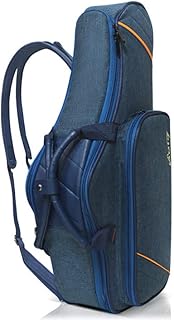
Gig bags trade absolute protection for portability. Modern gig bags use dense foam, 1200D Oxford cloth, or structured foam cores that absorb moderate bumps. They are lighter, often include backpack straps, and squeeze into spaces a hardshell cannot. The risk is that soft sides offer little defense against heavy impacts or being crushed in a gear pile. If you mostly drive to gigs and never check your horn as luggage, a high-quality gig bag is reasonable. If you fly or load your gear into a trailer with amplifiers, a hardshell is the safer long-term investment.
Setup and Carry Configuration
Most cases arrive fully assembled, but the carry system deserves a quick inspection. Hard cases rely on handles and sometimes shoulder straps. Test whether the handle is centered; an off-balance load strains one wrist. For gig bags, examine how backpack straps attach. Straps sewn directly to the back panel are fine for light loads, but hidden or padded strap systems distribute weight across your shoulders and reduce back fatigue during long walks.
Also consider the accessory layout. An external mouthpiece pouch is convenient until it snags on a doorway. Internal pockets keep small items safer but can add bulk. If you carry a tablet or sheet music, a dedicated flat document pocket prevents folds and creases.
Maintenance and Reliability Signals
A case protects your saxophone, but you also need to protect the case. Hard shells with fabric interiors can trap moisture after a rainy gig. Leave the lid open when you get home so pads and case lining dry fully. Gig bags with cloth exteriors pick up dirt quickly; spot-clean with mild soap rather than machine washing, which can degrade foam padding.
Reliability signals in reviews often appear after six months of ownership. Look for feedback about zipper longevity, latch alignment, and whether handles fray at the stitching. A case with four hundred or more reviews and a sustained high rating usually indicates that the manufacturer has resolved early production issues. Be cautious of listings with perfect five-star averages but only a handful of reviews; those scores often reflect honeymoon-period enthusiasm rather than long-term durability.
How to Compare Reviews
When reading owner feedback, filter for comments that mention your specific use case. A parent praising a case for elementary band may prioritize weight and price over drop protection, while a working musician may focus on TSA compatibility and hinge strength. Pay attention to repeated complaints. If multiple reviewers mention that a gig bag’s shoulder straps dig in after twenty minutes, that is a comfort issue that will affect you on longer commutes. Similarly, if several hardcase owners report latch failures after a few months, that suggests a hardware weak point.
Photos in reviews are especially useful. They show how a pro-model horn fits, whether the accessory pocket bulges with a standard mouthpiece cap, and how much wear the exterior shows after a year.
Final Recommendation
If you need maximum protection and your saxophone travels by plane or tour van, the contoured and rectangular hardshell cases at the top of this list offer the best combination of impact resistance and proven reliability. For students and local gigging musicians who walk or bike to rehearsals, the high-review gig bags and backpack cases provide a lighter carry without sacrificing everyday protection. Doublers should prioritize the 2-in-1 designs that include a dedicated flute compartment. Finally, if budget is the deciding factor, the lightweight padded gig bags still deliver baseline safety, though you should handle them more carefully in crowded environments. Match the case to your actual routine, and your saxophone will stay protected through years of practice and performance.