Buying Guide
Choosing among the best aluminum phone cases starts with separating the metal material from the overall case design. Aluminum may appear as a complete shell, a front-and-rear armor frame, or a bumper surrounding softer layers. The listings in this comparison show that these formats serve different priorities. A full-body case generally documents more coverage, while a slim frame tends to preserve more of the phone’s original profile.
Match the case to your phone model
Compatibility is the first practical check. Every selected product is listed for a specific phone model or model family, and the dimensions, camera arrangement, buttons, and port openings can differ between generations. For example, the Arc Pulse iPhone 17 Pro Max case is not interchangeable with the Arc Pulse iPhone 16 Pro Max version. The same principle applies to the iPhone 17 Pro Max versions from AOPNN and Marrkey.
Check the model name, screen size where supplied, and any model-specific wording before selecting a case. A correct material specification cannot compensate for an incorrect fit. The listings for YOOVEI and OEVNLZ both emphasize precise cutouts, while Maustron describes a precision-molded frame for the iPhone 17 Air. Those details are useful because they address access to cameras, buttons, speakers, and ports rather than simply naming the phone series.
A bumper or partial shell is the more streamlined format. Arc Pulse uses aerospace-grade aluminum shells with an elastomer layer, while AOPNN combines an aluminum bumper with a TPU backplate and soft liner. YOOVEI also centers its design on an aluminum alloy frame. These products may suit users who want a metal touch and raised edges without the most enclosed armor construction.
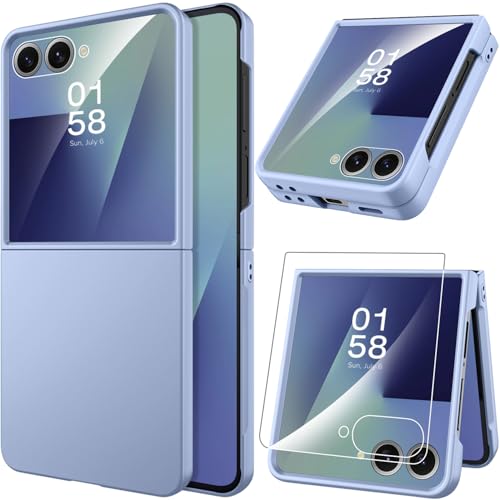
Full-body armor takes a different approach. Lanhiem, FunnyWin, OEVNLZ, and Marrkey list coverage that extends beyond the frame. Lanhiem includes screen and camera protection, FunnyWin lists front and rear metal framing with a screen protector and camera cover, and Marrkey adds a built-in screen protector to its dual-layer construction. Full coverage can be useful when the screen and camera are as important to protect as the sides, but it may add thickness or weight.
The MOOYAACASE design sits between protection and functionality. It uses a machined aluminum case with TPU corner cushions and adds a rotating stand. Its listed 1-inch height indicates that a feature-heavy design can have a more noticeable profile than a thin frame.
Evaluate protection coverage
Look for evidence about what is physically covered. Raised edges can help keep the screen and camera from resting directly on a surface, as listed for Arc Pulse, Maustron’s iPhone 17 Pro Max case, and Marrkey. Soft liners and TPU bumpers are also important because a rigid aluminum shell alone does not describe how the interior is separated from the phone.
For more complete protection, prioritize products that document a front protector or camera cover. Lanhiem lists a 9H tempered glass screen protector and camera lens protector. OEVNLZ lists a built-in tempered-glass screen protector, while FunnyWin describes Gorilla Glass and an acrylic camera cover. Marrkey’s cases list built-in screen protection and raised camera edges. These features provide clearer coverage evidence than a generic claim that a case is protective.
Avoid treating broad marketing language as a verified test result. The supplied listings use terms such as military-grade and shockproof, but this comparison reports the construction and stated features rather than claiming an independently confirmed drop result. That distinction matters when comparing the best aluminum phone cases from public specifications.
Check magnetic support and extra functions
Magnetic compatibility varies considerably. AOPNN lists a hidden N52 magnet array and a stated 15N force. OEVNLZ lists an 18N magnetic hold, and Lanhiem lists magnetic accessory compatibility with a stated 1,500g holding force. MOOYAACASE describes high-strength magnets in its rotating stand and support for MagSafe-compatible wireless charging. These cases are the clearest choices when a charger, car mount, wallet, or other magnetic accessory is part of your setup.
Not every aluminum case documents magnetic support. Arc Pulse emphasizes heat dissipation and no 5G interference instead, while Maustron’s iPhone 17 Air listing focuses on its thin frame, lining, buttons, and finish. If magnetic accessories matter, select a product with that feature explicitly listed rather than assuming every metal case will work with the same accessories.
A stand is another meaningful difference. Lanhiem uses an adjustable camera guard kickstand, FunnyWin has a built-in metal kickstand for portrait and landscape viewing, and MOOYAACASE has a rotating bracket with tilt adjustment. These features can make a case more useful for calls, navigation, or video viewing, but they also introduce additional hardware and may change how the case feels in a pocket or hand.
Consider daily handling
Aluminum changes the tactile experience as much as the appearance. Maustron lists a matte brushed finish, integrated metal buttons, and an anodized coating intended to resist fingerprints. YOOVEI lists an anti-fingerprint back panel, while OEVNLZ describes metallic stripes that provide a non-slip grip. These are handling details rather than impact claims, but they can affect routine use.
A soft lining is useful where aluminum contacts the phone. Maustron lists microfiber lining, AOPNN lists a soft liner, and MOOYAACASE uses TPU cushions at the corners. Arc Pulse uses elastomer inlays. These interior materials are distinct from the aluminum shell and help explain how each design addresses contact and impact transfer.
Profile is also worth checking. Maustron gives a 0.8mm frame thickness, and Arc Pulse emphasizes an ultra-lightweight slide-on design. By contrast, Marrkey explicitly describes its Tough Armour case as bulky, and the full-body models from Lanhiem and FunnyWin add screen, camera, and stand hardware. There is no universal best profile: the right choice depends on whether pocket comfort or enclosure is more important.
Read the specification limits carefully
Public listing data can identify construction, compatibility, coverage, and included functions, but it cannot establish every real-world result. The Marrkey listings, for example, state that the cases protect against rain or sudden water exposure but do not support diving, swimming, surfing, or soaking. That wording should be read as a limitation, not as a waterproof certification.
Likewise, a stated magnetic force or a named aluminum grade describes the supplied specification. It does not guarantee performance with every mount or accessory. Use those details to narrow the choices, then verify the exact phone model and accessory requirements before ordering.
Final Recommendation
MOOYAACASE Mech-Inspired Aluminum Case ranks first overall in this specification-based comparison under the published weighted criteria.
MOOYAACASE is the highest-scoring returned product and the first overall specification-based choice among the best aluminum phone cases. Its combination of 6061-T6 aluminum, CNC machining, TPU corner cushions, a rotating stand, and MagSafe-compatible charging gives it the broadest documented feature set in this comparison.
Lanhiem is the better fit for iPhone 15 Plus users who want full-body coverage, a camera kickstand, and screen and lens protection. Arc Pulse is the more minimalist direction for iPhone 17 Pro Max and iPhone 16 Pro Max owners, with aerospace-grade aluminum shells and elastomer inlays. OEVNLZ is a practical full-body option with an integrated screen protector and documented magnetic hold.
For a slim magnetic bumper, AOPNN and YOOVEI provide the clearest combination of aluminum framing, softer internal layers, and accessory support. FunnyWin is the most enclosure-focused Samsung option in the list. Marrkey is a straightforward aluminum-and-silicone armor choice for iPhone 17 Pro Max, while Maustron is aimed at iPhone 17 Air users who prioritize a thin metallic profile.
Together, these top aluminum phone cases show why model compatibility, coverage, and case format matter more than the word aluminum alone. Select the design that matches your phone, desired protection area, accessory setup, and tolerance for added profile.
Frequently Asked Questions
What should I check before buying the best aluminum phone cases?
Confirm the exact phone model first. Then check whether the listing documents the type of aluminum construction, screen and camera coverage, internal lining or bumper, cutout alignment, and any magnetic or stand features you need. Model-specific fit is especially important because cases for different generations are not automatically interchangeable.
Are aluminum phone cases compatible with magnetic accessories?
Some are, but compatibility is product-specific. AOPNN, OEVNLZ, Lanhiem, MOOYAACASE, and YOOVEI list magnetic support or compatibility. Arc Pulse documents other design features but does not list MagSafe support in the supplied evidence. Do not infer magnetic compatibility solely from the presence of metal.
Which selected cases include screen protection?
Lanhiem lists a 9H tempered glass screen protector, OEVNLZ lists a built-in tempered-glass protector, and FunnyWin lists a Gorilla Glass protector. The Marrkey models also list built-in screen protectors. Other selected products, including Arc Pulse, AOPNN, YOOVEI, and Maustron, emphasize shells, bumpers, liners, or raised edges instead.
Do slim aluminum cases provide full-body coverage?
Not necessarily. Arc Pulse, AOPNN, YOOVEI, and Maustron use shell or frame-oriented designs that focus on profile, raised edges, or the phone’s sides and back. Full-body models such as Lanhiem, FunnyWin, OEVNLZ, and Marrkey document more extensive front or camera coverage. Review the individual coverage description rather than assuming a slim case encloses every surface.
Which aluminum case is best for hands-free viewing?
MOOYAACASE lists a 360-degree rotating stand with 120-degree tilt. Lanhiem lists an adjustable kickstand with a 0-to-130-degree range, and FunnyWin lists a built-in stand for portrait and landscape viewing. These are the selected models with the clearest stand specifications in the supplied evidence.