Buying Guide
Finding the right ancient Rome biography depends on more than name recognition. Readers should match the scope, format, and authorial approach to their own interests, whether they want a single dramatic life or a panoramic view of the empire through many voices.
Scope and Scale: Single Life vs. Collective Portrait
The first decision when choosing among the best ancient rome biographies books is determining how wide a lens you prefer. A single-subject study, such as a life of Augustus or Hadrian, allows for deep psychological detail, extensive quotation from primary sources, and a clear narrative arc. These works often read like novels, with a defined beginning, rising tension, and a resolution tied to the subject’s death or political climax.
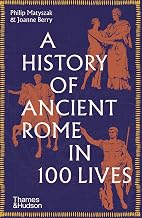
Collective biographies, by contrast, trade depth for breadth. A multi-emperor survey or a volume covering one hundred lives can reveal patterns—how succession corrupted, how military loyalty shifted, or how women exercised power through indirect channels—that are invisible in a standalone account. If you are new to Roman history, a collective work can serve as an efficient orientation. If you already know the outline of the Republic and Empire, a focused biography will likely offer the richer payoff.
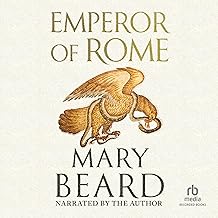
Ancient Rome biographies arrive in print, digital, and audio editions, and each format changes the reading experience. Hardcover editions often include maps, genealogical tables, and photographic inserts that help readers track complex family alliances. Paperbacks are easier to annotate and carry. Audiobooks suit narrative-driven biographies with strong chronological flow, especially those that emphasize political intrigue or battlefield drama, though they can make it harder to flip back to check a date or a name. Kindle editions offer searchable text and adjustable typography, which is useful when a text is dense with Latin terminology or when you want to cross-reference multiple accounts of the same event.
Consider your own habits. If you listen during commutes, choose a biography with a strong forward-driving story. If you study at a desk, a physical edition with reference apparatus may serve you better.
Setting Up Your Reading Experience
Unlike electronics, books require no installation, but a little preparation improves comprehension. Before starting a biography of a Roman emperor or politician, skim a brief timeline of the Republic or Empire so you understand the institutional framework. Keep a simple list of recurring names—Roman naming conventions mean that multiple men in the same family may share nearly identical names, which confuses even experienced readers.
If you are reading digitally, use bookmarking and highlighting features to mark key transitions, such as the moment a general crosses into forbidden territory or a senator shifts allegiance. For physical copies, sticky tabs at chapter breaks make it easy to return to pivotal passages. A small notebook for chronology prevents you from losing the thread when an author pauses the narrative to explore cultural context.
Maintaining Your Collection
Physical books on ancient history are often printed on heavier paper to accommodate illustrations, which makes them prone to spine strain if forced open flat. Store them upright with adequate support and avoid leaving them open face-down. Dust jackets on hardcovers protect the binding from shelf wear, so retain them if you plan to keep the volume long-term.
For digital libraries, back up your purchases through the provider’s cloud service, and consider exporting notes periodically if the platform allows it. Audiobook files should remain linked to your account rather than treated as local downloads you might accidentally delete during device cleanup.
Reliability Signals: Authors, Sources, and Accuracy
Not every popular history meets scholarly standards. When evaluating the best ancient rome biographies books, look for authors who cite primary sources—Cicero’s letters, Suetonius’s Lives, Tacitus’s Annals, or epigraphic evidence from inscriptions. A robust bibliography and endnotes signal that the writer is engaging with the archaeological and textual record rather than recycling myths.
Be cautious of biographies that rely heavily on sensationalism or that present speculative psychological diagnoses as fact. The most trustworthy authors acknowledge gaps in the record. They distinguish between what an ancient source claims and what modern historians can independently verify. If the author is a recognized classicist or historian with peer-reviewed publications, that is a strong positive signal, though excellent journalistic historians also produce reliable work when they ground their narratives in specialist research.
How to Compare Reviews for History Titles
Reader reviews for biographies require careful interpretation. A negative review complaining that a book is “too detailed” may actually indicate that the text is precisely what a serious reader wants. Conversely, praise for a “fast, light read” may signal superficial treatment. Pay attention to recurring substantive criticisms. If multiple reviewers note factual errors, anachronistic language, or a failure to engage with recent scholarship, take those warnings seriously.
Look for reviews that mention specific strengths: clarity of battle descriptions, fairness in treating controversial figures, or usefulness of maps. Reviews that discuss how a biography changed the reader’s understanding of a familiar figure are usually more reliable than those focused on shipping speed or cover design. Cross-reference ratings across platforms when possible, and remember that a smaller number of thoughtful reviews often indicates a more specialized audience rather than a inferior book.
Final Recommendation: Matching the Right Bio to Your Interests
If you want one authoritative volume that doubles as a social history, choose the broadest narrative that still foregrounds individual lives. If your interest is political philosophy and oratory, prioritize a biography of a statesman whose own writings survive. For military history enthusiasts, a life of a campaigning emperor offers strategic detail alongside personal drama. Readers seeking fresh perspectives should look for titles that recover marginalized figures rather than retelling the careers of Caesar and Augustus alone.
The best ancient rome biographies books reward curiosity with context. Start with the scope that matches your current knowledge, select the format that fits your daily routine, and let the biographical lens transform distant names into recognizable human beings navigating ambition, disaster, and legacy.