Buying Guide
Choosing the right aquarium decor tank dividers starts with understanding what kind of separation you actually need. Some hobbyists want a clean visual wall between two fish that cannot share space, while others want a substrate tray that protects the glass bottom or supports heavy rockwork. A few even use divider grids as the skeleton of a DIY sponge filter or as a platform for raising fry. The best aquarium decor tank dividers are the ones that quietly do their job without warping, leaching, or blocking too much flow.
Sizing and Tank Capacity
The first check is always fit. Acrylic panel dividers are usually sold by tank size, such as 10 gallon, 20 gallon long, 29 gallon, 55 gallon, 75 gallon, or 125 gallon, and the listed dimensions should match the inside length and height of your aquarium. Measure the inside glass, not the outside, and account for the substrate depth if you plan to press the panel down into the gravel. Egg crate grids are more forgiving because they can be cut to size with snips, but you still want enough panels to cover the full footprint of the divider area. For long tanks, two or three smaller panels joined together often seat more cleanly than a single oversized sheet.
Feature Tradeoffs
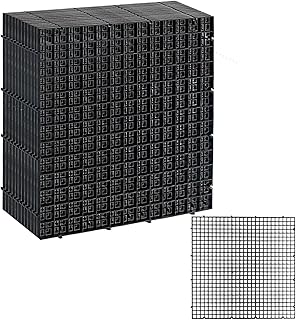
Acrylic panels offer a clear view and a tidy look, which is ideal for betta separation, fry rearing, or isolating a sick fish. They do require reliable suction cups, and the panel must be trimmed or selected so it does not bow under water pressure. Egg crate grids are opaque but extremely versatile. They work as substrate trays, rock supports, and DIY filtration platforms, and they let water flow freely between sections. The tradeoff is aesthetics: a grid divider is functional rather than invisible. If you want both, some hobbyists pair a clear acrylic panel for the visible section and an egg crate grid behind the aquascape where it is hidden by plants and rockwork.
Installation and Setup
Before installing any divider, remove the fish and do a dry fit. For acrylic panels, mark the suction cup positions, clean the glass with a lint-free cloth, and press each cup firmly to remove trapped air. For egg crate grids, use the included brackets or zip ties to join panels into the shape you need, then trim the edges so nothing pokes past the tank rim. Always leave a small gap at the bottom or back corner if you want water to circulate between sections, or seal the edges with aquarium-safe silicone if you need a true wall. Recheck the fit after filling the tank, since water pressure can shift a poorly seated panel.
Maintenance and Longevity
Dividers are low maintenance but not no maintenance. Pull the panel during your regular water change to wipe off algae and inspect the suction cups for hardening. Plastic grids can be rinsed in dechlorinated water and gently scrubbed with a soft brush. Acrylic scratches easily, so use only non-abrasive cloths and avoid magnetic algae cleaners directly on the surface. Replace any divider that has warped, cracked, or developed sharp edges, since a damaged panel can injure fish or leak small plastic fragments into the water column.
Reliability Signals to Watch For
When comparing listings, look beyond the star rating. A product with hundreds of reviews and a steady recent purchase count usually reflects consistent manufacturing, while a listing with only a handful of reviews can be a gamble even if the average looks high. Pay attention to comments about warping, suction cup failure, and exact sizing, since those are the most common complaints across aquarium decor tank dividers. Listings that specify included hardware, list multiple compatible tank sizes, and show clear photos of the actual panel tend to be more reliable than vague bundles.
How to Compare Reviews
Sort reviews by most recent to catch any quality drift, then read the one- and two-star comments to see what actually goes wrong. Look for patterns rather than single complaints. If multiple reviewers mention the same issue, such as panels arriving slightly undersized or suction cups losing grip within weeks, treat that as a real reliability signal. Also weigh reviews from hobbyists running similar tank sizes and stock to your own, since a divider that works perfectly in a 10 gallon betta tank may behave differently in a 75 gallon community setup.
Final Recommendation
If you want a single divider that handles most situations, start with a twelve-pack egg crate grid that has a deep review base and proven long-term performance. For hobbyists focused on clean visual separation, a clear acrylic panel sized to your exact tank is the better match, especially for bettas, fry, or quarantine use. Budget shoppers who only need a small divider can save with a four-panel adjustable grip set, while large tank owners should prioritize a panel specifically rated for their gallon size. Match the divider type to the job, verify the dimensions against your tank, and you will end up with a setup that looks tidy, stays in place, and keeps your fish exactly where they need to be.