Buying Guide
Choosing among the best artists drawing sets starts with understanding how you plan to use the kit. A student practicing daily gesture sketches has different priorities than a mixed-media illustrator who wants watercolor and metallic accents in the same session. Before you commit to a bundle, consider the following factors to ensure the materials match your workflow and creative goals.
Sizing and Capacity
Piece count is often the first number shoppers notice, but bigger is not always better. A compact forty-piece set focused on graphite, charcoal, and blending tools can cover every fundamental sketching technique, while a one-hundred-fifty-plus piece bundle may include crayons, paints, and additional pads that add versatility. Think about your available workspace and whether you need a portable kit. If you draw on location, a slimmer case with dedicated pencil slots and a secure zipper will travel better than a bulky wooden box. For studio use, larger sets keep everything visible and within reach, reducing the time you spend hunting for the right grade of pencil.
Medium Variety and Feature Tradeoffs
The best artists drawing sets typically include more than standard graphite. Look for combinations of colored pencils, charcoal sticks, pastels, watercolor pencils, and metallic leads. Each medium behaves differently on paper, so variety lets you experiment with texture, opacity, and layering. However, broad assortments can mean tradeoffs. Sets that add painting supplies such as acrylic or watercolor cakes may allocate less of the overall budget toward pencil core quality. If your primary goal is detailed pencil work, prioritize sets with a wide tonal range in graphite and charcoal. If you enjoy mixed-media projects, a bundle that crosses into paint and pastel territory will give you more creative freedom without buying separate collections.
Case Quality and Organization
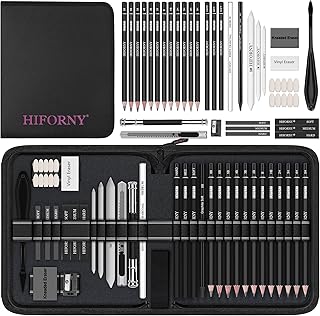
How a set is stored affects how often you will use it. Wooden cases feel substantial and look great on a desk, but they are heavier and may not withstand travel. Fabric or zippered cases with elastic loops and mesh pockets keep tools secure and lightweight. Pay attention to whether the sketchbook or paper pads are built into the case or stored separately. Integrated storage protects paper from bending, while separate pads often give you more sheets and larger formats. For artists who work in coffee shops, parks, or classes, a zippered case with a handle is usually the more practical choice.
Setup and First Use
Most drawing kits arrive ready to use, yet the initial experience varies. Some sets include tutorial guides or coloring books that help beginners learn shading techniques right away. Others assume you already know how to layer charcoal or blend with a tortillon. If you are buying for a young artist or a complete beginner, look for kits that mention instructional content. For experienced users, the absence of a guide is rarely a drawback, but the arrangement of tools should be intuitive enough that you are not searching for a specific grade of pencil mid-sketch. A well-organized interior with labeled slots or compartments speeds up your setup time and keeps you focused on the paper.
Maintenance and Longevity
Drawing supplies last longer when stored properly. Pencil leads can snap if they rattle loosely in a bag, and charcoal sticks crumble under pressure. A case that holds each tool firmly in place prevents breakage and extends the life of the set. Erasers and blending stumps should be kept away from direct heat and sunlight to avoid hardening or crumbling. If your kit includes watercolor pencils or paint cakes, make sure the lids or pans seal tightly between sessions so the pigment does not dry out prematurely. Occasional sharpening with a high-quality sharpener rather than a dull blade will also preserve the centering of the core and reduce waste.
Reading Reviews and Reliability Signals
When comparing artists drawing sets, look beyond the star average and read recent reviews for mentions of broken leads, missing pieces, or damaged cases upon delivery. A high review count combined with consistent praise for durability usually indicates reliable manufacturing and packaging. Pay attention to feedback about the sketchbook or paper quality included in the bundle, because thin or overly textured paper can limit what you can practice. Photos posted by customers are especially useful for judging true case size, interior layout, and how the pencils look after real-world use. If a newer product has fewer reviews but a high rating and strong recent sales, it may still be worth considering, though you should weigh the risk of limited long-term feedback.
Final Recommendations: How to Choose
If you want a single kit that covers nearly every drawing medium in a portable format, the top-ranked all-drawing sets with zippered cases and over one hundred pieces are your safest bet. They combine graphite, charcoal, colored pencils, and pastels without drifting too far into paint territory. Beginners should gravitate toward bundles that include a tutorial and a sketchbook so they can start practicing immediately rather than buying accessories separately. For mixed-media artists who want to experiment with watercolor cakes or acrylic pads alongside traditional sketching, the larger deluxe bundles offer the widest creative playground. Professionals and dedicated illustrators may prefer smaller, curated sets that emphasize high-grade graphite and charcoal over novelty items. Finally, if portability is your top priority, a slim graphite-and-charcoal travel kit will serve you better than a heavy wooden case. Match the set to your skill level, workspace, and the mediums you actually intend to use, and you will end up with tools that stay out of the drawer and in your hands.