Buying Guide
What “automatic underground sprinkler system” actually means
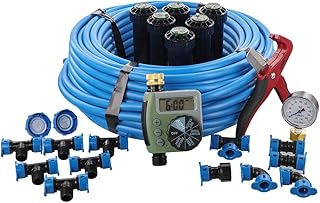
An automatic underground sprinkler system is a network of buried supply lines, valves, and sprinkler heads that runs on a programmed schedule without you standing there with a hose. The pieces that matter most are the valves (which open and close each zone), the sprinkler heads or rotors (which distribute the water), the controller or timer (which decides when each zone runs), and the wiring or wireless link that ties the controller to the valves. Some products in this guide are full kits that include most of those parts, while others are individual components you add to an existing setup.
Sizing the system to your yard
Start with square footage and shape. Small, rectangular lawns under about 2,000 sq ft often do well with a single-zone all-in-one system or a modest DIY kit. Medium lawns in the 2,000 to 6,000 sq ft range usually need two or three zones so you are not trying to push too much water through one line. Larger or irregular yards benefit from four or more zones, which is where multi-valve manifolds and a multi-zone controller earn their keep. Match head type to area as well: spray heads suit smaller, defined zones, while rotors throw farther and cover open stretches more efficiently.
Feature tradeoffs to weigh
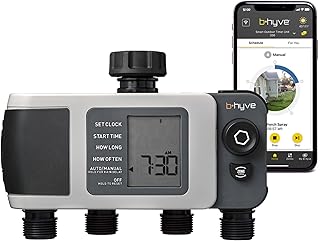
Smart controllers add app control, weather-based skip logic, and remote scheduling, but they current Amazon listing detail more and depend on a stable Wi-Fi or Bluetooth connection. Hose-fed all-in-one systems are the easiest path to automation without trenching, yet they are limited by household water pressure and the number of zones you can run from a single faucet. Traditional in-ground kits give you the most flexibility and the cleanest look once installed, but they require more planning, pipe work, and occasional valve-box maintenance. Impact rotors reach farther than pop-up sprays but can be noisier and more sensitive to low pressure.
Installation and setup considerations
Before you buy, sketch a rough zone map and confirm where your water supply line and any required controller power will live. Check whether the kit you like is compatible with your existing pipe material, whether PVC or poly, and whether the valves are sized for your service line. For DIY kits, look for push-fit or click-connect technology if you want to avoid soldering or gluing. If you are adding a smart controller, verify the number of zones it supports and whether it needs a separate indoor or weatherproof enclosure. Plan for a backflow preventer if your municipality requires one.
Maintenance and reliability signals
Underground systems live or die by valve reliability and head cleanliness. Look for manifolds and valves with replaceable diaphragms and accessible solenoid wiring so a single failed part does not mean digging up the whole run. Pop-up heads should retract fully to avoid mower damage, and rotors should have adjustable arcs so you can fine-tune coverage as plants grow. Wire quality matters too: solid, UL-listed irrigation wire resists corrosion better than generic hookup wire. Once installed, plan to flush the lines at the start of each season, clean filters on spray heads, and check each zone for even coverage a few times per year.
How to compare reviews effectively
High review counts give you a wider sample, but read the negative reviews first to see whether the complaints match your situation. Pay attention to comments about install difficulty, valve longevity, and customer support responsiveness, since those tend to predict long-term satisfaction more than star averages. Look for patterns rather than one-off complaints, and weigh reviews from users with yards similar in size and water pressure to yours. A product with thousands of reviews and a steady stream of recent buyers is usually a safer bet than a newer listing with only a handful of opinions.
Final recommendation: how to choose among the ranked products
If you want a complete, self-install package and have a typical residential lawn, start with the Rain Bird 32ETI DIY kit at the top of the list. For homeowners who already have pipe in the ground and need to organize multiple zones, the Orbit 4-valve and 3-valve preassembled manifolds are the cleanest way to add reliable zone control. If you are upgrading an existing system rather than building one, focus on the components you are missing: a smart controller for scheduling, an impact rotor or pop-up kit for better coverage, or a multi-port hose timer to expand a simpler layout. Match the product to the gap in your system, and you will end up with an automatic underground sprinkler setup that is easier to live with than to install.