Buying Guide
Choosing the right automotive electronic flasher starts with understanding your vehicle’s socket, the electrical load of your bulbs, and how much adjustability you actually need. Unlike old thermal flashers that depend on a specific wattage to heat a bimetal strip, electronic flashers use solid-state circuitry to control the on-off cycle. That makes them ideal for LED upgrades, but it also means you need to match the pin count, amperage range, and physical shape to your specific application.
Sizing and Capacity
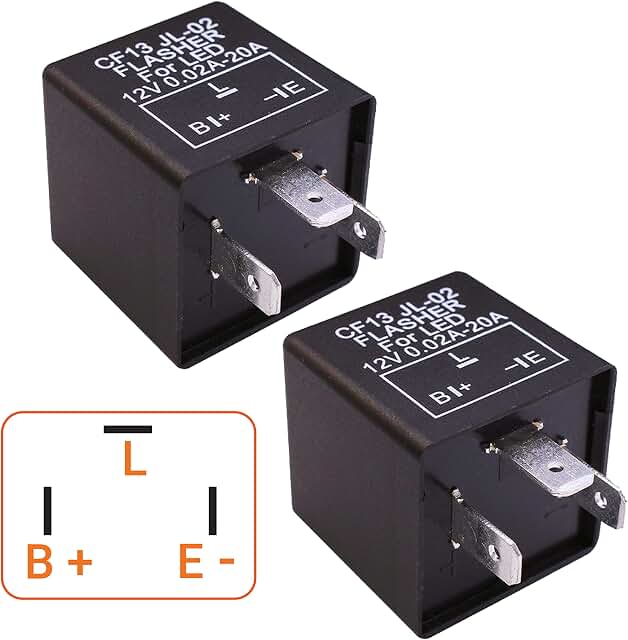
The first step is to identify the pin configuration your vehicle requires. Most cars and motorcycles use a two-pin round or rectangular flasher, while many modern trucks and SUVs use a three-pin CF-13 or EP34 format. Ford vehicles often require a five-pin EP27 relay. Pull your existing flasher and count the prongs, or check your owner’s manual for the socket type. Once you know the pin count, look at the current or wattage range printed on the relay. If you are running standard incandescent bulbs, almost any automotive electronic flasher will handle the load. If you have switched to LEDs, choose a relay with a very low minimum amperage—some units start as low as 0.02A—so the flasher still detects the circuit and does not fall into rapid hyper-blink or no-blink mode. For mixed setups with both LEDs and halogens, a wide-range relay is the safest choice.
Feature Tradeoffs
Not every driver needs an adjustable flasher, but the option is useful if you prefer a slightly faster or slower blink rate than stock. Adjustable units typically have a small dial on the body that changes the timing without adding load resistors. However, adjustable flashers are usually slightly larger, so verify you have enough clearance behind the fuse panel or kick panel. Fixed-frequency relays are simpler and often more compact, making them a better fit for tight motorcycle fairings or older cars with limited space. Another tradeoff is single versus multi-packs. A single premium relay may current Amazon listing detail less upfront, but a two- or four-pack saves money per unit and gives you a spare if the first one ever fails.
Installation and Setup Considerations
Installing an automotive electronic flasher is usually a plug-and-play job, but a few details can make the difference between a five-minute swap and a troubleshooting session. Always disconnect the battery or at least turn the ignition off before pulling the old relay. The socket can be brittle, and shorting pins is easy if a metal tool slips. If your new relay includes a ground wire, attach it to a clean chassis point rather than letting it dangle. Ground wires reduce electrical noise and help the flasher read the circuit more accurately. For three-pin units, confirm whether your vehicle uses a constant-power or switched-power setup; some flashers are polarity-sensitive even though they are solid-state. If the blink rate is still wrong after installation, double-check that all bulbs are functioning. A single burned-out LED can trick the relay into thinking the circuit is lower resistance than it actually is.
Maintenance and Longevity
One of the main advantages of electronic flashers over thermal ones is durability. Without a moving bimetal strip, there is no physical contact to arc, corrode, or fatigue. Still, the circuit board inside can be affected by moisture and extreme heat. If your flasher lives in the engine bay or under the dash near a heater duct, look for a sealed or heavy-duty housing. Periodically inspect the connector for green corrosion, especially in humid climates or after winter road-salt exposure. If your blink rate starts drifting after months of normal operation, clean the socket with electrical contact cleaner before blaming the relay. In most cases, a quality electronic flasher will outlast the vehicle’s bulbs.
Reliability Signals
When comparing automotive electronic flashers, treat review volume as a sanity check rather than the only metric. A product with several hundred reviews and a 4.2- to 4.5-star average usually indicates consistent manufacturing and honest listings. Be cautious of items with perfect five-star averages but only a handful of reviews; those scores often change once more buyers install the part in real-world conditions. Look for feedback that mentions your specific vehicle model, especially if you drive a truck or SUV that uses a less common five-pin relay. Comments about fitment, wire length, and whether the relay cured hyper flash on the first try are more useful than generic praise. Photos in reviews can also reveal whether the housing is larger than the stock unit, which matters in cramped fuse boxes.
Final Recommendation
If you want one flasher that covers the widest range of vehicles and bulb types, the adjustable three-pin option with included terminals is the most flexible choice. It handles everything from tiny marker LEDs to high-output turn signals and lets you fine-tune the blink rate to match your preference. For riders and drivers who simply need a reliable two-pin replacement, a heavy-duty round relay with strong recent sales and a ground wire offers excellent peace of mind. Truck owners with Ford or similar platforms should stick to the five-pin EP27 format to avoid wiring adapters. Finally, if you are upgrading multiple vehicles or want a spare on hand, a multi-pack of solid-state flashers delivers the best overall value and keeps you from waiting on shipping if a relay ever fails. Match the pin count first, confirm the wattage range second, and treat adjustability as a bonus only if you have the space to use it.