Buying Guide
Choosing the best beef dog rawhide bones starts with matching bone length, shape, and thickness to a specific dog rather than browsing by flavor alone. The selections above cover a spread of breeds, chew styles, and pack counts, so the guide below focuses on the specifications that actually drive a smart match.
Matching bone length to muzzle size
The most direct specification on every rawhide package is the bone length in inches. Manufacturers commonly recommend choosing a bone longer than the dog’s muzzle so it cannot bite it off whole. In the selections above, 4-5 inch bones suit small breeds, 6-7 inch bones fit medium dogs, and 8-11 inch bones are aimed at large and giant breeds. Pet Factory’s 6-7 inch knotted bones and 4-5 inch chicken-flavored knotted bones both inherit this muzzle-length rule directly in their product details, which makes them easier to align with smaller muzzles. Canine Chews’ 8-9 inch knotted and basted options and the 10-11 inch retriever rolls push the upper end for serious chewers.
Knotted bone versus rawhide roll versus pressed bone
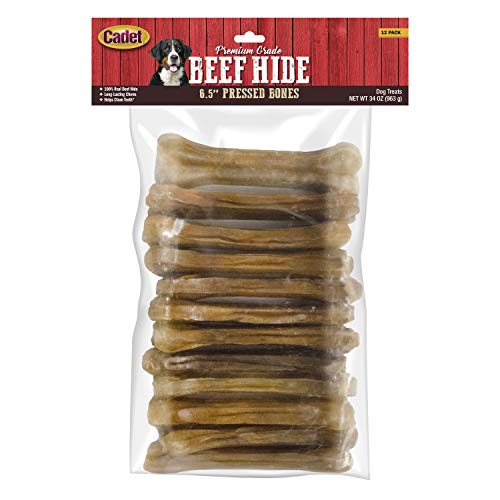
Shape is the second clearest specification. Knotted bones use tied ends that resist shredding and slow consumption, which is why the Canine Chews 8-9 inch knotted bones emphasize durability and the Pet Factory 6-7 inch knotted bones highlight long-lasting chewing. Rawhide rolls, such as the Canine Chews 8-9 inch basted rolls and Pet Factory 5 inch chip rolls, expose more surface area to teeth and gums, which can support a longer chewing session through texture rather than knot density. Pressed bones, like the Cadet 6.5 inch pressed bones, compress beefhide into a denser block, which gives aggressive chewers a tougher surface but may be too hard for senior dogs with sensitive teeth.
Thickness and pack weight as durability signals
When two bones have the same length and shape, pack weight is a useful proxy for hide thickness. The Canine Chews 10-11 inch retriever rolls weigh 5 pounds across 20 rolls, which suggests a thicker roll than a typical chip roll. The 8-9 inch Canine Chews knotted bones weigh 3.79 pounds across 10 bones, again pointing to denser hide. Pressed bones like the Cadet 6.5 inch option weigh 2.125 pounds across 12 bones, consistent with their compressed construction. These weights are not a guarantee of durability, but they give a comparison point when two products look similar on paper.
Ingredient and sourcing transparency
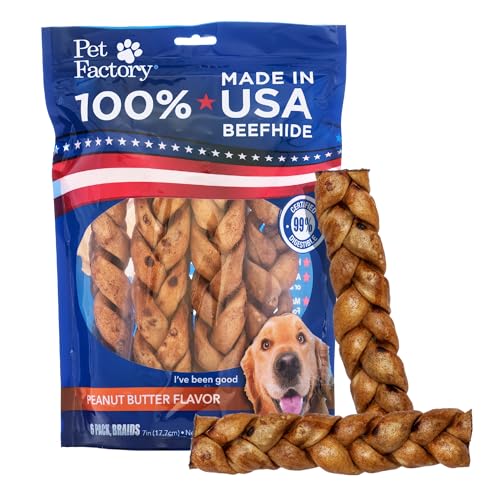
Specification differences around sourcing show up clearly between brands. Pet Factory states that its beefhide is sourced from American-raised, corn-fed cattle and made in a Global Food Safety Initiative-certified facility, which shows up on the 6-7 inch knotted bones, the 5 inch chip rolls, and the 7 inch peanut butter braided sticks. Cadet emphasizes a rigorous inspection process for its premium beef hide across the munchy sticks, twist sticks, and pressed bones. Canine Chews describes its basted bones as all-natural with no preservatives and uses beefhide sourced from Mexico and the USA for its pressed bones. For buyers who prioritize domestic sourcing, the Pet Factory line and the Canine Chews USA beefhide rolls are the easiest to track on the package spec list.
Dental chewing function and supervision
Every rawhide bone in this category is designed to scrape plaque and tartar as the dog chews, which shows up as a recurring feature in the Canine Chews basted rolls, the Pet Factory knotted bones, the Cadet twist sticks, and the Cadet pressed bones. However, rawhide is still a chew treat, not a toothbrush, and the product details consistently recommend intermittent use and supervised chewing. Pet Factory in particular documents discard guidance for small pieces on multiple listings, while Cadet highlights its inspection process as a counterweight to splintering concerns. The best beef dog rawhide bones are the ones that pair these dental claims with explicit supervision language, because unsupervised chewing is the most common cause of safety issues.
Pack count and multi-dog utility
Pack count matters more than flavor when a household has multiple dogs or a strong daily chewer. The Cadet 100-count munchy sticks and 100-count twist sticks serve a multi-dog rotation without requiring constant reordering. The Canine Chews 25-pack basted rolls and 20-pack retriever rolls target multi-dog homes with bigger dogs. Smaller packs like the 6-pack Pet Factory braided sticks and the 4-count chicken-flavored knotted bones fit single-dog households that prefer to rotate based on flavor.
Final recommendation
Canine Chews 10-11 in USA Beefhide Retriever Rolls (20 Pack) ranks first overall in this specification-based comparison under the published weighted criteria.
The highest-scoring specification-based choice in this comparison is the Canine Chews 8-9 in Beef Basted Knotted Bones (10 Pack), which combines a medium-to-large breed length, a knotted-end construction, and a 3.79 pound pack weight that points to dense hide. For owners who want a single brand or flavor rotation, the Canine Chews 10-11 in USA Beefhide Retriever Rolls (20 Pack) and the Cadet Premium Beef Hide Pressed Bones (6.5 in, 12 Count) are the most specification-aligned second and third options, and they reflect the same top beef dog rawhide bones design philosophy that links length, shape, and thickness to a specific breed. Buyers who want domestic sourcing, kid-friendly flavors, or bulk pack counts should pivot to the Pet Factory and Cadet lines, which cover the best beef dog rawhide bones across small, medium, and large dogs without changing the underlying muzzle-length rule.
Frequently Asked Questions
Among the best beef dog rawhide bones, how long should a beef rawhide bone last for a medium dog?
Specification-based guidance varies by shape and thickness. Basted knotted bones and pressed bones at the 6-9 inch range are designed for sustained chewing sessions, while chip rolls and thin twist sticks are sized as shorter-duration chews. The best beef dog rawhide bones for medium dogs are the ones whose length, thickness, and pack weight match the dog’s daily chewing routine.
Are braided rawhide sticks safer than knotted bones for aggressive chewers?
Braided sticks and knotted bones both use reinforcement to slow consumption, but the structural techniques differ. Braided sticks add extra surface area through multiple strands, while knotted bones concentrate the reinforcement at the ends. The best beef dog rawhide bones for strong chewers are the ones whose construction detail on the package matches the dog’s chewing style, with supervision guidance that matches the product.
Which rawhide bones are best for small breeds?
The 4-5 inch knotted bones, 5 inch chip rolls, and 5 inch twist sticks in this comparison are sized for small to medium dogs under the muzzle-length rule. The Pet Factory 4-5 inch chicken-flavored knotted bones and the Pet Factory 5 inch chip rolls are the most direct matches, and they reflect the same best beef dog rawhide bones design principle used on larger bones, just at a smaller scale.
How important is product weight when comparing rawhide bones?
Pack weight is a useful proxy for hide thickness when two products share the same length and shape. A 5 pound pack of 10-11 inch rolls signals thicker hide than a 2 pound pack of similar bones, and the same logic applies to 3.79 pound knotted packs versus lighter knotted packs. The beef dog rawhide bones comparisons always look at weight alongside length and shape, and they treat weight as a supporting specification rather than a guarantee.
Can rawhide bones support dental health in large dogs?
Yes, when the bone length, shape, and thickness are matched to a large dog’s jaw. The 8-9 inch basted knotted bones, 10-11 inch retriever rolls, and 6.5 inch pressed bones in this comparison all document dental chewing benefits, and the larger sizes give the dental surface more contact time. For very large or giant dogs, the 10-11 inch retriever rolls stand out as the beef dog rawhide bones option for combining dental chewing with structural durability.