Buying Guide
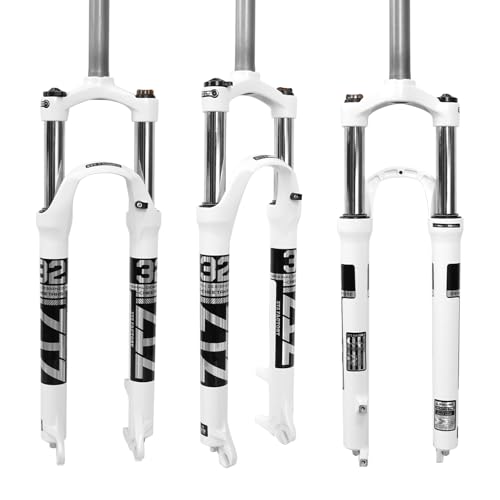
Choosing among the best bike forks starts with fitment, not travel or appearance. A fork must match the frame’s steerer interface, wheel diameter, hub spacing, axle format, brake mount, and available tire clearance. The listings in this comparison include straight 1-1/8-inch steerers, 9mm quick-release systems, 100mm or 135mm hub spacing, and several disc-brake standards. Those numbers are not interchangeable. Measure the existing fork and inspect the frame before ordering.
Start with wheel size and tire clearance
Wheel size is the quickest way to narrow the field. The selected products cover 20-inch, 26-inch, 27.5-inch, and 29-inch applications. Fat-tire forks are a separate design group: the ZTZ and Exceedhub models specify 4.0-inch tire use, while the standard MTB forks are aimed at narrower tires. BOLANY’s rigid fork supports 26, 27.5, and 29-inch wheels, and the BestParts carbon fork lists the same wheel-size range but limits tire width to 2.4 inches.
Do not assume that a fork described as universal will fit every wheel. Hub spacing, dropout type, brake position, crown clearance, and the frame’s intended axle-to-crown length still matter. A 20-inch fat-tire fork with 135mm spacing is not a direct substitute for a 26-inch MTB fork with 100mm spacing.
Choose suspension travel for the frame
Suspension travel should be compatible with the bicycle’s original design. The selected options range from 100mm to 180mm, while the RockShox Judy Silver listing describes an 80-120mm range. The 100mm ZTZ fat-tire and standard MTB models are the shorter-travel choices here. They may be easier matches for XC-oriented frames than the double-crown 180mm designs.
The 180mm forks are specialized. ZTZ, JURPLIX, Exceedhub, and BUCKLOS list long travel for fat-tire, snow, beach, e-bike, AM, or enduro-related applications. Long travel changes front-end height and handling, so the frame manufacturer’s intended fork length should be checked. A fork with more travel is not automatically the right upgrade.
Rigid forks require a different decision. BOLANY and BestParts provide no suspension travel, which can simplify a rigid conversion but changes how bumps are transmitted to the bicycle and rider. Their benefits in this comparison are fitment range, listed weight, and construction rather than shock absorption.
Compare air, oil-spring, and named damping systems
Air forks allow pressure changes, and several selected fat-tire models list manual air or ABS firmness adjustment. That can be useful when the same bicycle is used on different surfaces, but the supplied listings do not provide a pressure chart or setup procedure. Buyers should treat air adjustment as a documented feature, not as a guarantee of a particular ride result.
The ZTZ 26x4.0 model uses an oil-spring design and lists a crown lockout. It offers a simpler suspension specification than the air models. RockShox’s Judy Silver is the most specifically documented conventional MTB damper in the group, with Motion Control RL, external rebound, and TurnKey lockout. Those named controls make it easier to compare its adjustment equipment with the more basic forks.
Check the steerer and headset dimensions
Most selected products use a 28.6mm, 1-1/8-inch straight threadless steerer. That includes the RockShox, ZTZ, JURPLIX, Exceedhub, BUCKLOS, BOLANY, and BestParts selections. A straight steerer still needs the correct length and headset arrangement. The fat-tire listings provide different steerer lengths, including 220mm, 230mm, 240mm, and 260mm examples.
The steerer is only one part of fitment. Crown race dimensions, frame head-tube compatibility, and the required star nut may affect installation.
Match the brake mount and axle
All selected products are documented for disc-brake use, but the mounting details differ. The standard MTB options commonly list 74mm post-mount-style dimensions, while the JURPLIX fork lists a 74mm hole distance and the Exceedhub 26-inch fat fork lists 75mm. The RockShox listing does not provide the same complete brake-mount detail in the supplied evidence, so confirm the exact configuration before purchase.
Axle format is equally important. Several choices use a 9mm quick-release system, with 100mm spacing on standard MTB forks and 135mm spacing on fat-tire designs. A wheel built for a through-axle or another hub width will not be confirmed compatible by wheel diameter alone.
Consider weight and construction carefully
The rigid forks have the lowest listed weights in this selection: BOLANY lists approximately 800g, while the BestParts carbon fork lists approximately 1.the current price in the specifications. Suspension forks are generally heavier in the supplied data, and the fat-tire models list weights from approximately 3.9 to the current price. These figures come from public listings and may use different measurement methods, so compare them cautiously.
Construction choices also differ. Aluminum and magnesium alloys appear throughout the suspension group. BOLANY uses aluminum alloy, BestParts uses 3K T800 full carbon fiber, and the JURPLIX listing specifies corrosion-resistant aluminum alloy with sealed internals. Material alone does not establish ride quality or durability, but it does help distinguish the documented designs.
Final Recommendation
RockShox Judy Silver TK Suspension Fork ranks first overall in this specification-based comparison under the published weighted criteria.
RockShox Judy Silver TK Suspension Fork is the highest-scoring returned product and the first overall specification-based choice among these best bike forks. Its Motion Control RL damper, external rebound, TurnKey lockout, Fast Black upper tubes, and stated 29-inch compatibility provide the most complete conventional MTB feature set in the comparison.
For a 29-inch long-travel build, the ZTZ 180mm air fork is the more specialized alternative. Fat-tire buyers should begin with the wheel and tire match: the ZTZ and JURPLIX 20-inch models suit 20x4.0 applications, while the Exceedhub 26-inch and ZTZ 26x4.0 models target 26-inch fat bikes. The BUCKLOS 20x4.0 model is another defined 20-inch option with a relatively low listed weight.
The best choice among the top bike forks depends on the frame’s original geometry and hardware. Select BOLANY or BestParts only when a rigid fork is intended, and verify whether the aluminum or carbon construction, tire clearance, brake mount, and QR spacing match the rest of the bicycle. No listing here should be treated as a universal replacement without those checks.
Frequently Asked Questions
How do I choose the best bike forks for my bicycle?
Record the current wheel diameter, tire width, hub spacing, axle type, steerer diameter and length, brake mount, and original fork travel. Compare every measurement with the selected listing. A 29-inch wheel does not by itself establish compatibility, because the steerer, hub, brake, and frame geometry must also match.
Are 180mm forks suitable for every mountain bike?
No. The selected 180mm models are specialized for particular mountain-bike or fat-tire applications. Installing a longer fork can alter front-end height and handling, and the supplied evidence does not confirm compatibility with every frame. Check the frame’s recommended travel and axle-to-crown dimensions before purchase.
Is a rigid fork better than a suspension fork?
Neither design is universally better. BOLANY and BestParts are rigid forks, so they provide no suspension travel and are suited to riders specifically planning a rigid setup. Suspension models such as the RockShox and ZTZ forks provide listed travel and, in some cases, lockout or rebound controls. The right type depends on the frame and intended riding conditions.
What does 9mm QR mean on these forks?
It identifies a 9mm quick-release axle format. The required hub spacing still matters: standard MTB selections commonly list 100mm, while the fat-tire models commonly list 135mm. Confirm both measurements, along with the brake mount, before reusing a wheel.
Do air forks need setup adjustment?
The selected air forks list adjustable air pressure or manual firmness adjustment, so setup is part of their design. The supplied evidence does not include rider-weight pressure charts or a tested procedure. Follow the manufacturer’s instructions and confirm that the fork’s adjustment range suits the bicycle and intended use.