Buying Guide
Hand-blown margarita glassware sits at the intersection of artisan craft and everyday function. The best blown margarita glasses share a few traits worth weighing before you pick a style, and the options in this guide cover the most common form factors and capacities.
Glassmaking Technique and Origin
The defining trait of this category is that each glass is shaped by hand rather than machine-produced. Most of the products in this comparison are described as hand-blown by Mexican artisans, often using techniques passed down through generations. A few entries, including stemless and coupe-style builds, use hand-blown construction outside the traditional Mexican craft lineage. Either approach can produce a quality glass, but buyers who care about heritage technique may prefer the Mexican-made entries that explicitly cite generational methods and recycled glass.
Because hand-blown pieces vary slightly between runs, expect minor differences in size, color distribution, and pattern placement. This is a normal feature of artisan work rather than a defect, and the listings in this guide call it out where relevant.
Capacity and Size Considerations
Capacity in this category spans roughly 6 oz to 21.5 oz per glass. Smaller builds in the 6 oz to 10 oz range work well for measured pours, while 12 oz to 16 oz sizes align more closely with traditional margarita serving. Larger schooner-style glasses extend capacity further but change the overall silhouette on the table.
Dimensions matter as much as capacity. A 7-inch-tall, 4.5-inch-wide glass reads differently on a bar cart than a 5-inch stemless tumbler, even if capacities are similar. Buyers should compare both numbers, especially when shelf clearance or cabinet depth is limited.
Design and Pattern Variety
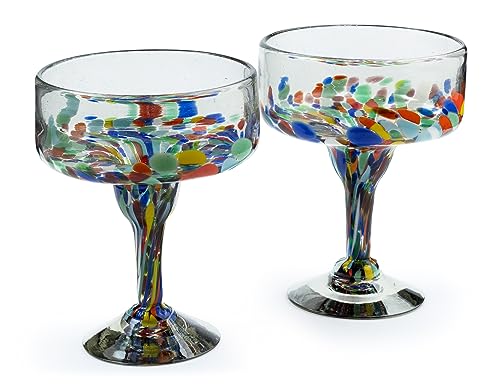
Color and pattern are where blown margarita glasses diverge most. Within the confetti family alone, you will find confetti rock, confetti Carmen, and multicolor confetti stemless versions. Cobalt blue rims, aqua blue rims, blue spirals, and green rim designs each deliver a different table look.
Picking a design often comes down to whether you want a traditional Mexican rim style, a more contemporary painted finish, or a clean stemless silhouette that pairs easily with modern dinnerware.
Material Safety and Construction
Most of the glasses in this comparison are described as lead-free. Buyers focused on safer everyday use can prioritize listings that name the material composition directly.
Wall thickness and base design are also part of construction. Heavier bases tend to feel more stable on the table, and listing details often mention thick walls or sturdy builds. Where this evidence is stated, it has been factored into the scoring.
Care and Longevity
Care guidance varies across the category. Several hand-blown Mexican sets are listed as dishwasher safe, sometimes with a gentle-cycle recommendation. Coupe and stemless hand-blown glasses in this comparison often appear dishwasher safe as well.
Longevity depends largely on how the glass is washed, stored, and stacked. Pieces with painted patterns are more sensitive to abrasive cleaning, while plain recycled glass typically tolerates standard cycles.
Set Size and Entertaining Plans
Set counts in this guide range from two-piece pairs to six-piece sets. Two-glass sets are practical for couples or small households. Four-glass sets cover most family dinners and small gatherings. Six-glass sets, like the Vesici cobalt rim entry, are geared toward larger parties where running out of glassware mid-event is a concern.
Final Recommendation
Dos Sueños Hand Blown Margarita Glasses, Aqua Blue Rim, 16 oz Set of 4 ranks first overall in this specification-based comparison under the published weighted criteria.
The final choice among the best blown margarita glasses depends on the documented features that match your intended use.
If you want a balanced hand-blown Mexican set with a stated 16 oz capacity, traditional cobalt blue rim styling, and a four-glass count, the Vesici 6-Piece Hand Blown Cobalt Blue Rim Margarita Glasses stands out as the first overall specification-based choice thanks to its combination of capacity, set size, and documented dishwasher-safe lead-free construction. Buyers looking at the top blown margarita glasses for larger gatherings will find its six-glass count particularly useful, while collectors of heritage cobalt rim glassware will appreciate the consistent design language. For a smaller pour with the same rim styling, the Dos Sueños Hand Blown Margarita Glasses with Aqua Blue Rim set offers a softer color profile in a four-glass format.
Frequently Asked Questions
What makes the best blown margarita glasses different from machine-made versions?
Hand-blown glasses are shaped individually by artisans, which usually produces slight variations in size, color, and pattern between pieces. Machine-made glasses are typically uniform. Many buyers choose blown glass for the visual character and the heritage connection to traditional Mexican glassmaking.
Are hand-blown margarita glasses safe to drink from?
Buyers who want to confirm material safety should check the listing details for explicit lead-free language before purchasing.
Which capacity works best for classic margaritas?
Classic margaritas are often served in the 12 oz to 16 oz range, which lines up with several sets in this guide, including the Dos Sueños cobalt, aqua, and confetti rock options. Smaller 6 oz stemless glasses work better for measured tasting pours, while larger schooner-style builds shift the drink toward a goblet presentation.
How should hand-blown margarita glasses be cleaned?
Care varies by design. Always check the listing’s care guidance before loading pieces into a dishwasher.
Are stemless blown margarita glasses more stable than stemmed ones?
Stemless designs, including the Wine Savant stemless confetti options, place the base directly under the bowl, which can feel more stable on a crowded table. Stemmed glasses, such as the MORA and Dos Sueños sets, lift the bowl off the surface and can reduce heat transfer from the table, but they may tip more easily if bumped. The choice depends on how and where you plan to serve.