Buying Guide
Choosing the best men’s body jewelry is primarily a fit and material decision. The most specification-aligned listing evidence in this comparison identifies the jewelry type, gauge, inner diameter or post length, material, closure, and intended placement. Those details are more useful than a broad style description because body jewelry must match an existing piercing channel and the anatomy around it.
Start with the piercing placement
Identify whether the piece is intended for a septum, nostril, lip, tongue, nipple, eyebrow, cartilage, industrial, labret, or stretched piercing. A product may be advertised for several placements, but that does not mean one size fits all of them. BodyBonita is specifically documented as a 12G septum ring with a 16mm inner diameter. Jewseen is documented as a 38mm industrial-style barbell. Gotumo is built around flat-back studs, which are listed for cartilage, nose, lip, and labret-style placements.
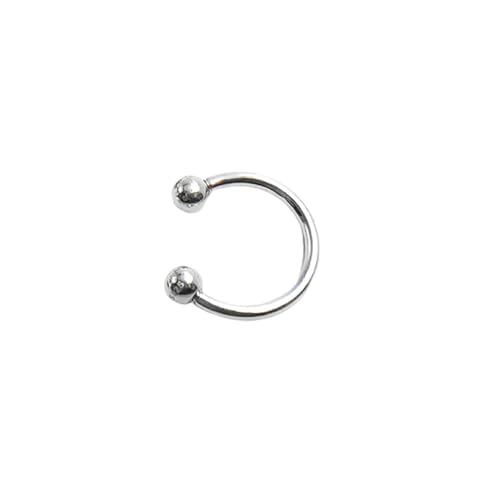
Placement also affects the preferred profile. Flat backs are designed to sit closer to the skin behind a piercing, while horseshoes and captive bead rings leave an open circular profile. Hinged clickers and push-fit studs can be useful when regular handling matters, but the closure should still be compatible with the piercing and the wearer’s ability to insert it safely.
Match gauge and wearable dimensions
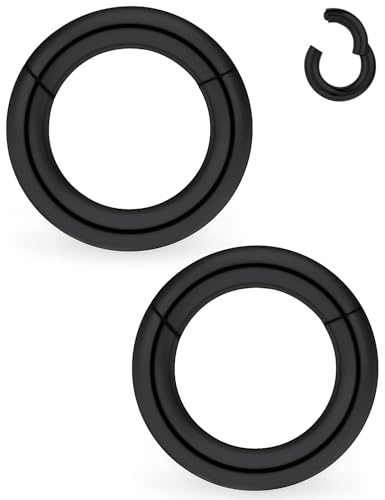
Gauge describes thickness, while inner diameter describes the inside span of a hoop or ring. A straight barbell uses wearable length instead. These measurements should not be treated as interchangeable. Dyknasz lists 16G hoops in five inner diameters from 8mm through 16mm, while Ruifan’s 14G captive bead set covers 8mm through 14mm. Yaalozei takes a different approach with an 8G, 19mm clicker intended for a larger-gauge look.
For studs, Gotumo documents 20G posts and lengths from 5mm to 8mm. MODRSA lists 7mm posts for its L-shaped studs and three hoop diameters. Msndnkwo provides straight barbells in 12mm, 14mm, 16mm, and 18mm lengths. These ranges can make comparison easier, but they do not replace measuring the jewelry currently worn or confirming the size with a professional piercer.
Review the material description carefully
Material wording varies considerably across listings. Several selected products identify 316L surgical stainless steel, including Dyknasz, Jewseen, Ruifan, and MODRSA. BodyBonita and Gotumo provide stronger titanium-specific language, with BodyBonita listing ASTM-F136 titanium and Gotumo specifying F136 titanium. The bodyjewellery horseshoe set identifies black anodized G23 titanium.
A material label alone does not determine whether a particular item is appropriate for every person or every piercing. Shoppers with known sensitivities should compare the full material information with their professional piercer’s guidance. This guide does not make medical or healing claims.
Choose the closure and profile
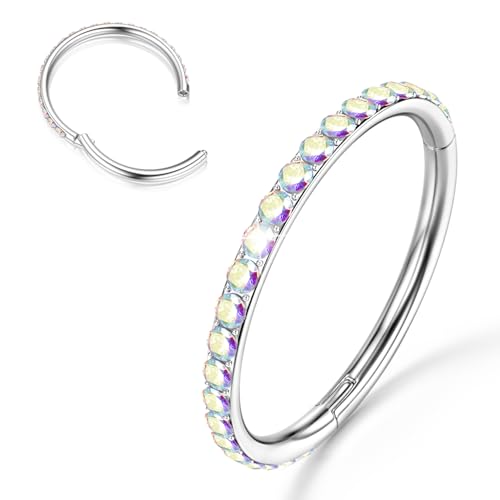
Closure design affects handling and appearance. BodyBonita uses a spring-lock bead mechanism. Dyknasz and Yaalozei use hinged clicker formats. Gotumo uses a threadless push-fit system. Captive bead designs appear in the Ruifan set, and straight barbells are represented by Msndnkwo and Jewseen.
A clicker can create a continuous hoop appearance, while a captive bead ring gives a more traditional bead-accented look. Threadless flat backs are visually discreet in the supplied design description. A decorative barbell such as Jewseen’s sword design is more expressive than a plain bar and may be better suited to alternative styling. The most suitable choice depends on the placement, required dimensions, and whether the wearer wants subtle or statement jewelry.
Decide whether a set or single piece makes sense
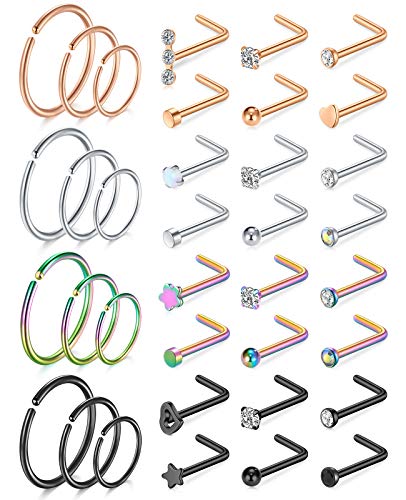
Sets are useful when the documented sizes or formats solve a real need. Dyknasz offers several hoop diameters, Msndnkwo covers four bar lengths, and MODRSA combines hoops with L-shaped studs. Those assortments can reduce the need to buy separate styles when the wearer already knows the correct gauge.
A single specialized piece may be preferable when material or design is the priority. BodyBonita provides a specific titanium septum format, Gotumo focuses on low-profile titanium studs, and Jewseen centers on one industrial barbell design. Larger packs can include pieces that do not suit a particular piercing, so compare the actual measurements rather than judging usefulness by piece count alone.
Keep the comparison evidence-based
This is a specification-based comparison, not a hands-on test. The scores reflect only supplied listing information: documented materials, measurements, design features, closure types, and stated placement uses. They do not reflect customer opinions, star ratings, current listing information, purchase activity, or marketplace labels. Because listings can contain inconsistent wording, verify gauge, length, material, and finish before ordering.
Final Recommendation
BodyBonita G23 Titanium 12G Septum Ring ranks first overall in this specification-based comparison under the published weighted criteria.
The final choice among the best men’s body jewelry depends on the documented features that match your intended use.
BodyBonita G23 Titanium 12G Septum Ring is the highest-scoring returned product and the first overall specification-based choice. It provides the clearest combination of ASTM-F136 titanium, a documented 12G gauge, 16mm inner diameter, and spring-lock bead closure. For shoppers comparing top men’s body jewelry by fit information and material detail, it is the most complete option in this selection.
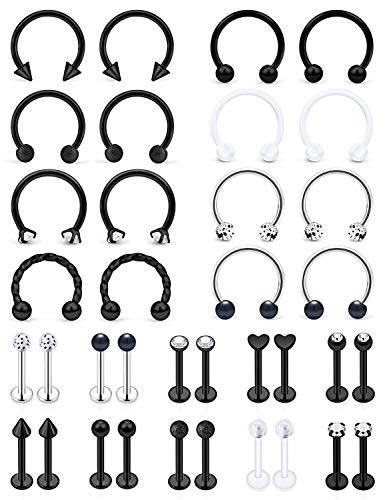
Dyknasz is the better direction when several hoop diameters are useful, while Msndnkwo is more appropriate for comparing straight-barbell lengths. Choose Jewseen for a decorative industrial profile, Gotumo for a discreet flat-back stud, or Yaalozei when a large-gauge clicker is the intended style. The Ruifan 14G set and SCERRING assortment provide additional ring and placement variety, while MODRSA is centered on nose jewelry and bodyjewellery offers a compact black titanium horseshoe option.
Before purchase, confirm that the selected gauge and inner diameter or bar length match the existing piercing. If the listing does not provide enough information for a safe fit decision, ask a qualified piercer rather than relying on appearance alone.
Frequently Asked Questions
What should I check first when buying the best men’s body jewelry?
Check the piercing placement, gauge, inner diameter or wearable length, and material. For example, BodyBonita lists 12G and 16mm for its septum ring, while Gotumo lists 20G posts with several lengths. These measurements determine whether the design is a plausible fit; color and decoration come later.
Is titanium or stainless steel better for body jewelry?
The supplied listings document both materials, but this comparison does not establish that one is universally better. BodyBonita and Gotumo specify F136 titanium, while Dyknasz, Jewseen, Ruifan, and MODRSA specify 316L stainless steel. People with sensitivities should review the complete material description and seek professional guidance for their individual piercing.
What is the difference between a clicker and a captive bead ring?
A clicker uses an integrated hinged closure that opens and closes as one hoop assembly; Dyknasz and Yaalozei document hinged clicker designs. A captive bead ring holds a separate bead within the ring, as shown by the Ruifan 14G set. Both formats require the correct size and suitable placement.
Are multi-piece sets useful for men?
Yes, when the included gauges, lengths, and diameters match the intended placements. Msndnkwo offers several straight-bar lengths, Dyknasz offers several hoop diameters, and MODRSA combines hoops with L-shaped studs. A larger piece count is not automatically more useful if the sizes do not fit or the materials vary between pieces.
How do I choose between discreet and statement styles?
Look at the profile and decoration. Gotumo’s flat-back studs are described as low-profile, while Jewseen’s barbell has a sword design and BodyBonita uses a larger-gauge septum format. Select the documented gauge and dimensions first, then choose the visual style that suits the placement and intended use.