Buying Guide
Choosing the best black seed oil capsules starts with comparing the information that appears on the label, not simply the headline milligram number. Black seed oil is also called black cumin seed oil or Nigella sativa oil, so all three terms can describe the same general ingredient category. The products selected here are softgels or capsules containing that oil or a documented black seed extract. They differ in source, concentration details, capsule materials, serving size, and manufacturing information.
Start with the oil amount and serving size
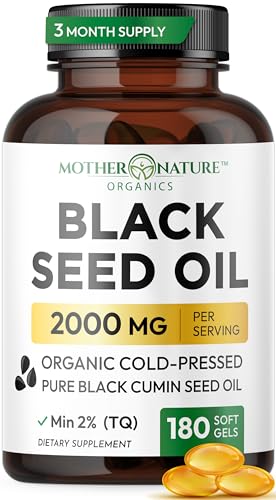
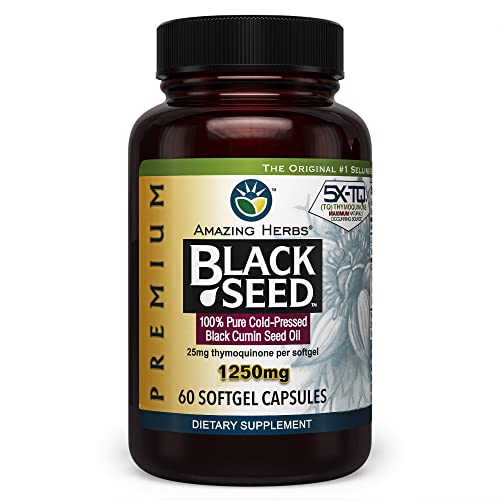
A milligram figure is useful only when you know whether it refers to one capsule or a full serving. ORZAX lists 1,000mg per capsule and a one-capsule daily format. Amazing Herbs lists 1,250mg in each softgel. By contrast, Nutricost states that each softgel contains 500mg and that two softgels provide 1,000mg per serving. MNO follows a similar two-softgel structure, with 1,000mg in each softgel and 2,000mg per serving.
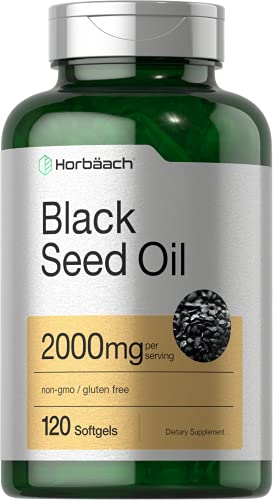
Horbäach uses a 2,000mg headline amount but does not provide the same serving context in the supplied listing. That makes direct comparison more difficult. Micro Ingredients gives a clearer two-softgel serving: 2,000mg of black seed oil plus 1,000 IU of vitamin D3. If you want black seed oil without another active ingredient, a single-ingredient product may be easier to evaluate. If you specifically want vitamin D3 in the same softgel, Micro Ingredients documents that combination directly.
Look for quantified thymoquinone
Thymoquinone, often abbreviated TQ, is a naturally occurring compound associated with black seed oil. Listings use several different ways to describe it. ORZAX gives a stated 2% concentration and says it is lab verified. Navobary states a standardized 5% formula. Gaia Herbs lists 10mg of thymoquinone per serving. MNO specifies standardized 2% thymoquinone.
Other products mention naturally occurring TQ or use a potency phrase without a numeric concentration. Maju Superfoods describes a 3X thymoquinone position, while Amazing Herbs identifies thymoquinone among the oil’s compounds but does not state a measured percentage. NOW Foods, Nutricost, Horbäach, and Micro Ingredients also mention naturally occurring compounds without supplying a TQ quantity in the supplied evidence.
A percentage and a milligram amount are not interchangeable without knowing the total oil quantity and serving size. Compare like with like: check whether the figure is per capsule or per serving, whether it is stated as a formulation specification or simply described as naturally occurring, and whether the listing mentions standardization or testing.
Compare extraction and processing claims
Cold pressing appears across much of this category. Cold pressing is a processing description; it does not by itself establish a particular thymoquinone concentration.
Some listings add useful detail. NOW Foods identifies the oil as hexane free and describes laboratory testing. MNO also states that the oil is cold pressed without harsh solvents and identifies a hexane-free formula. Amazing Herbs describes screw-type pressing and calls the oil unrefined. Micro Ingredients says its extraction avoids heat. These details help distinguish a product’s documented process, but they should not be treated as proof of a health outcome or as a substitute for complete label information.
Match the capsule to dietary requirements
Capsule material and exclusions can matter as much as the oil. Navobary describes a vegan formula and excludes gluten, soy, dairy, artificial colors, and preservatives. Gaia Herbs uses vegan liquid phyto-capsules and lists gluten-free and soy-free attributes. Maju Superfoods does not provide a capsule-material claim in the supplied evidence, so it should not automatically be treated as vegan.
MNO’s listing specifically identifies bovine-derived gelatin, making it a poor fit for vegan shoppers even though the oil is described as non-GMO and the formula excludes artificial fillers, preservatives, and alcohol. Micro Ingredients lists a formula made without soy, dairy, gluten, and tree nuts, while Nutricost lists non-GMO and gluten-free attributes. NOW Foods identifies soy-free and keto-friendly characteristics. Always compare the complete supplement facts panel with your own dietary or allergen requirements.
Give quality documentation appropriate weight
The most specification-aligned documentation in this comparison includes testing or manufacturing details stated in the listing. NOW Foods describes GMP quality assurance and ISO/IEC-accredited laboratory testing. Navobary describes independent testing for potency, heavy metals, and microbial contamination. ORZAX states third-party testing for potency. Nutricost identifies cGMP manufacturing and third-party testing, and Micro Ingredients lists third-party testing for safety, purity, and potency.
A testing claim is not the same as a supplied certificate or a complete laboratory report. Treat it as a specification to verify on the current product label or manufacturer documentation. Gaia Herbs emphasizes sourcing and quality oversight but does not provide the same testing categories in the supplied evidence. Amazing Herbs gives detailed seed and pressing claims, while its listing does not identify a specific TQ test result.
Consider the package and routine
The selected products range from 60 to 240 capsules or softgels. Gaia Herbs and many other products use 60-count packages, while Nutricost and Horbäach provide 120 softgels. MNO lists 180 softgels, and Micro Ingredients lists 240. Package count alone does not reveal the daily serving, so pair it with the directions: Gaia Herbs lists 30 servings from 60 capsules, Nutricost lists 60 servings from 120 softgels, and Micro Ingredients lists 120 servings from 240 softgels.
A one-capsule format may simplify a routine, as with ORZAX. Two-softgel servings can provide a larger combined oil amount, as documented by Nutricost, MNO, and Micro Ingredients. The best black seed oil capsules for one person may therefore be different from the best fit for another, depending on whether the priority is measured TQ, vegan materials, a single ingredient, or a clearly defined serving.
Final Recommendation
Navobary Black Seed Oil 500mg ranks first overall in this specification-based comparison under the published weighted criteria.
Navobary Black Seed Oil 500mg is the highest-scoring returned product and the first overall specification-based choice.
The final choice among the best black seed oil capsules depends on the documented features that match your intended use.
ORZAX Black Seed Oil 1000mg is a close alternative with a stated 2% thymoquinone level, 1,000mg per capsule, cold-pressed oil, filler-free positioning, and third-party potency testing. Navobary suits vegan shoppers who prefer a stated 5% standardized thymoquinone formula and detailed testing categories. Gaia Herbs suits those who want 10mg of thymoquinone per serving in vegan liquid phyto-capsules. Amazing Herbs is notable for its unrefined oil and USA cold pressing, while NOW Foods stands out for manufacturing and laboratory documentation.
MNO provides clear two-softgel serving math and 2% standardization, but its bovine-derived gelatin matters for dietary selection. Nutricost and Horbäach offer straightforward oil formats with larger capsule counts, though their listings do not quantify TQ. Micro Ingredients is the distinct two-in-one option, pairing 2,000mg of oil with vitamin D3. These are the top black seed oil capsules in this comparison based only on the supplied specifications; review the current label and follow professional guidance for personal use.
Frequently Asked Questions
What should I compare when choosing the best black seed oil capsules?
Compare the oil amount per capsule and per serving, the Nigella sativa source, extraction method, quantified thymoquinone information, capsule material, dietary exclusions, and any stated testing or manufacturing controls. A clear serving size is especially important because some products list 500mg per softgel while others present a combined two-softgel amount.
Is a stated thymoquinone percentage easier to compare than a general TQ claim?
A stated percentage or milligram amount is easier to compare than a general statement that TQ occurs naturally. ORZAX and MNO state 2% standardization, Navobary states 5%, and Gaia Herbs lists 10mg per serving. These formats still measure different things, so check whether the value is reported per capsule or serving.
Which selected products document vegan capsules?
Navobary and Gaia Herbs explicitly describe vegan capsule formats. Micro Ingredients lists a formula without several common allergens, but the supplied evidence does not explicitly identify the capsule as vegan. MNO specifically identifies bovine-derived gelatin, so it does not fit a vegan requirement.
Do all cold-pressed products have the same potency?
No. Cold pressing describes how the oil is processed, not a universal thymoquinone level. The selected listings show why separate checks are needed: ORZAX, Navobary, Gaia Herbs, and MNO provide quantified TQ information, while several other cold-pressed products do not. Compare the complete label rather than assuming equal potency from the extraction method alone.
Which of the top black seed oil capsules includes vitamin D3?
Micro Ingredients is the selected product that explicitly combines black seed oil with vitamin D3. Its listing states that two softgels provide 2,000mg of unrefined black seed oil and 1,000 IU of vitamin D3. Choose this type only if the added nutrient fits your intended supplement routine and professional guidance.