Buying Guide
Choosing among the best probiotic capsule supplements starts with the label details rather than a single headline number. Compare how many strains are identified, how the serving is measured, whether the formula includes prebiotics or other supporting ingredients, and how the capsules are stored. This comparison uses supplied public listing information, not independent testing or customer opinions.
Start with the intended design
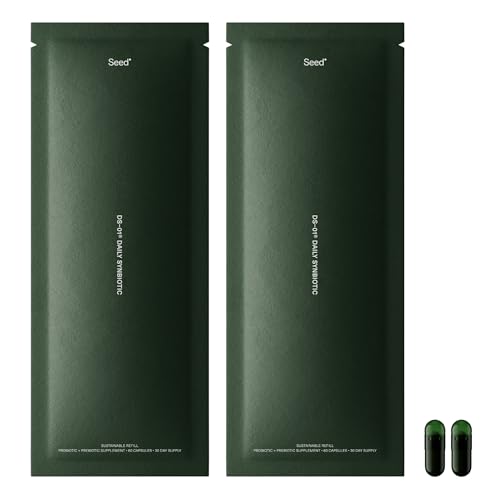
A standard probiotic capsule emphasizes live microorganisms and a daily serving. Nature Made Probiotics for Digestive Health and Align take a focused approach, while Nature’s Way Fortify Extra Strength Adults 50+, NOW Foods Probiotic-10, and Garden of Life use multi-strain designs. Seed DS-01 adds a prebiotic to 24 strains, and NatureBell lists 40 strains with several supporting components.
A higher strain count is a label characteristic, not proof that one formula will suit every person. Focused products may be easier to evaluate, while broad blends can provide more documented variety. Some products are targeted: Florastor uses Saccharomyces boulardii CNCM I-745 with enzymes and botanicals; Garden of Life is formulated for women; and Align centers on Bifidobacterium 35624.
Compare CFU and serving size carefully
CFU describes the colony-forming-unit amount stated by a listing, but amounts are not directly interchangeable unless the serving basis is the same. Nutricost states 50 billion CFU per capsule. NatureBell states 200 billion CFU per serving, with two capsules per serving. Seed reports 53.6 billion AFU and uses a two-capsule full dose.
A one-capsule product may be simpler to remember, while a two-capsule formula may include more components. Florastor’s listing calls for two capsules one or two times daily with meals, which differs from once-daily products. Follow the product directions rather than normalizing every label to one number.
Look for prebiotics and additional ingredients
Amazon Basics lists a 50-milligram prebiotic blend containing FOS and larch arabinogalactan. Garden of Life lists organic prebiotics, Nature’s Way lists plant-based prebiotic fiber, and Seed combines a prebiotic with its probiotic system. NatureBell includes prebiotics, postbiotics, fiber, and enzymes.
Additional ingredients make a formula more complex and warrant a closer label review. NatureBell includes psyllium husk, acacia fiber, bromelain, and papain. Florastor lists digestive enzymes plus ginger, fennel seed, and peppermint leaf. If you prefer a shorter ingredient list, Align, Nature Made, or NOW Foods may be easier to evaluate.
Check storage and delivery features
Shelf stability can be useful when refrigeration is inconvenient. Nature’s Way, Nature Made, Amazon Basics, Garden of Life, and Align state that refrigeration is not required. Seed documents a capsule-in-capsule system intended to safeguard probiotics through digestion, while NOW Foods describes acid-resistant strains.
These are different features: storage convenience concerns handling the bottle, while a delivery system concerns how the product is designed to pass through digestion. Seed’s supplied evidence is based on an in-vitro study, and NOW’s acid-resistant description is a product specification. Treat those statements as label evidence rather than a personal performance guarantee.
Review dietary and quality details
Nature’s Way is described as non-GMO and gluten-free. NOW Foods Probiotic-10 is dairy-, soy-, and gluten-free. Nature Made is vegetarian and free of dairy, artificial flavors, preservatives, and added color. Nutricost lists non-GMO, gluten-free, third-party-tested, and GMP-compliant facility claims. NatureBell lists exclusions including soy, dairy, gluten, wheat, eggs, fish, shellfish, peanuts, and tree nuts.
Quality language varies in specificity. NOW Foods states NPA A-rated GMP certification and strain verification. Seed states extensive third-party testing, and NatureBell states third-party lab testing for safety and potency. These details help with a label-based comparison but do not replace professional guidance.
Match the routine to the product
Decide whether you want a focused strain, a broad multi-strain blend, a synbiotic with prebiotics, or a targeted formula with enzymes and botanicals. Then check the serving count and whether potency applies per capsule or per serving. Review ingredient exclusions and consult a qualified healthcare professional if you are pregnant, immunocompromised, managing a condition, or taking medication.
Final recommendation
Seed DS-01 Daily Synbiotic ranks first overall in this specification-based comparison under the published weighted criteria.
The final choice among the best probiotic capsule supplements depends on the documented features that match your intended use.
Seed DS-01 Daily Synbiotic is the highest-scoring returned product and the first overall specification-based choice.
Its 24-strain probiotic, prebiotic inclusion, capsule-in-capsule delivery system, acclimation guidance, and stated third-party testing make it a well-documented option in this comparison. It is not the simplest routine because the full dose uses two capsules.
For a conventional daily capsule, Nature’s Way Fortify Extra Strength Adults 50+ offers 11 strains, prebiotic fiber, one-capsule dosing, and no refrigeration for its intended age group. Garden of Life is a women-focused alternative with 16 strains, 50 billion CFU, organic prebiotics, and a shelf-stable one-capsule format. NOW Foods Probiotic-10 is notable when strain verification and manufacturing documentation matter most.
The top probiotic capsule supplements are not interchangeable. Align and Nature Made emphasize focused, shelf-stable daily use; Amazon Basics adds a prebiotic blend; Nutricost emphasizes a high stated CFU amount per capsule; NatureBell combines several supporting components; and Florastor takes a targeted yeast-probiotic approach. Use documented design, serving instructions, and ingredient exclusions as final filters rather than relying on potency alone.
Frequently Asked Questions
What should I compare first in the best probiotic capsule supplements?
Compare intended use, named strains, CFU or AFU serving basis, capsules per serving, added ingredients, and storage instructions. A larger number does not by itself establish a better match. Also check whether the product is broadly designed or targeted to a particular group.
Are multi-strain probiotic capsules automatically better?
No. Seed DS-01, Garden of Life, Nature’s Way, and NOW Foods provide broader documented strain mixes, while Align and Nature Made use more focused designs. The suitable choice depends on formula details, serving routine, dietary needs, and healthcare guidance.
Do probiotic capsules need refrigeration?
Not always. Nature’s Way, Nature Made, Amazon Basics, Garden of Life, and Align state that refrigeration is not required. Storage requirements vary, so follow the specific label and pay attention to handling instructions and expiration information.
What is the difference between a probiotic and a synbiotic capsule?
A probiotic contains live microorganisms. A synbiotic combines probiotics with a prebiotic component. Seed DS-01 is described as a probiotic-plus-prebiotic synbiotic, while NatureBell also combines probiotics with prebiotics, postbiotics, enzymes, and fiber. Added components require a closer ingredient review.
When should someone ask a healthcare professional before using one?
Ask a qualified healthcare professional when you are pregnant, immunocompromised, managing a medical condition, taking medication, or considering a probiotic for persistent or serious symptoms. Product listings describe intended support and do not establish that a supplement diagnoses, treats, cures, or prevents disease.