Buying Guide
The best kava kava capsules are not defined by one number alone. A useful comparison begins with what the listing actually identifies: whole root or extract, kavalactone quantity or percentage, added botanicals, capsule type, source, and manufacturing information. The products above vary widely on each point, so the right fit depends on how much label detail and formula simplicity you want.
Pure Mountain Botanicals lists 400 mg of whole kava root powder from Vanuatu and says the formula contains no fillers, binders, or additives. FijiKava lists 600 mg of noble Fijian root per capsule. These descriptions are relatively direct, but neither supplies a kavalactone percentage. A whole-root product can therefore be easier to understand as an ingredient list while offering less information about the concentration of named active compounds.
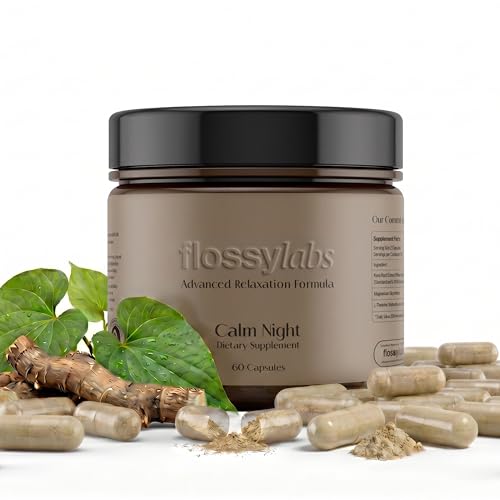
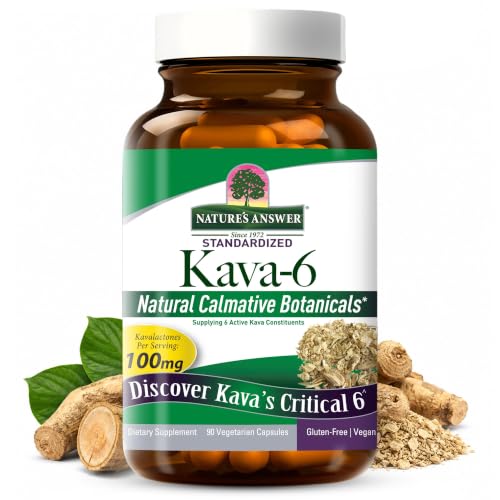
Extract products take a different approach. Gaia Herbs PRO Kava 75 states 75 mg of active kavalactones per serving, Nature’s Answer Kava-6 states 100 mg per serving, and PRIMO KAVA states 50 mg per capsule. Flossy Labs specifies 350 mg of kava standardized to 30% kavalactones, while Samarogen lists a 55% kavalactone extract. These figures are not interchangeable because serving sizes and labeling conventions differ. Compare the stated unit before drawing conclusions.
How to read the active-compound label
A root weight tells you how much kava material the manufacturer lists. A kavalactone amount or percentage gives a different kind of information about the extract. Vitamatic, for example, identifies 1,000 mg of kava root extract and a minimum of 2% kavalactones per serving. That is more informative than a listing that names only “kava extract,” but it still needs to be read alongside the serving direction.
The best kava kava capsules for label-focused shoppers are often the ones that make the serving basis explicit. Nature’s Answer names six kavalactones and provides a total per-serving amount. Gaia Herbs PRO gives an active amount and a three-capsule direction. PRIMO KAVA places its 50 mg figure on a per-capsule basis. Record both the active figure and the number of capsules used to deliver it.
Single-ingredient products can simplify screening. Pure Mountain Botanicals, FijiKava, Gaia Herbs Kava Root, and Oregon’s Wild Harvest center their supplied descriptions on kava root. Their labels may appeal to people who want fewer listed components or who prefer to evaluate kava separately from other herbs.
Blended formulas may be relevant when you specifically want additional ingredients. Vitamatic lists magnesium, ashwagandha, GABA, theobromine, L-theanine, and cacao. Flossy Labs combines kava with magnesium and L-theanine. Samarogen adds ashwagandha, chamomile, lemon balm, and passionflower. A broader formula is not automatically preferable: it simply makes the ingredient list more complex and may require closer review for compatibility with your routine.
Source, cultivar, and processing details
Geographic and cultivar descriptions vary. FijiKava and PRIMO KAVA identify Fijian kava, while Pure Mountain Botanicals identifies Vanuatu root. Gaia Herbs PRO also states Vanuatu sourcing. Several listings use the term “noble,” including FijiKava, PRIMO KAVA, and Samarogen. Those details help distinguish a formula’s documented identity, but they do not replace checking the complete label.
Processing information is another useful point of comparison. Gaia products use a liquid phyto-cap format. Samarogen specifies environmentally friendly CO2 extraction. Pure Mountain Botanicals says it uses multiple testing methods, including HPLC and ICP-MS, and describes batch traceability. Oregon’s Wild Harvest names SGS for non-GMO verification. These are different types of documentation, so treat them as separate label attributes rather than one universal quality measure.
Capsule count does not reveal the active amount by itself. The selected products also include conventional capsules, vegetarian capsules, vegan capsules, liquid phyto-caps, and Samarogen softgels.
Serving directions deserve equal attention. Gaia Herbs PRO states one capsule three times daily, while FijiKava describes 600 mg per capsule. PRIMO KAVA states 50 mg of kavalactones per capsule. These formats make direct bottle-to-bottle comparisons difficult without standardizing the serving information. Follow the product label rather than assuming that a larger capsule count means a different daily amount.
Safety and label review
Kava products should be treated as active herbal supplements, not interchangeable food items. Samarogen specifically says not to use kava with alcohol. These warnings are product-specific evidence and should be reviewed before considering any capsule.
Check the complete Supplement Facts panel, serving size, directions, warnings, and other ingredients. If the listing leaves out a detail important to you—such as the kavalactone amount, cultivar, extraction method, or capsule material—do not infer it from another product. A pharmacist or clinician can help assess interactions and whether kava is appropriate for you.
Final recommendation
Pure Mountain Botanicals Kava Kava Capsules ranks first overall in this specification-based comparison under the published weighted criteria.
Pure Mountain Botanicals Kava Kava Capsules is the first overall specification-based choice among these best kava kava capsules because its whole-root identity, Vanuatu sourcing, testing methods, certifications, and traceability are unusually well documented. It is a particularly clear option for comparing a single-ingredient powder format.
Gaia Herbs PRO Kava 75 and Nature’s Answer Kava-6 are better suited to shoppers who want a stated kavalactone amount. Vitamatic, Flossy Labs, and Samarogen offer more complex blends with explicit supporting ingredients and varying standardization details. FijiKava and PRIMO KAVA focus on noble Fijian kava, while Gaia Herbs Kava Root and Oregon’s Wild Harvest emphasize root-focused capsule formats. Together, these top kava kava capsules cover the main specification differences without treating them as equivalent formulas.
Frequently Asked Questions
What should I compare first when choosing the best kava kava capsules?
Start with the form of kava, then check whether the label states root weight, extract strength, or kavalactones. Next review the serving size, additional ingredients, source, capsule type, warnings, and manufacturing or testing information. These fields provide a more useful comparison than capsule count alone.
Are whole-root and extract capsules the same?
No. Pure Mountain Botanicals and FijiKava describe root quantities, while Gaia Herbs PRO, Nature’s Answer, Flossy Labs, Samarogen, and PRIMO KAVA provide extract or kavalactone details. A root-weight statement and a kavalactone statement describe different attributes, so they should not be treated as equivalent measurements.
Which selected product states a kavalactone amount per capsule?
PRIMO KAVA states 50 mg of kavalactones per capsule. FijiKava states 600 mg of noble kava root per capsule, which is a root quantity rather than a kavalactone amount. Other selected listings provide active-compound information per serving or as a percentage, so check the serving basis carefully.
Do any selected capsules contain ingredients besides kava?
Yes. Vitamatic lists magnesium, ashwagandha, GABA, theobromine, L-theanine, and cacao. Flossy Labs lists magnesium and L-theanine, and Samarogen lists ashwagandha, chamomile, lemon balm, and passionflower. Gaia Herbs PRO, Nature’s Answer, FijiKava, Pure Mountain Botanicals, Gaia Herbs Kava Root, Oregon’s Wild Harvest, and PRIMO KAVA are presented in the supplied evidence as more kava-focused formulas.
What warnings should I review before using kava?
Review the product’s own directions and warnings. The supplied listings include cautions involving pregnancy, nursing, medications, liver conditions, age, and alcohol. Because those concerns can depend on personal circumstances and other products you use, consult a qualified healthcare professional before adding kava to your routine.