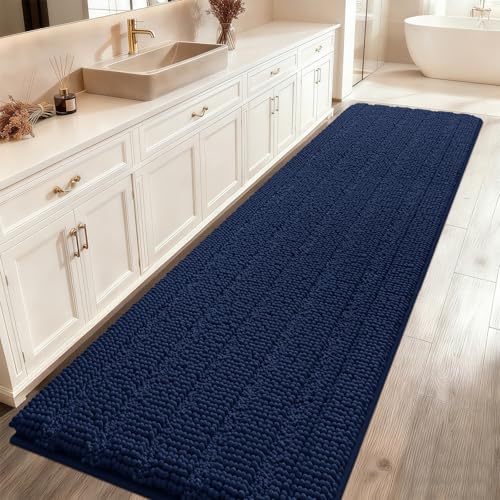
Buying Guide
This guide compares the best chenille runner rugs using documented chenille material and surface, absorbency and drying features, backing and floor stability, care and construction details, and runner size and placement utility.
Chenille runner rugs are most useful where a narrow strip of floor needs softness and moisture control. The selected products are primarily bathroom runners, but several listings also document use in kitchens, laundry rooms, bedrooms, hallways, or entryways. Because this is a specification-based comparison, the ranking reflects stated construction and intended use rather than hands-on testing or customer sentiment.
Match the runner length to the floor plan
Measure the usable floor area before choosing among the best chenille runner rugs. A 70-by-24-inch format, as documented for Yimobra, the long ACCUMTEK runner, and Bcoimo, is suited to a long vanity, bathtub side, or broad shower approach. A 60-by-24-inch design, such as SUBRTEX, Arenarug, or KGORGE, provides substantial coverage while fitting a slightly shorter run. The 59-by-20-inch H.VERSAILTEX and AINAHYVA models are narrower choices for compact layouts.
Do not measure only the open floor. Account for door swings, cabinet fronts, toilet clearance, and the distance needed to open drawers. By contrast, a thick or high-pile runner can be more comfortable but may be less convenient near a door or cabinet.
Consider pile and surface construction
Chenille is not one uniform surface type in this group. Yimobra and the long ACCUMTEK runner emphasize plush, high-density chenille. SUBRTEX gives a more precise 0.6-inch pile and 1400GSM density, which helps shoppers compare it with thicker-looking shag designs. Bcoimo describes a high-low pile texture, while ACCUMTEK’s 60-by-24-inch model combines chenille with dense cut pile.
A plush surface can feel warmer and softer under bare feet, but pile height is only one part of placement. If a rug sits under a door, a thinner construction may be more practical. If comfort beside a tub is the priority, a thicker chenille or foam-supported design may be more appealing. AINAHYVA documents foam inside the rug, while several other listings focus on dense or thick fibers instead.
Prioritize moisture handling for bathroom use
Most of the selected products describe absorbency, but the details differ. Yimobra documents vertical air channels intended to move moisture away from the surface. H.VERSAILTEX, KGORGE, BSICPRO, and SUBRTEX describe dense chenille fibers that capture water from wet feet. The 60-by-24-inch ACCUMTEK model adds a dual-fabric surface with porous cut pile, and Arenarug specifies chenille and tufting for water absorption.
These descriptions indicate intended moisture management, not a guarantee that a rug will remain dry in every situation. Keep the bathroom floor and rug underside dry as directed. Yimobra specifically notes that its backing is not designed for standing water. A runner can help with water from feet after a shower, but it should not be treated as a substitute for correcting leaks, puddles, or poor drainage.
Inspect the backing and floor conditions
Every selected product documents some form of slip-resistant or movement-reducing backing, including hot-melt adhesive, PVC, TPR, rubber, or a related spray coating. The backing is important because a soft chenille top does not by itself keep a rug in place. Yimobra, H.VERSAILTEX, and Bcoimo all state that the floor should be clean and dry for the backing to work as intended.
Check the listing’s floor guidance before use. Several products caution against placing the rug on a wet surface. Smooth, level flooring is the recurring condition in the supplied evidence. If the runner shifts, remove it, dry the floor and underside, and reassess the fit rather than assuming a backing can grip through moisture or debris.
Compare washing and drying instructions
Machine washing is widely documented, but care instructions are not identical.
Use the product’s own care directions instead of applying one routine to every rug. Avoid bleach or fabric softener where the listing says not to use them. Dry the rug fully before putting it back on the floor, particularly in a bathroom. Shaking the pile after washing is also mentioned for several products and may help restore the surface’s appearance, but it is not a substitute for complete drying.
Choose style and placement beyond the bathroom
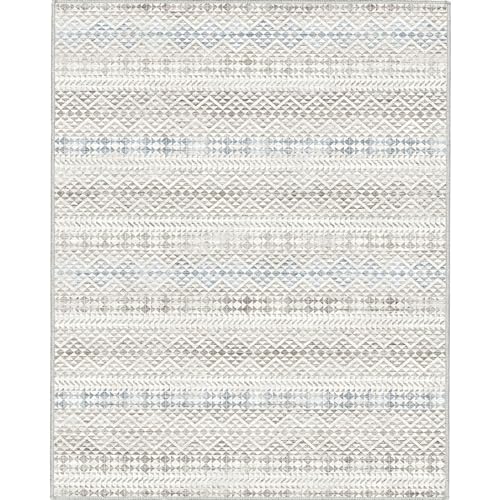
The supplied choices cover neutral ivory, beige, gray, navy, dusty blue, burnt orange, and blue-and-white designs. Striped patterns appear on ACCUMTEK, BSICPRO, and KGORGE, while Bcoimo supplies a stronger warm-color accent. A neutral runner may blend into a bathroom or kitchen, whereas a colored runner can become part of the room’s palette.
Several listings describe use in kitchens, laundry rooms, bedrooms, hallways, entryways, or near indoor doors. Still, bathroom use is the clearest common category, so consider moisture exposure, door clearance, and cleaning frequency before moving any runner to a different room.
Final Recommendation
Yimobra 70 x 24-Inch Chenille Bathroom Runner ranks first overall in this specification-based comparison under the published weighted criteria.
Yimobra 70 x 24-Inch Chenille Bathroom Runner is the highest-scoring returned product and the best chenille runner rugs choice when you want broad coverage and the most detailed moisture, backing, care, and construction evidence. Its long format is suited to larger bathrooms, and its vertical-channel description gives the moisture-management design more specificity than a generic absorbency claim.
The top chenille runner rugs are not identical, so the best alternative depends on the room. H.VERSAILTEX and AINAHYVA are narrower 59-inch choices, while BSICPRO is appropriate for a shorter 47-inch placement.
For color and texture, consider ACCUMTEK’s chenille-and-cut-pile construction, KGORGE’s neutral stripes, or Bcoimo’s burnt-orange high-low pile. Regardless of the model, verify the actual floor dimensions, keep the underside and floor dry, and follow the supplied washing and drying instructions.
Frequently Asked Questions
What size should I choose for a bathroom vanity?
Measure the open floor in front of the vanity and allow clearance for cabinet doors. The 70-by-24-inch Yimobra and ACCUMTEK runners provide broad coverage for long layouts. The 59-by-20-inch H.VERSAILTEX or AINAHYVA runners may fit narrower areas, while 60-by-24-inch models such as SUBRTEX and KGORGE suit more conventional larger runs.
Are chenille runner rugs machine washable?
The selected listings generally describe machine washing, but the recommended drying method varies. SUBRTEX advises avoiding tumble drying, while AINAHYVA and the long ACCUMTEK model describe low-temperature drying. Follow the instructions for the specific rug, avoid prohibited cleaning products, and dry it fully before reuse.
Can I use these runners outside the bathroom?
Some selected products document additional indoor uses. These are indoor placement suggestions, not evidence that every rug is suitable for outdoor exposure or prolonged standing water.
How do I reduce movement on the floor?
Place the rug on a clean, dry, smooth or level surface when the listing requires those conditions. The selected runners use backing types including PVC, TPR, rubber, hot-melt adhesive, or spray coatings intended to reduce shifting. Dry both the floor and underside before placement. If movement continues, check whether the rug is too large for the available clearance or positioned over an unsuitable surface.
Which of the best chenille runner rugs is suited to a doorway?
Measure the gap first, then compare the rug’s thickness and surrounding clearance. A thick plush runner may offer more cushioning but can interfere with a door if the available space is limited.