Buying Guide
The best men’s crystal link bracelets cover two broad design directions: linked metal bracelets carrying cubic zirconia or rhinestone accents, and beaded gemstone bracelets built around natural stone. The selected products document both formats, so the right choice depends first on the visual structure you want and then on fit, material, and closure details.
Choose the bracelet structure first
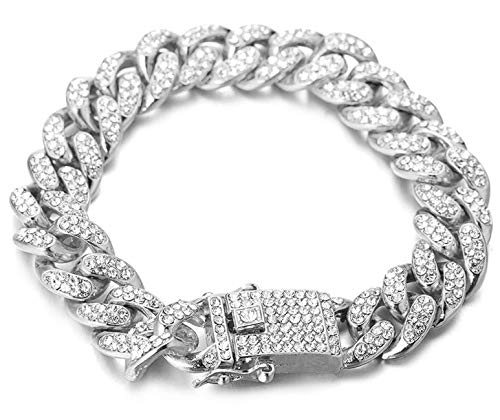
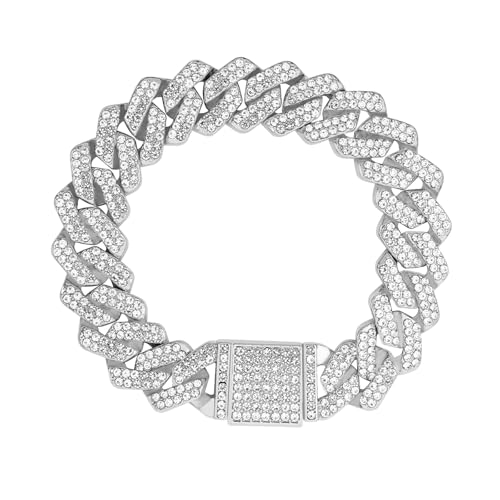
Cuban and Miami Cuban chains use interlocking metal links to create a wide, continuous silhouette. Daniel Wellington offers a chunky 316L stainless-steel chain with a gold PVD finish and a smaller crystal accent, while the Luxfine, Cysnuc, Halukakah, DOJUTI, and Apzzic designs use broader iced-out profiles. Width matters: the 12mm designs look substantial, the 14mm models are more imposing, and the 7mm Daniel Wellington format is comparatively streamlined despite its chunky links.
Beaded options create a different category feel. GAVU uses 4mm lapis lazuli beads with metal accents, COLORFEY uses 12x9mm flat rectangular beads, and HASKARE uses 10mm round beads. These designs are less about a continuous chain surface and more about stone color, texture, and stacking. They may be preferable when a crystal bracelet should read as natural jewelry rather than hip-hop-inspired metalwork.
Compare crystal and stone details
A listing can describe “crystal” in several ways. Cubic zirconia and clear rhinestones are reflective accents placed into metal links; natural stones such as tiger eye, obsidian, hematite, pyrite, and lapis lazuli provide color and surface variation. The Cysnuc and Luxfine 7.5-inch models offer particularly specific setting language, including prongs. That detail helps distinguish stones held by a named setting from listings that simply mention sparkle.
Daniel Wellington documents claw-set cubic zirconia, while Apzzic and DOJUTI identify clear rhinestones. Halukakah describes a full crystal-focused presentation and prong-set detail. For beaded pieces, examine bead size and shape instead: COLORFEY’s flat rectangular stones have a more geometric appearance, and HASKARE’s round beads create a softer stacked profile.
Check fit before choosing a style
The listed length is one of the most important specifications. Fixed lengths include Daniel Wellington at 7.3 inches, Apzzic at 8 inches, Luxfine at 8 inches, Halukakah at 8 inches, and HASKARE at 7.7 inches. Cysnuc lists several lengths from 7 to 9 inches, and DOJUTI lists 7- and 8-inch options. Those ranges are useful, but they do not replace measuring the intended wrist or checking the seller’s sizing guidance.
Adjustable and extended designs give more flexibility. GAVU lists a 6.5- to 7.5-inch fit with a 1.2-inch extender. COLORFEY uses a sliding knot for 7.3- to 7.9-inch wrists. These options can be easier to fine-tune than a fixed chain, though their bead-based construction looks different from a Cuban link. A bracelet that sits too tightly may restrict movement, while excess room can cause the stones or links to rotate around the wrist.
Material terminology varies across the selected products. Daniel Wellington and Apzzic specify stainless steel, while Luxfine’s 12mm gold model names 316L stainless steel. Cysnuc does not identify the base metal in the supplied specifications, and Halukakah identifies the finish but not the underlying metal. DOJUTI specifies alloy. Treat these distinctions as meaningful when comparing construction documentation.
Gold-toned designs include Daniel Wellington’s gold PVD finish, Luxfine’s 14K gold-plated appearance, and the gold option from DOJUTI. White or platinum-toned designs include Cysnuc, the white-gold Luxfine model, and Halukakah. Natural-stone bracelets generally emphasize bead material over plated metal, with GAVU adding 18K gold-plated stainless-steel accent beads.
Inspect the closure
A clasp affects both appearance and handling. Daniel Wellington uses an invisible spring gate clasp that blends into the chain. Luxfine and Cysnuc use box-clasp designs, and their listings describe convenient operation. DOJUTI uses an iced-out box clasp, while Apzzic and GAVU use lobster claw clasps. Beaded models use cord-based systems: COLORFEY lists a sliding knot, and HASKARE describes durable braided cord construction.
A concealed or decorative box clasp can preserve a continuous iced-out look. A lobster claw clasp is familiar and easy to identify, but it may be more visible. Sliding knots prioritize adjustment rather than a metal clasp. Consider whether you want the closure to disappear into the design, add decoration, or provide direct fit control.
Match the finish to your wardrobe
Silver, white-gold, and platinum-style finishes generally coordinate with cool-toned metals and monochrome outfits. Gold and two-tone designs create a warmer focal point. Daniel Wellington is the most restrained chain choice in this selection, while Halukakah and the 14mm Cuban models make the bracelet the central styling element. GAVU, COLORFEY, and HASKARE are easier to approach as layered gemstone accessories because their beads break up the surface of the wrist.
The top men’s crystal link bracelets are not identical in visual language. A wide Cuban chain suits a deliberately bold look; a narrow beaded bracelet can sit beside a watch; and a mixed-stone design introduces color without relying on a plated metal finish. Use the documented width, bead size, and clasp type to predict how much visual space the bracelet will occupy.
Final recommendation
Among the top men’s crystal link bracelets, the ranked products differ under documented crystal or gemstone detail, bracelet construction, fit and sizing flexibility, closure and wearability, and finish and design versatility.
Cysnuc 12mm White-Gold Iced-Out Cuban Bracelet ranks first overall in this specification-based comparison under the published weighted criteria.
Daniel Wellington Crystal Link Chain Bracelet is the highest-scoring returned product and the first overall specification-based choice. Its 316L stainless-steel construction, gold PVD finish, claw-set cubic zirconia, 7.3-inch length, and concealed spring gate clasp form the most complete documented combination for a polished chain design.
For a more overt iced-out look, the 7.5-inch Luxfine white-gold model and Cysnuc’s 12mm bracelet provide explicit prong-setting details, while Halukakah offers the broadest 14mm profile. Apzzic and DOJUTI are straightforward silver or two-tone Cuban alternatives with stated lengths. GAVU is the more understated choice, and COLORFEY or HASKARE suit shoppers who prefer natural multi-stone beads. These best men’s crystal link bracelets should be compared by construction and fit rather than by appearance alone.
Frequently Asked Questions
What should I look for in the best men’s crystal link bracelets?
Start with the bracelet’s structure, crystal or stone material, dimensions, fit range, and clasp. A linked Cuban design and a beaded gemstone design can both qualify as crystal bracelets, but they wear and style differently. Specific terms such as 316L stainless steel, prong setting, cubic zirconia, bead size, and clasp type provide more useful comparison points than a broad style label.
Are Cuban link and beaded crystal bracelets the same design?
No. Cuban link bracelets use interlocking metal links, often with cubic zirconia or rhinestone accents. Beaded bracelets use separate natural or synthetic stone beads connected by cord or elastic-style construction. The selected comparison includes both because the supplied listings use crystal terminology across these related men’s bracelet formats.
How do I choose the right bracelet length?
Measure the wrist where the bracelet will sit, then compare that measurement with the listed length or adjustment range. Fixed options in this selection include 7.3, 7.5, 7.7, and 8 inches. Cysnuc lists several chain lengths, while GAVU and COLORFEY provide adjustment features. Leave room for comfortable movement without assuming every listed length fits the same way.
Which clasp types appear in this comparison?
The products use spring gate, box, lobster claw, and cord-based sliding closures. Daniel Wellington documents an invisible spring gate clasp. Luxfine, Cysnuc, and DOJUTI use box-style designs; Apzzic and GAVU list lobster claw clasps; COLORFEY specifies a sliding knot. The closure can affect both the bracelet’s appearance and how precisely it can be fitted.
Is a wider bracelet always a better choice?
Not necessarily. Width changes the visual scale and feel of the bracelet. The selected 12mm and 14mm Cuban designs create a bold appearance, while Daniel Wellington’s chain and the beaded options offer different proportions. Choose width according to the amount of wrist coverage and visual emphasis you want, then confirm the listed length and closure details.