Buying Guide
Choosing among the best diamond chain necklaces starts with identifying what the listing actually documents. In this comparison, “diamond” describes several forms of sparkle: lab diamonds in the Halukakah chain, cubic zirconia in the Gemsme, HH BLING EMPIRE, Luxval, HDMENC, and APaztip designs, glass rhinestones in SOFPLATE, and diamond-cut surfaces in related chain construction. These materials create different specifications, so read the stone or finish description rather than treating every glittering surface as the same.
Decide between stones and diamond-cut surfaces
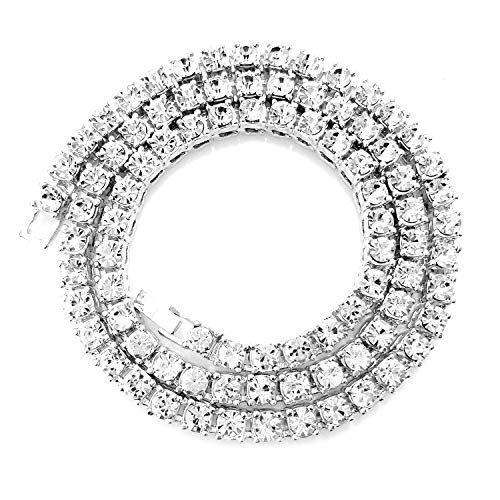
A stone-set chain has individual stones or rhinestones attached to the links. Halukakah is the outlier with stated Italian lab diamonds and VVS clarity. The Gemsme tennis necklaces use round cubic zirconia, while APaztip, HDMENC, IDRUPACE, and DAOYALE describe rhinestone or cubic-zirconia detailing. SOFPLATE specifies glass rhinestones. This distinction matters when the material itself is central to your selection.
A diamond-cut chain uses faceted metal to reflect light without a continuous row of applied stones. That construction appears in other supplied candidates, but the selected products here focus primarily on stone-set tennis or iced-out Cuban designs. If you want a clean, narrow chain rather than a visibly jeweled surface, verify that the listing describes a cut pattern rather than a stone setting.
Match the chain design to the intended look
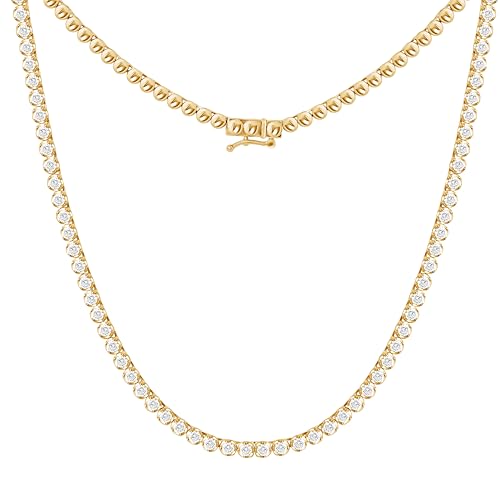
Tennis necklaces create a continuous, refined line around the neck. Gemsme’s 4mm and 6mm options provide two widths, while Luxval offers a 3mm choker-length version. HH BLING EMPIRE combines a one-row tennis treatment with Cuban-link styling, and SOFPLATE uses a heart rhinestone detail in a wider format.
Cuban chains are broader and more graphic. Halukakah, HDMENC, APaztip, IDRUPACE, and DAOYALE all document iced-out or stone-detailed Cuban designs. IDRUPACE adds a KING pendant, while APaztip specifies a dual-lock clasp. These details make the chains read as complete statement pieces instead of simple layering strands.
Check width before choosing length
Width changes the visual weight and how much of the neckline the chain occupies. Luxval’s 3mm and Gemsme’s 4mm tennis design are comparatively restrained. Gemsme’s 6mm chain offers more visible coverage. HDMENC lists 12mm, IDRUPACE lists 13mm, APaztip lists 0.55 inches, and Halukakah lists 14mm. SOFPLATE is especially wide for a tennis format at 10.5mm.
Length affects placement just as much. Luxval starts at 13 inches and includes a 2-inch extender. SOFPLATE lists about 15.83 inches, while Gemsme’s selected sizes are 18 or 20 inches. DAOYALE, APaztip, HDMENC, and IDRUPACE provide multiple longer options. Tie a flexible string around the neck and measure it before selecting a fixed length; this is particularly useful for wide Cuban designs.
The selected products use different construction approaches. Halukakah documents Aerogold plating over its design. Gemsme uses brass with 18K white-gold plating, and Luxval uses brass with 14K gold plating. HH BLING EMPIRE describes silver plating with transparent E-coating. HDMENC, APaztip, IDRUPACE, and DAOYALE describe plated alloy construction.
Those finishes should not be treated as interchangeable with solid precious metal. A plated piece may need different care from a solid-metal piece, and the supplied descriptions do not establish identical long-term behavior. Look for the exact base metal, plating, coating, and any stated skin-contact information. Several selected listings mention lead- or nickel-free construction, but those statements apply to the individual listings and should not be generalized to every chain.
Inspect the closure and included storage
Closure evidence varies. Gemsme’s 4mm design specifies a double-latch box closure, and APaztip specifies a dual-lock clasp. DAOYALE describes its clasp as easy to wear. Other selected listings provide detailed stone or sizing information without naming the clasp. Do not infer a closure type when the listing does not state one.
Storage can also be useful for keeping a plated or stone-set necklace separate from other jewelry. HH BLING EMPIRE, Gemsme, Luxval, and SOFPLATE mention packaging or storage elements, while APaztip documents a PVC storage box and IDRUPACE mentions a metal box. These are included features, not evidence of how the necklace will perform over time.
Use the specifications as a final checklist
Before selecting one of the best diamond chain necklaces, confirm five points: stone type or cut treatment, chain width, finished length, base metal and surface finish, and closure style. Then check whether the design is a tennis chain, Cuban link, pendant-equipped chain, or choker. The most useful comparison is the one that matches those documented details to your intended neckline and styling habits.
Final Recommendation
Halukakah 14mm Lab Diamond Cuban Link Chain ranks first overall in this specification-based comparison under the published weighted criteria.
The final choice among the best diamond chain necklaces depends on the documented features that match your intended use.
Halukakah 14mm Lab Diamond Cuban Link Chain is the highest-scoring returned product and the first overall specification-based choice. Its stated lab-diamond content, VVS-clarity description, prong setting, handmade construction, and 24-inch statement profile give it the most comprehensive technical specification set in this comparison.
For a classic tennis format, Gemsme 6mm 18K White Gold-Plated Tennis Necklace is the more focused alternative, with round cubic zirconia, four-prong settings, and a clearly stated 20-inch length. Choose Gemsme’s 4mm version when a slimmer profile and double-latch box closure matter more. Luxval is the compact choker option, while SOFPLATE offers a distinctive wide crystal format.
Among the top diamond chain necklaces in the Cuban category, HDMENC, APaztip, IDRUPACE, and DAOYALE differ mainly in width, stone detail, pendant treatment, clasp information, and length range. HH BLING EMPIRE is the flexible hybrid because it documents both tennis and Cuban styling. Match those distinctions to the silhouette you want rather than relying on the word “diamond” alone.
Frequently Asked Questions
What are the best diamond chain necklaces for a classic tennis look?
The selected Gemsme necklaces are the clearest classic tennis options. The 6mm version documents round cubic zirconia, four-prong settings, 18K white-gold plating, and a 20-inch length. The 4mm version is slimmer, lists lengths from 16 to 24 inches, and specifies a double-latch box closure. Luxval provides a shorter 3mm, 13-inch design with a 2-inch extender.
Are all diamond chain necklaces in this comparison made with diamonds?
No. The pool includes several documented materials. Halukakah states that it uses Italian lab diamonds, while Gemsme, Luxval, and other tennis designs use cubic zirconia or rhinestones. SOFPLATE specifies glass rhinestones. Always check whether the listing identifies lab diamonds, cubic zirconia, glass, or a diamond-cut metal surface.
Which selected chain has the widest documented profile?
Halukakah lists a 14mm width, making it the widest selected product with a millimeter measurement. IDRUPACE lists 13mm, HDMENC lists 12mm, and SOFPLATE lists 10.5mm. APaztip lists a 0.55-inch width. These proportions indicate statement styling and may sit differently from slimmer tennis chains.
Which chains offer multiple lengths?
HH BLING EMPIRE lists lengths from 16 to 30 inches. APaztip lists 16 to 24 inches, HDMENC and IDRUPACE list 18, 20, and 24 inches, and DAOYALE lists 18 to 26 inches. Gemsme’s 4mm design lists 16 to 24 inches. Luxval instead uses a 13-inch base with a 2-inch extender.
What should be checked before ordering a plated chain?
Confirm the base metal, plating type, width, length, and closure in the specific listing. Plated alloy, brass, and coated silver can have different care requirements, and a documented lead- or nickel-free statement applies only to the product listing that makes it. Also verify whether the chain includes a pendant, since that changes its visual weight and layering flexibility.