Buying Guide
The best diamond choker necklaces in this comparison are fashion-jewelry pieces using cubic zirconia, crystal, or rhinestones rather than documented mined diamonds. That distinction matters when comparing the listings: a solitaire necklace concentrates attention in one pendant, while tennis and multi-row styles distribute sparkle across more of the neckline. The right choice depends on the visual coverage, finish, and fit information that best matches your wardrobe.
Choose the stone layout first
A solitaire is the most focused design. The PAVOI Yellow Gold Solitaire Choker has a documented 6.5mm bezel-set cubic zirconia, while the PAVOI 1.5-Carat Crystal Solitaire Choker lists a larger 7.3mm stone. These designs create one central focal point and can be worn alone or layered with longer chains. The single-stone format is also easier to compare because the listing identifies the stone size and setting.
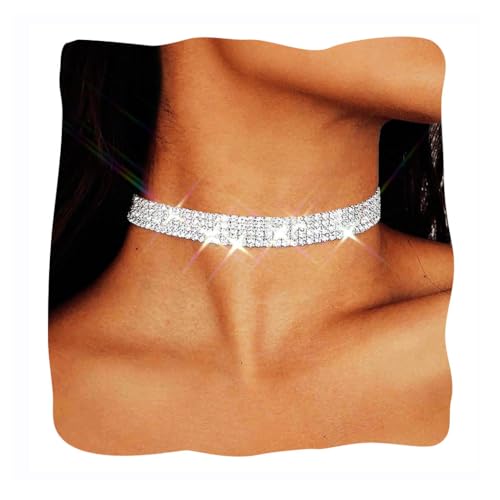
Tennis styles create more continuous sparkle. The Luxval 14K Gold-Plated 3mm Tennis Choker is specified as a 3mm-wide cubic zirconia chain, making it the clearest choice here for a consistent line of stones. Multi-row chokers take that coverage further. Zealmer documents three rows, JAKAWIN documents four, and FdcLixuvol documents three. More rows generally create a broader visual presence, so check whether the intended neckline can accommodate a statement piece.
Compare materials and finishes
The selected listings use several material combinations. Gold-plated brass appears in the Luxval tennis design and in some crystal or rhinestone styles. PAVOI specifies gold plating and gives additional nickel-, lead-, and cadmium-compliance information. Zealmer identifies 18K white gold-plated brass, while silver-toned options may use alloy, brass with silver plating, or crystal and rhinestone components.
A named plating type is useful for comparing appearance, but it does not turn a fashion-jewelry piece into solid gold or sterling silver. If skin sensitivity is a concern, prioritize listings that explicitly document nickel-free, lead-free, hypoallergenic, or similar construction. The evidence varies by product, so do not assume that an unspecified material has the same properties as one with detailed safety information.
Check the actual length and extender
Choker terminology is not standardized across these listings. The listed base lengths range from about 11.8 to 16 inches for the selected products, while extenders range from 2 to 5.9 inches. JAKAWIN’s four-row design has one of the longest stated extensions at 5.9 inches. ACEDRE lists a 31cm body and a 14cm extension, and Cryshimmer lists 12.5 inches plus 5 inches.
The base length is the starting point; the extender determines how much flexibility you have. A 16-inch necklace with a 2-inch extension may sit differently from a 12.4-inch necklace with a 3.74-inch extension, even if both are described as chokers. Measure around the intended part of your neck and compare that measurement with the listed body length. Also consider whether you want a close collar effect or a slightly lower placement.
Match the finish to your wardrobe
Gold-toned styles are represented by the Luxval tennis necklace and the PAVOI solitaire designs. They can coordinate with warm-toned jewelry and provide a softer contrast against dark clothing. Silver styles dominate the rhinestone category, including Zealmer, JAKAWIN, ACEDRE, Ronglry, PINCHUAN, and FdcLixuvol. Silver and clear crystal combinations are repeatedly described for prom, weddings, parties, dates, and formal outfits.
For everyday flexibility, a simple solitaire or a one-row tennis design is easier to combine with different necklines. For event dressing, three-row, four-row, or mixed-style sets offer more visible coverage. The Cryshimmer and PINCHUAN selections also include multiple pieces, which can help coordinate accessories, but they are less focused than a single-necklace purchase.
Follow the documented care guidance
Care information is especially important for plated and rhinestone jewelry. JAKAWIN specifically advises keeping its necklace away from chemicals, high temperatures, water, and impact. That guidance is a useful reminder for similar alloy, crystal, and plated designs, even when another listing does not repeat the same instructions. Store a necklace separately to limit scratching and avoid exposing it to substances that may affect plating or stones.
Do not infer water resistance from a listing that only describes a finish as durable or fade-resistant. Likewise, a hypoallergenic statement addresses the materials named by that listing; it does not establish the same result for every product in the category. Use the supplied care and material information as a comparison aid rather than assuming identical construction across brands.
Final Recommendation
Luxval 14K Gold-Plated 3mm Tennis Choker ranks first overall in this specification-based comparison under the published weighted criteria.
Luxval 14K Gold-Plated 3mm Tennis Choker is the first overall specification-based choice. It combines a clearly stated 3mm cubic zirconia tennis design, 14K gold-plated brass, a 13-inch length, and a 2-inch extender. Its documented lead-free and nickel-free construction adds useful detail for shoppers comparing materials, while the simple continuous profile can work with both formal and casual outfits.
Among the top diamond choker necklaces, the PAVOI Yellow Gold Solitaire Choker is the better fit for a centered pendant, and the PAVOI 1.5-Carat Crystal Solitaire Choker is the more prominent solitaire option. Zealmer and FdcLixuvol suit shoppers seeking three-row coverage, while JAKAWIN is the bolder four-row choice. For variety, Cryshimmer and Ronglry document multiple styling directions, though their formats differ from a single signature necklace.
Before choosing, verify the base length, extension, plating or alloy description, and stone type. The best diamond choker necklaces are not interchangeable: a 12-inch multi-row collar, a 16-inch solitaire, and a 13-inch tennis chain create different proportions on the neck. Use the measurements and construction details to make the final match.
Frequently Asked Questions
Among the best diamond choker necklaces, are these diamond chokers made with real diamonds?
The selected listings describe cubic zirconia, crystal, or rhinestones, including AAAAA cubic zirconia, artificial diamond references, and clear crystal stones. They should therefore be treated as diamond-look fashion jewelry rather than documented natural-diamond jewelry. Check the stone description carefully when comparing the best diamond choker necklaces.
What length should a choker have?
The appropriate length depends on your neck measurement and desired placement. The selected products list base lengths from approximately 11.8 to 16 inches, with extenders adding flexibility. Measure around your neck and compare that result with both the necklace body and extension. A longer extender can help accommodate different fits, but it does not guarantee the same position for every wearer.
Which design gives the most continuous sparkle?
A tennis design gives the most continuous documented stone coverage in this selection. The Luxval 14K Gold-Plated 3mm Tennis Choker is specifically described as a 3mm cubic zirconia tennis necklace. Three-row and four-row rhinestone designs also provide broad visual coverage, but their construction is more layered and statement-oriented.
Are multi-piece choker sets useful?
They can be useful when you want coordinated styling options. Cryshimmer documents a five-piece set, and PINCHUAN also lists a five-piece jewelry set. These formats provide more than one accessory, while a single solitaire or tennis necklace is more focused. Confirm what is included in the package and distinguish the necklace specifications from the other pieces.
How should plated or rhinestone chokers be cared for?
Follow the product-specific instructions, and handle plated, alloy, crystal, and rhinestone jewelry cautiously. JAKAWIN advises avoiding chemicals, heat, water, and impact. Store pieces separately and remove them before activities that may expose them to moisture or abrasion. Claims such as fade resistance or hypoallergenic construction should not be treated as universal care instructions for every necklace.