Buying Guide
The best dining room tablecloths are selected by matching the table, the expected mess level, and the visual role the cloth needs to play. The listings in this comparison cover fabric tablecloths, linen-look polyester, microfiber, cotton-linen blends, faux linen, PU, and PVC vinyl. Those materials do not offer the same feel or care routine, so the right choice depends on which specifications matter most in your home.
Start with the table dimensions
Measure the tabletop before choosing a cover. A tablecloth measurement is not the same as the table measurement: the cloth should extend beyond each edge. The desired drop depends on whether you want a casual, tailored, or more formal look. MIULEE states that its 60 x 84-inch cloth fits tables from 36 x 60 to 48 x 72 inches. HOMOHEINI gives a smaller fit range for its 52 x 70-inch vinyl cover, while JIALE identifies its 55 x 70-inch size for four-to-six-seat tables.
For a longer table, compare the stated size with the table length rather than relying only on seat count. Chassic is explicitly listed for eight-foot rectangular tables and ten to twelve seats at 60 x 120 inches. Tootop measures 60 x 102 inches, making it a middle length among the selected larger rectangles. Obstal lists 60 x 84, 60 x 102, and 60 x 120-inch options, which can simplify matching a plain-color style across different tables.
Choose the protection level
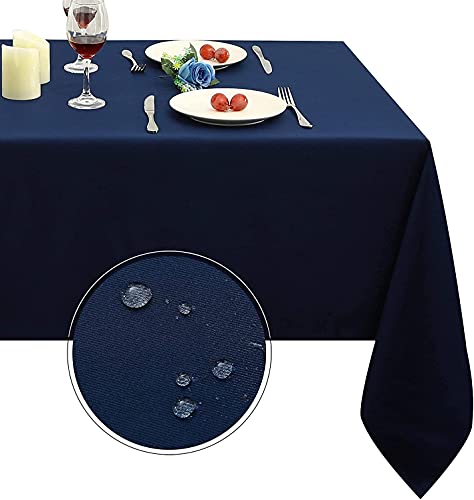
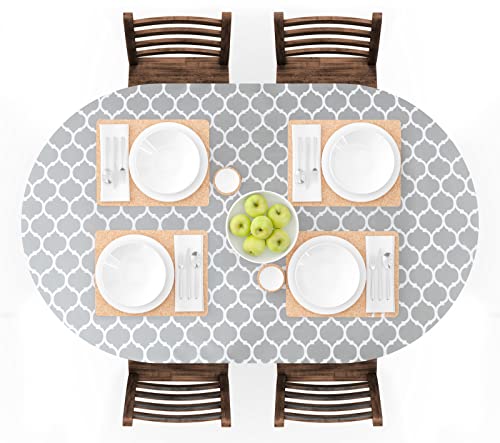
For frequent spills, prioritize wording such as waterproof, water-resistant, spillproof, stain-resistant, or wipe clean. These are listing claims, not independent test results, but they help distinguish the intended use of each product. HOMOHEINI is a practical wipe-clean choice, with a PVC surface described as waterproof, oil-resistant, and stain-resistant. Smiry also emphasizes a waterproof PU surface and damp-cloth cleanup.
Fabric choices can still offer protection. Pureegg lists water-repellent and stain-resistant properties, while JIALE and Obstal describe coated or resistant surfaces. SASTYBALE’s beige jacquard option lists waterproof and stain-resistant properties. If the main concern is protecting the tabletop during meals, these specifications deserve more weight than decorative details alone.
Compare fabric and construction
Cotton-linen blends and linen-look fabrics generally serve shoppers who want visible texture and a softer textile presentation. JIALE and Tootop use cotton-linen descriptions, while Pureegg identifies a linen blend. Chassic uses 100% polyester with a linen look, and MIULEE uses faux linen. These options can suit dining rooms where the cloth is part of the decor rather than only a barrier between food and the tabletop.
Polyester and microfiber can be practical for repeated use. Obstal uses 100% polyester, SASTYBALE uses polyester jacquard, and Softalker identifies 100% microfiber. Vinyl and PU shift the priority toward surface protection and cleanup. Smiry specifies PU with a three-layer thickening technique; HOMOHEINI uses PVC with flannel backing. Consider whether you prefer a fabric hand and drape or a surface that can be wiped after a messy meal.
Match the care instructions to your routine
Care directions vary more than the product titles may suggest. Pureegg, Obstal, SASTYBALE, JIALE, Tootop, and Softalker list machine-wash guidance, generally with a gentle or cold cycle. Some also mention low tumble drying or low-temperature ironing. MIULEE recommends damp-cloth cleaning as well as cold washing, and Smiry emphasizes wiping the surface clean.
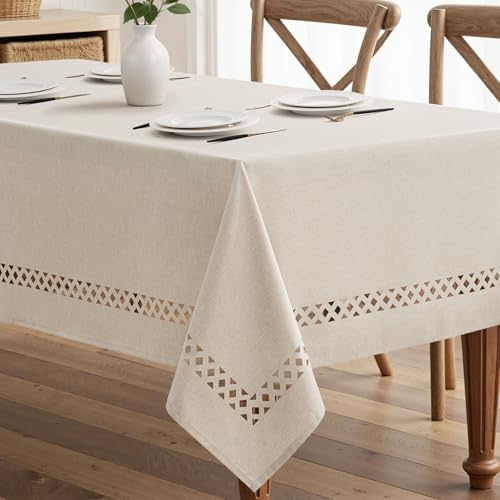
HOMOHEINI is specifically not machine washable and should not be bleached or ironed. That limitation may be acceptable if quick wiping is more useful than laundering. Decorative elements can also affect how a cloth fits your routine: JIALE and Tootop have tassels, while MIULEE has cutouts and SASTYBALE uses a jacquard pattern. Read the care instructions before assuming that every washable-looking tablecloth can be treated identically.
Use design to narrow the shortlist
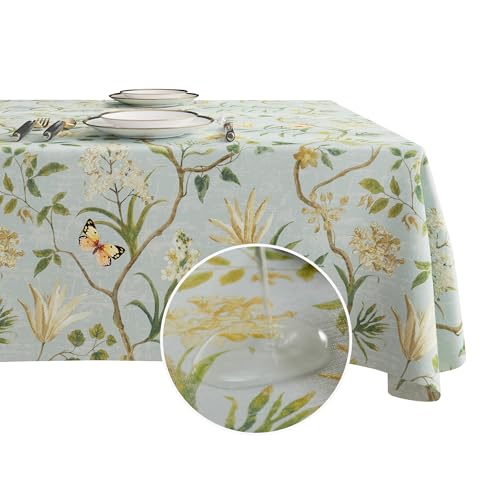
For farmhouse or rustic rooms, JIALE’s tassels and embroidery, Tootop’s geometric design and tassels, and the textured look of Pureegg are documented options. MIULEE offers a geometric cutout border, while SASTYBALE supplies a floral jacquard surface. Smiry uses embossed floral detailing and scalloped edges. Plain navy Obstal is easier to coordinate when the centerpiece, dishes, or room already provide strong pattern.
Outdoor and event use is mentioned for many selected products, including Pureegg, Chassic, Obstal, Tootop, JIALE, and HOMOHEINI. That does not mean every listed material will behave identically outside; it means the public listing identifies those settings. For patios, picnics, or craft areas, prioritize protection and cleaning. For a formal indoor meal, fabric appearance and edge details may matter more.
Final recommendation
HOMOHEINI Leaves Vinyl Tablecloth ranks first overall in this specification-based comparison under the published weighted criteria.
The final choice among the best dining room tablecloths depends on the documented features that match your intended use.
HOMOHEINI is the first overall specification-based choice because it combines strong documented spill protection, wipe-clean care, flannel backing, and clear smaller-table fit guidance. The top dining room tablecloths vary by use, however: choose Chassic for an eight-foot table, Smiry for wipe-clean PU, MIULEE for a decorative cutout border, or Obstal for plain-color flexibility. Confirm the tabletop dimensions and desired drop before ordering any option.
Frequently Asked Questions
Among the best dining room tablecloths, how should I choose the right tablecloth size?
Measure the tabletop length and width, then add the desired drop on both sides. Use the listing’s stated fit range where available. MIULEE, HOMOHEINI, and Chassic provide useful size guidance for different table lengths and seating capacities. Do not assume that a four-to-six-seat label fits every table in that category.
Are fabric tablecloths waterproof?
Some selected fabric tablecloths list waterproof, water-resistant, spillproof, or water-repellent properties, but the claims differ by product. Pureegg, JIALE, Obstal, SASTYBALE, and Softalker describe protective finishes or resistance. Tootop’s supplied evidence emphasizes fabric construction and wrinkle resistance rather than waterproofing, so check the individual specification before choosing it for spill-heavy use.
Which option is easiest to clean?
HOMOHEINI is designed for wiping with a damp cloth and is not machine washable. Smiry also emphasizes wipe-clean care. Several fabric alternatives list machine washing, including Pureegg, Obstal, JIALE, Tootop, and Softalker. Choose based on whether immediate surface cleanup or laundering convenience better matches your routine.
Can these tablecloths be used outdoors?
Many selected listings identify outdoor settings such as patios, picnics, camping, parties, or barbecues. Pureegg, Chassic, Obstal, Tootop, JIALE, and HOMOHEINI are among those that mention indoor and outdoor use. Outdoor suitability in a listing does not replace checking the size, care directions, and protection claims for your specific setting.
What is the main difference between vinyl and fabric options?
Vinyl and PU surfaces generally prioritize wipe-clean spill protection, while cotton-linen, polyester, microfiber, and faux-linen options emphasize a textile look and washable care. HOMOHEINI represents the vinyl format, while Pureegg, MIULEE, Obstal, and Softalker represent fabric-oriented alternatives. The best dining room tablecloths choice depends on whether appearance, laundering, or rapid cleanup is your main priority.