Buying Guide
Choosing among the best dishwasher-safe sauté pans starts with more than the dishwasher symbol. A sauté pan needs enough depth for liquids and enough flat surface for browning, while its materials, handle design, lid, and cooktop compatibility determine how broadly it can be used. The products here are compared from public listing specifications and feature descriptions, not from hands-on testing.
Start with capacity and shape
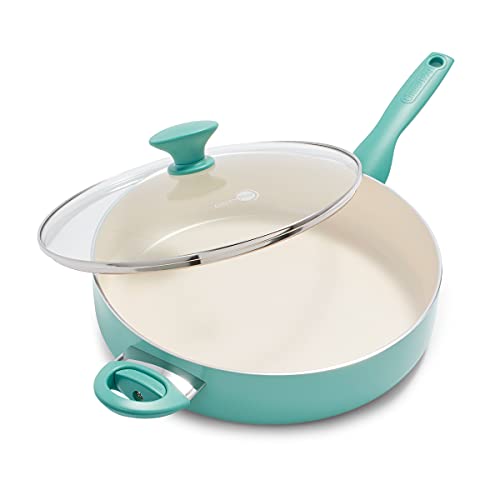
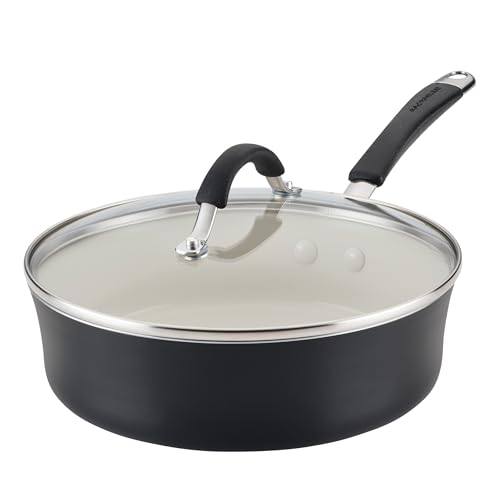
Capacity should match the meals you normally prepare. A 3-quart pan such as the Rachael Ray Cucina is more compact for smaller portions, while 5-quart models from Calphalon, GreenPan, Redchef, T-Fal, COOKER KING, and Kikcoin are positioned for family cooking or batch preparation. The 5.5-quart Cuisinart adds capacity with straight high sides and a flat cooking surface. Farberware increases the room to 6 quarts, and HexClad goes substantially larger at 10 quarts.
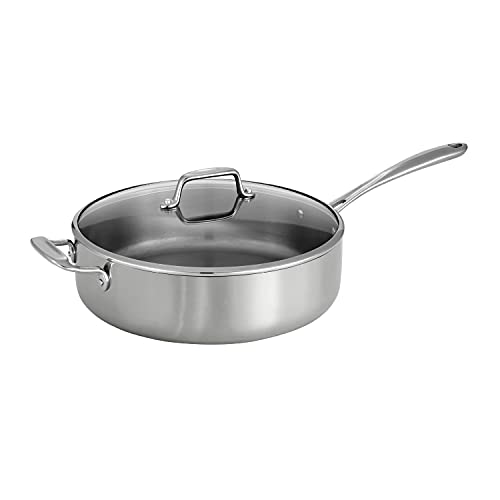
A wider, flatter base is useful when sautéing ingredients in a single layer. Higher sides help contain sauces, braises, and frying splatter. The listing for the Cuisinart specifically calls out straight high sides and a flat cooking surface, while the COOKER KING hybrid model describes a high-wall design. HexClad is described as suitable for one-pot and batch cooking. These details are more useful than diameter alone because they explain how the pan is intended to be used.
Match the pan to your cooktop
Induction compatibility is a major dividing line. The Cuisinart, Redchef, Kikcoin, COOKER KING hybrid, and HexClad listings explicitly support induction, along with gas and electric or other stated cooktops. The GreenPan Rio, T-Fal models, and Rachael Ray Cucina explicitly exclude induction. When a listing does not clearly state induction compatibility, as with Calphalon and Farberware here, do not assume that it will work on an induction surface.
If you use a glass or ceramic cooktop, check the pan’s base and weight as well as its listed compatibility. The supplied evidence confirms broad compatibility for several models, but it does not provide independent information about how each base behaves on a particular stove. A pan that works across multiple cooktop types may be the simpler choice for a mixed or changing kitchen.
Compare surface materials
Nonstick, ceramic, hybrid, and uncoated stainless steel surfaces have different documented characteristics. Ceramic models such as GreenPan, Redchef, Rachael Ray, and Kikcoin make coating-composition claims and are positioned around easy release and cleanup. Hard-anodized nonstick models from Calphalon, T-Fal, and Farberware emphasize durable construction or nonstick interiors. Hybrid pans from HexClad and COOKER KING combine a laser-etched or textured surface with stainless steel and a nonstick component.
Cuisinart uses a stainless steel cooking surface, while the listing says it does not discolor, react with food, or alter flavors. Stainless steel is therefore a reasonable direction for shoppers who prefer a non-coated cooking surface, but the supplied data does not establish that it releases food as easily as the nonstick options. Choose based on the cooking surface you prefer rather than treating one material as universally better.
Check oven limits carefully
Oven specifications can apply to the pan, lid, or both. Calphalon lists the pan as oven safe to 450°F. T-Fal’s hard-anodized model lists 400°F for the pan and 350°F for the lid. Rachael Ray lists the pan to 400°F and the lid to 350°F. GreenPan lists oven and broiler use to 350°F. HexClad lists 900°F for the pan and 400°F for the tempered glass lid, while COOKER KING gives the same 900°F pan and 400°F lid distinction.
Redchef lists an 842°F oven limit for the pan, but the supplied listing does not provide separate lid or handle limits. Kikcoin says the skillet with lid is oven safe without a temperature. For any stovetop-to-oven recipe, use the lower limit when a lid or handle has its own restriction, and follow the manufacturer’s care instructions.
Look at handles and lids
A helper handle can make a full sauté pan easier to lift, especially in the 5- to 10-quart range. It is documented on Cuisinart, GreenPan, Redchef, T-Fal, and Farberware. Calphalon lists stay-cool stainless steel handles, while GreenPan and Rachael Ray describe stay-cool or silicone-grip handle designs. COOKER KING and HexClad include side-handling features in their descriptions, but the evidence is less detailed about specific handle materials.
Glass lids are common across the selected products and can help monitor cooking without removing the cover. Cuisinart adds a flavor-lock lid, and several listings mention vented, tempered, or shatter-resistant glass. A lid is especially useful for simmering, braising, and retaining moisture, but remember that its oven limit may be lower than the pan’s.
Treat dishwasher-safe claims as a convenience feature
Dishwasher-safe construction can simplify cleanup, but the listings differ in how specifically they describe it. Calphalon, GreenPan, Redchef, Rachael Ray, T-Fal, Farberware, Kikcoin, and COOKER KING explicitly identify dishwasher-safe care for the pan. Cuisinart does the same for its cooking surface and pan. HexClad is described as dishwasher-friendly, and the remaining selected stainless models also carry dishwasher-safe claims.
Dishwasher compatibility does not remove the need to check the care instructions for coatings, lids, handles, and detergents. Since care directions can vary by component, read the included instructions before placing a lid or coated pan in the dishwasher.
Final Recommendation
HexClad 10-Qt. Hybrid Deep Sauté Pan ranks first overall in this specification-based comparison under the published weighted criteria.
Calphalon Hard-Anodized 5-Qt. Sauté Pan is the first overall specification-based choice among the best dishwasher-safe sauté pans because it combines a practical 5-quart capacity, dishwasher-safe pan and lid, even-heating hard-anodized aluminum, stay-cool handles, and a 450°F oven limit. It is followed by HexClad for very large batch cooking and Cuisinart for a classic induction-ready stainless steel design.
For induction kitchens, Redchef, Kikcoin, COOKER KING, HexClad, and Cuisinart have the clearest compatibility statements in this comparison. For ceramic-coated cooking, GreenPan, Redchef, Rachael Ray, and Kikcoin provide the most directly documented options. Shoppers seeking the top dishwasher-safe sauté pans for high-heat oven transitions should compare the pan and lid limits separately rather than relying on a single headline temperature.
The right choice ultimately depends on capacity, cooktop, surface preference, and how often you use the dishwasher. A 3-quart pan suits smaller portions, while the 6- and 10-quart options are better aligned with batch cooking. Review the product instructions for any care restrictions before purchase.
Frequently Asked Questions
What makes a sauté pan different from a frying pan?
A sauté pan generally combines a broad, flat cooking surface with deeper, straighter sides. That shape can accommodate sauces, braises, simmering liquids, and larger quantities while still providing room for sautéing. The Cuisinart listing specifically describes straight high sides and a flat cooking surface, while COOKER KING describes a high-wall design. Product naming varies, so review the stated capacity and shape rather than relying only on the title.
Are dishwasher-safe sauté pans also safe for the oven?
Dishwasher safety and oven safety are separate specifications. The selected pans list different oven limits, and lids often have lower limits than the pan. For example, T-Fal lists 400°F for the pan and 350°F for the lid, while HexClad lists 900°F for the pan and 400°F for its tempered glass lid. If the listing does not provide a temperature, as with Kikcoin, consult the manufacturer’s instructions before using it in the oven.
Which of the best dishwasher-safe sauté pans work with induction?
Cuisinart, Redchef, Kikcoin, COOKER KING’s hybrid model, and HexClad explicitly document induction compatibility. GreenPan Rio, both selected T-Fal models, and Rachael Ray Cucina explicitly exclude induction. Calphalon and Farberware do not state induction compatibility in the supplied evidence, so they should not be treated as confirmed induction choices without further documentation.
Is ceramic nonstick the same as traditional nonstick?
No. Ceramic nonstick and conventional nonstick are different surface categories, even though both are marketed for food release and easier cleanup. GreenPan, Redchef, Rachael Ray, and Kikcoin identify ceramic coatings, while Calphalon, T-Fal, and Farberware describe nonstick interiors without identifying them as ceramic. Hybrid products such as HexClad and COOKER KING combine stainless steel with a nonstick component.
What capacity is practical for family cooking?
A 5-quart pan is a versatile middle ground for many family meals, and that size appears across several selected models. A 3-quart pan is more compact, while 6 quarts offers extra room and 10 quarts is intended for especially large batches. Capacity alone does not determine usable space, so also consider the pan’s dimensions, side height, lid, and the available storage area.