Buying Guide
Choosing the best duck dry cat food starts with identifying what “duck” means in the recipe. Some products name duck as the first ingredient or describe it as the single animal protein. Others combine duck with cod, herring, quail, turkey, or chicken. Neither design is automatically right for every cat, but the distinction matters if you are trying to simplify the protein profile or avoid a particular poultry ingredient.
This comparison uses public listing data only. The rankings consider recipe identity, stated nutritional coverage, ingredient exclusions, digestive features, and functional nutrients. They do not represent feeding trials, palatability testing, veterinary endorsement, or customer-opinion analysis.
Check how prominently duck appears
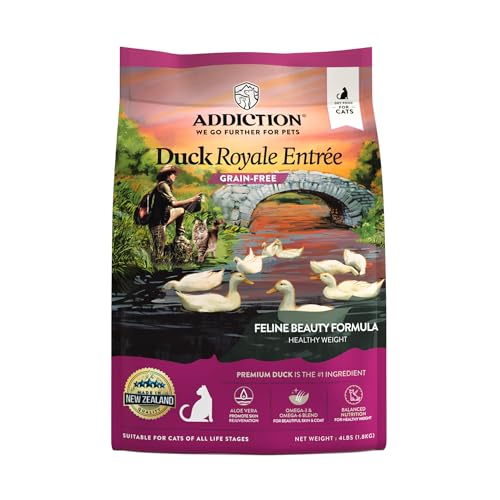
A duck-first recipe gives duck a stronger position in the product description than a formula where duck is one item in a larger poultry blend. Blue Buffalo Wilderness, Blue Buffalo Basics, Nulo Freestyle Indoor, and Dr. Elsey’s identify duck prominently. Natural Balance goes further by describing duck as the single animal protein, while Addiction identifies cage-free New Zealand duck as its central protein. These descriptions can help narrow the field, but they do not establish that a cat will tolerate or prefer a particular recipe.
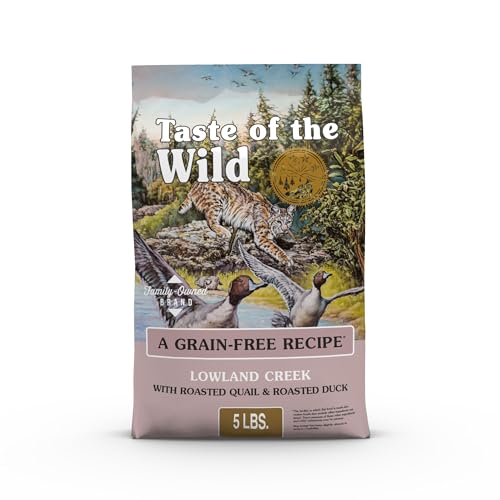
Some formulas intentionally combine proteins. Taste of the Wild Lowland Creek uses roasted duck and quail; Nulo pairs duck with cod; Farmina combines duck and herring; and Birdie & Louie lists duck meal with herring meal. A blend may offer broader ingredient variety, while a single-animal-protein approach may be easier to evaluate when you are tracking dietary exposures. Read the complete package ingredient panel before making a restricted-diet decision.
Match nutritional coverage to your cat’s life stage
Nutritional adequacy and life-stage language should be checked separately from the recipe name. Addiction states that its Duck Royale food is complete and balanced for all life stages. Farmina’s listing says its recipe meets AAFCO standards for all life stages, and Birdie & Louie describes its formula as complete and balanced for all stages. Those statements make these options more flexible for households with kittens, adults, or seniors, subject to your veterinarian’s advice.
Other products are more specifically positioned for adult cats. Natural Balance describes complete nutrition for adults, while both Blue Buffalo formulas are presented for adult feeding. Nulo Freestyle Indoor is aimed at adult indoor cats. Dr. Elsey’s listing emphasizes high protein for all cats but supplies less explicit life-stage information in the evidence provided here. If you are feeding a kitten, pregnant cat, or cat with a diagnosed condition, do not infer suitability solely from the presence of duck; verify the product’s current adequacy statement.
Evaluate grain-free and exclusion claims carefully
Many selections here are grain free. Open Farm also excludes artificial flavors, preservatives, and additives and says it contains no rendered poultry or meat meals. Blue Buffalo Wilderness and Basics exclude corn, wheat, and soy, while Nulo Freestyle Indoor excludes grain, corn, wheat, soy, rice, white potato, and tapioca.
An exclusion is useful only when it matches your cat’s needs. Grain-free does not automatically mean more suitable, and a recipe with no chicken or poultry by-product meals is not the same as a veterinary elimination diet. Ingredient sensitivities can involve specific proteins, cross-contact, or an ingredient not mentioned in a short listing. For persistent digestive or skin symptoms, ask a veterinarian before changing foods repeatedly.
Look for digestive-support features
Digestive claims differ in specificity. Addiction lists flaxseed and prebiotics. Nulo includes prebiotic fibers and BC30 probiotics. Taste of the Wild identifies probiotics, prebiotics, and antioxidants. Natural Balance highlights easily digestible ingredients and green peas as a natural fiber source. Farmina connects pumpkin with digestive health, while Birdie & Louie includes probiotics.
These are product features, not guarantees of an individual response. Introduce a new kibble gradually and monitor appetite, stool quality, and hydration. Dry food supplies little moisture compared with wet food, so access to fresh water remains important. If your cat has vomiting, diarrhea, weight change, or a diagnosed gastrointestinal condition, product selection should be guided by professional advice rather than a marketing claim.
Consider protein and functional nutrients together
A protein percentage can be informative when it is actually supplied. Taste of the Wild lists 36% protein, Dr. Elsey’s emphasizes that more than 90% of its protein is animal based, and Nulo reports 82% animal-based protein. These figures are not directly interchangeable: total protein and the share of protein from animal sources describe different things.
Functional additions may also help you compare otherwise similar recipes. Nulo lists taurine, vitamin A, amino acids, omega 3 and omega 6 fatty acids, biotin, zinc, and copper. Blue Buffalo uses LifeSource Bits and includes omega fatty acids. Open Farm adds pumpkin and dandelion greens. Farmina includes pumpkin and describes natural antioxidants. Birdie & Louie lists taurine, probiotics, vitamins, minerals, and superfoods. These details support specific formulation distinctions, but they should not be treated as proof of a medical outcome.
Bag size affects storage and freshness. The selected products range from compact two-pound packaging to larger 11-pound bags. A large bag may be practical for multiple cats, while a smaller bag can reduce the risk of keeping food open for too long when one cat eats slowly. Birdie & Louie specifically describes an easy-seal bag, and freshness-preserving storage is useful for any dry kibble.
Compare the feeding directions on the current package rather than estimating portions from bag size. Calorie density, cat size, activity, age, and whether wet food is also fed all affect the appropriate serving. Store kibble in a cool, dry place and keep the package information available in case your veterinarian needs the exact formula details.
Final Recommendation
Nulo Freestyle Indoor Duck & Cod ranks first overall in this specification-based comparison under the published weighted criteria.
The final choice among the best duck dry cat food depends on the documented features that match your intended use.
Open Farm Farmstead Duck Kibble is the highest-scoring returned product and the first overall specification-based choice in this comparison. It combines a complete-and-balanced statement with humanely raised duck, traceable ingredients, functional produce, and exclusions for several commonly avoided ingredients. Its evidence is especially useful for shoppers who want more sourcing detail rather than a simple duck flavor label.
Natural Balance Duck & Green Pea is a strong alternative for adult cats when single-animal-protein positioning and a simplified recipe are priorities. Addiction Duck Royale is the more flexible all-life-stage pick on the supplied evidence, while Nulo Freestyle Indoor is a compelling option for adult indoor cats seeking a protein-forward blend with probiotics and prebiotic fibers. Farmina Pumpkin Duck and Taste of the Wild Lowland Creek suit different preferences: the former emphasizes pumpkin and all-life-stage coverage, while the latter provides a broader poultry blend with a stated protein level and multiple digestive features.
Blue Buffalo Wilderness and Blue Buffalo Basics offer duck-first adult formulas in larger bags, with Basics focusing more directly on skin and stomach care. Dr. Elsey’s stands out for animal-protein emphasis, but its supplied listing leaves more questions about life-stage coverage. Birdie & Louie rounds out the top 10 with an all-life-stage statement, duck meal, herring meal, taurine, and probiotics. These are the top duck dry cat food candidates here by documented specifications, not by hands-on performance or customer sentiment.
Before buying, confirm the current package’s adequacy statement, ingredient panel, feeding directions, and any veterinary restrictions. A gradual transition is generally more practical than an abrupt switch, and a cat with a known food allergy or medical condition may need a professionally selected diet.
Frequently Asked Questions
What should I check when comparing the best duck dry cat food?
Start with the exact role of duck in the formula: single animal protein, first ingredient, or part of a poultry blend. Then check whether the package states complete and balanced nutrition for your cat’s life stage. Review grain, soy, corn, potato, poultry by-product, and other exclusions only in relation to your cat’s known needs. Finally, compare documented features such as probiotics, prebiotics, fiber, taurine, omega fatty acids, and bag size. Do not rely on the recipe name alone, because a duck label does not establish a specific protein percentage, calorie level, or medical suitability.
Is a duck-and-herring or duck-and-quail recipe still duck dry cat food?
Yes, when the product is a dry kibble and duck is an identified ingredient or featured protein. Farmina’s Pumpkin Duck recipe includes duck and herring, Taste of the Wild Lowland Creek includes roasted duck and quail, and Birdie & Louie uses duck meal and herring meal. These are legitimate duck-containing dry foods, but they are not single-protein recipes. If you are trying to avoid another protein, inspect the full ingredient list and consult a veterinarian for an elimination-diet plan.
No. Grain-free is a design characteristic, not a universal quality judgment or guarantee of improved health. Several selected products exclude grains, but they use different combinations of peas, potatoes, pumpkin, vegetables, or other ingredients. The appropriate formula depends on the cat’s complete diet, health history, life stage, and tolerance. Ask a veterinarian before choosing grain-free food for a suspected sensitivity or a diagnosed condition.
How should I transition my cat to a new duck kibble?
Use a gradual change rather than replacing the old food in one meal. Increase the new food over several days while observing appetite, stool, and general tolerance. Keep fresh water available, measure portions according to the current package directions, and avoid changing several diet variables at once if you are trying to identify a response. Contact a veterinarian if your cat refuses food, develops persistent digestive symptoms, or has a known condition requiring therapeutic nutrition.
Does a high animal-protein claim tell me everything about a kibble?
No. Dr. Elsey’s, Nulo, and Taste of the Wild provide useful protein-related details, but total protein, animal-based protein share, ingredient order, calorie density, and nutritional adequacy are different pieces of information. A high-protein claim should be considered alongside life-stage coverage, the complete ingredient panel, taurine and other required nutrients, and your cat’s individual needs. The supplied listing information supports comparison, but it cannot replace the current package label or veterinary guidance.