Buying Guide
The best embroidered aprons are not all built for the same job. Some prioritize hand-finished floral decoration, while others use stitched names or logos on workwear intended for kitchens, cafés, studios, or workshops. Start by deciding whether the apron is mainly a protective layer, a personalized gift, a heritage-style garment, or a decorative half apron. Then compare the specifications that affect daily use: embroidery placement, coverage, adjustment points, pocket design, fabric, and care.
Choose the embroidery type
The listings in this comparison document three main approaches. Hand-embroidered floral aprons, such as Embroidery NTA and Cuitáxi, emphasize artisan pattern work and cultural or decorative character. MXArtsCrafts also identifies local artisan production and traditional Mexican styling. These designs can make the apron itself part of the outfit, making them suitable for gifting, hosting, or cooks who want a visually distinctive garment.
Personalized aprons use stitched names, titles, initials, or other text. Lightfire Printing, PLACE4PRINT, and TEEAMORE all describe custom embroidery rather than a printed surface. That distinction matters when shoppers want a professional name apron or a gift with a specific message. However, the supplied listings do not provide independent durability testing, so the comparison treats the embroidery claims as listing specifications rather than verified performance results.
Novelty designs take a different route. Miracu and Fairy’s Gift describe embroidered phrases on ruffled cotton aprons. They are a fit for casual cooking, entertaining, and humorous gifts, but their decorative styling may not suit a uniform or workshop setting.
Match coverage to the task
Full-bib aprons generally offer more upper-body coverage than waist aprons. Embroidery NTA lists a 35.5-inch overall length and an 11-inch chest width, while Miracu and Fairy’s Gift provide 24-by-34-inch-class dimensions. The personalized chef and workwear listings describe bib-style construction, long ties, or lengths around 32 to 34 inches. These details give a useful starting point, but a shopper should still compare the product measurements with their own torso and waist dimensions.
Adjustability is especially important when the listing gives only one-size or standard sizing. Look for an adjustable neck strap, long waist ties, or adjustable hardware. MXArtsCrafts specifies an S-to-L fit, while the other selected products use one-size, standard, or adjustable descriptions. Cuitáxi documents an adjustable fit, and the TEEAMORE crossback model uses over-the-shoulder straps rather than relying on a neck strap alone.
A waist apron serves a narrower purpose. It can protect the lower front of clothing while leaving the upper body uncovered, and it may feel less substantial for tasks involving splashes or flour. The selected top 10 focuses mainly on bib and full-front designs because they provide more complete documented coverage. Buyers wanting a shorter server-style format should verify that the intended task does not require bib coverage.
Evaluate pocket layout
Pocket count alone does not tell the whole story. Deep pockets, compartments, and loops can be more useful than several shallow openings. Cuitáxi specifically describes deep pockets for phones, recipe cards, utensils, and seasoning packets. The TEEAMORE crossback apron includes two chevron front pockets and a towel loop, making it particularly practical for food-service routines. The cotton duck workwear model goes further with a kangaroo-style compartment pocket, tool loop, and multiple sections.
For home cooking, two front pockets may be enough for a phone, recipe card, pen, or small utensil. Embroidery NTA, Miracu, Fairy’s Gift, PLACE4PRINT, and other selected models document two pockets. Keep pocket placement in mind when bending or moving around a counter; the supplied evidence confirms storage features but does not report hands-on comfort or pocket security testing.
Compare fabrics and care
Fabric influences weight, feel, structure, and maintenance, but the listings do not provide a common laboratory standard. Embroidery NTA lists a linen, viscose, and cotton blend and describes it as breathable, absorbent, and fast drying. The 100% cotton options include the 9.4-ounce TEEAMORE crossback apron, the 7-ounce TEEAMORE personalized apron, and the 12-ounce cotton duck workwear apron. Those weights help distinguish lighter everyday cotton from heavier utility fabric.
Lightfire Printing describes stain-resistant fabric and machine washing, while MXArtsCrafts provides handwash or cold-machine-wash guidance and advises against bleach. Miracu advises against dryer, spin-dry, and dry-cleaning, and Fairy’s Gift recommends hand washing and hanging to dry. These care differences can influence ownership convenience. If frequent washing is expected, prioritize a listing with explicit machine-wash instructions rather than assuming all cotton or blended aprons can be treated alike.
Consider the work environment
For home baking, floral linen or novelty cotton can provide the desired mix of appearance and basic protection. For professional kitchens, cafés, or catering, the crossback TEEAMORE apron is more specifically documented for long shifts and service work. Its shoulder straps, cotton twill, towel loop, and pockets align with that use. Lightfire Printing and PLACE4PRINT are more flexible choices when a name or title is important.
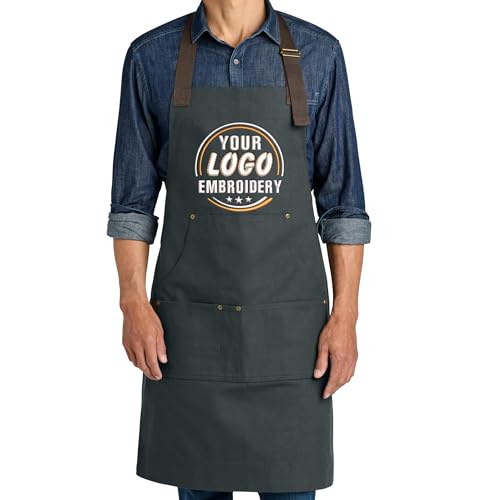
The TEEAMORE cotton duck apron is the clearest workshop option. Its 12-ounce fabric, 34-inch length, tool compartments, utility loop, brass rivets, and double-needle topstitching are documented for builders, woodworkers, barbers, artisans, and other demanding environments. It may be unnecessarily substantial for someone who only needs a light kitchen layer, but its specifications support heavier-duty positioning.
Check personalization details before ordering
Custom products require more than choosing a color. Confirm the text, spelling, thread color, placement, and any available font or line limits shown on the live listing. PLACE4PRINT describes name personalization, while the other custom options mention names, initials, titles, logos, or custom text. The evidence supplied here does not establish turnaround times, proofing procedures, or customization limits beyond what each listing states, so those details should be confirmed before purchase.
Final Recommendation
TEEAMORE Custom Crossback Cotton Twill Apron ranks first overall in this specification-based comparison under the published weighted criteria.
The final choice among the best embroidered aprons depends on the documented features that match your intended use.
TEEAMORE Custom Embroidered Logo Text Apron with Pockets is the highest-scoring returned product and the first overall specification-based choice. Its crossback straps, 9.4-ounce cotton twill, two pockets, towel loop, and documented professional uses make it the most balanced pick for regular kitchen or food-service work.
Among the top embroidered aprons, Lightfire Printing is a strong personalized alternative because it combines stitched custom text with stain-resistant fabric, long ties, and machine-wash care. PLACE4PRINT is similarly practical for gifts, students, and home chefs. For decorative artisan character, Embroidery NTA and Cuitáxi provide the clearest hand-embroidered floral or heritage presentation. MXArtsCrafts adds a colorful Mexican design with more explicit size and washing guidance.
Choose the TEEAMORE cotton duck model when tool storage and heavier coverage matter more than a lightweight feel. For humorous gifting, Miracu and Fairy’s Gift offer embroidered phrases, ruffles, pockets, and adjustable ties. The final decision should follow the task: compare measurements for fit, pocket structure for storage, fabric and care instructions for maintenance, and the documented embroidery type for the look or personalization you want.
Frequently Asked Questions
What should I look for in the best embroidered aprons?
Look for embroidery that matches your purpose, an adjustable neck or shoulder system, waist ties that provide a workable fit, and pockets sized for the items you carry. Also compare documented measurements, fabric composition or weight, and care instructions. A hand-embroidered linen style may suit gifting or hosting, while a personalized cotton twill or cotton duck apron may be more appropriate for repeated work.
Are personalized embroidered aprons different from printed aprons?
The selected personalized listings describe names, titles, initials, logos, or custom text as stitched embroidery rather than printed decoration. That gives the design a different surface treatment, but this comparison does not independently test longevity. Check the live product page for the available text, thread color, font, placement, and customization limits before ordering.
Which selected apron is best for a professional kitchen?
The TEEAMORE Custom Embroidered Logo Text Apron is the most specifically documented for long shifts, kitchens, cafés, bakeries, restaurants, and catering. Its crossback straps, 9.4-ounce cotton twill, two front pockets, and towel loop support a work-focused setup. Lightfire Printing and PLACE4PRINT are alternatives when personalized names or titles are the main priority.
Which embroidered apron is best for workshop tasks?
TEEAMORE Custom Workwear Apron with Pockets Logo Text Embroidered is the clearest workshop choice. The listing specifies 12-ounce cotton duck fabric, a compartmentalized kangaroo pocket, a utility loop, brass hardware, double-needle topstitching, and a 34-inch length. It is described for builders, woodworkers, barbers, artisans, kitchens, and outdoor projects.
Do embroidered aprons need special washing?
Care varies by listing. Lightfire Printing is described as machine washable, MXArtsCrafts provides handwash or cold-machine-wash guidance, and Fairy’s Gift recommends hand washing and hanging to dry. Miracu advises against dryer, spin-dry, and dry-cleaning. Follow the specific care directions for the selected apron rather than relying only on its fiber content.