Buying Guide
The best enduro powersports handguards should be evaluated as a fitment and protection system, not simply by appearance. A useful comparison starts with the handlebar diameter, then checks how the guard mounts around the controls, what materials form the shield and backbone, and whether the design is open or more enclosing. The listings in this guide document several different approaches, so the right specification profile depends on the motorcycle and the intended terrain.
Start with handlebar diameter
Handlebar diameter is the first compatibility screen. The Enduro Engineering Evolution 2 model at [B079WH9ZFJ] is listed for 7/8-inch bars, while the Evolution 2 at [B07HF64VJ3] is specified for 1-1/8-inch ProTaper, Neken, and Renthal handlebars. These are not interchangeable descriptions, so measure or confirm the bar section used by the mounting hardware before selecting either model.
Several universal listings cover both common sizes. Power Parts at [B0D9HWM1XV] and JFG RACING at [B07M9TKZ6L] state compatibility with 7/8-inch and 1-1/8-inch handlebars. That wider stated range can simplify initial screening, but it does not remove the need to check the clutch, brake, cables, controls, and available space on the specific motorcycle. PowerMotor at [B0CX4YTMMW] instead provides a detailed KTM-family application range, which may be more useful than a broad universal label for those listed models.
Compare shield coverage and design type
Open guards are a recurring design in this category. Acerbis X-Ultimate at [B06WWK1ZDF] is identified as an open handguard and has removable upper and lower lids. PROOTOM at [B0BDF1898V] also uses an open design, with the listing emphasizing maximum ventilation. PowerMotor likewise describes an open design attached near the levers. These layouts can prioritize airflow and a less enclosed profile, but the supplied listings do not provide standardized coverage measurements, so avoid assuming that one open guard shields the same area as another.
The Enduro Engineering EVO 2 Composite Mount at [B07CHRY1KP] is described as a roost deflector with coverage against mud, rocks, and flying debris. Its shape is presented as protective without being bulky, and the top and bottom rubber edges are said to flex under impact. Power Parts at [B0D9HWM1XV] uses a wide design and lists protection against falls, stones, and branches. These statements are useful for understanding intended protection, but they are product-description claims rather than independent test results.
Inspect construction details
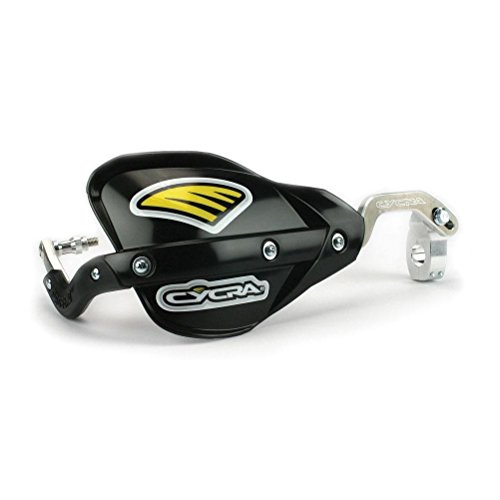
Material information helps distinguish the options. The EVO 2 lists injected-molded polypropylene for the outer shield and a composite mounting arm. JFG RACING specifies 6061 aluminum with a PP plastic outer shield and adds a double-layer top. HIYOYO at [B08RX39DYG] describes an aluminum insert with PP plastic. Power Parts lists robust plastic with an aluminum bracket, while Cycra Probend at [B002CUQBP4] identifies 6061 aluminum and includes alloy handguards, plastic abrasion guards, plastic shields, alloy bar ends, and mounting hardware.
A metal backbone and plastic shield do not automatically indicate identical behavior. Bracket shape, mounting location, control placement, and available clearance can affect whether a system suits a particular bar and motorcycle. The evidence supports comparing the documented material combinations, not claiming a universal durability ranking.
Check levers, cables, and mounting space
Handguards occupy the same area as brake and clutch controls, so clearance deserves its own check. The EVO 2 listing specifically says its composite mounting arm offers more clearance for hands and levers. JFG RACING and HIYOYO mention room for cables or brake lines, and PowerMotor also states that its design leaves space for cables and brake lines. Those details are more useful than a generic universal claim because they address the control area directly.
Cycra’s system is designed for Fasst Flexx Bars, which makes its handlebar relationship especially important. Acerbis describes mounting behind the pump, while PROOTOM lists collar-based mounting and two horizontal positions. The selected Enduro Engineering models provide separate 7/8-inch and 1-1/8-inch fitment references, so the bar-size distinction should be checked before installation.
Decide how much ventilation you need
Ventilation features are clearest on Acerbis X-Ultimate and PROOTOM. Acerbis documents removable upper and lower lids, allowing the listed ventilation configuration to change. PROOTOM states maximum ventilation and two horizontal adjustment positions. PowerMotor’s open design also points toward an airflow-oriented layout. By contrast, the Enduro Engineering EVO 2, JFG RACING, Power Parts, and HIYOYO listings emphasize shielding and materials without documenting removable panels or adjustable airflow.
More ventilation is not automatically better for every ride. Consider whether the guard is intended to deflect brush, rocks, mud, wind, or a combination of those conditions. Because the supplied data does not use a common test method, compare the stated design features directly rather than treating ventilation language as a measured performance result.
Final recommendation
Enduro Engineering EVO 2 Composite Mount ranks first overall in this specification-based comparison under the published weighted criteria.
Enduro Engineering EVO 2 Composite Mount at [B07CHRY1KP] is the highest-scoring returned product and the first overall specification-based choice among the best enduro powersports handguards. Its documented combination of polypropylene shields, a composite mounting arm, flexible edges, debris coverage, and hand-and-lever clearance gives it the most complete evidence profile in this comparison.
The top enduro powersports handguards depend on the motorcycle’s bar size and control layout. Choose Cycra Probend at [B002CUQBP4] when Fasst Flexx compatibility and a listed alloy package matter most. Select the 7/8-inch or 1-1/8-inch Enduro Engineering Evolution 2 according to the documented bar diameter. Acerbis X-Ultimate and PROOTOM are the clearest airflow-oriented options, while JFG RACING, Power Parts, HIYOYO, and PowerMotor provide different combinations of dual-size fitment, aluminum-backed construction, and stated control clearance.
Frequently Asked Questions
What handlebar sizes do these enduro handguards support?
The selected products cover several fitment patterns. Enduro Engineering Evolution 2 is listed separately for 7/8-inch and 1-1/8-inch bars. JFG RACING and Power Parts state both sizes, HIYOYO states 22 mm or 7/8-inch, and PowerMotor lists specific KTM-family applications. Confirm the bar diameter and control layout before installation.
Are open handguards suitable for enduro riding?
Open designs are documented for Acerbis X-Ultimate, PROOTOM, and PowerMotor. Their listings emphasize airflow, removable lids, or an open layout. Whether that configuration suits a particular ride depends on the desired balance between ventilation and debris shielding. The supplied evidence does not provide standardized protection testing.
The EVO 2 listing specifically refers to added hand and lever clearance. JFG RACING, HIYOYO, and PowerMotor also mention room for cables or brake lines. These statements can guide screening, but the motorcycle’s actual controls and routing still need to be checked.
What construction materials appear most often in this comparison?
The selected listings commonly describe plastic shields paired with aluminum or composite mounting components. JFG RACING and Cycra identify 6061 aluminum, HIYOYO lists an aluminum insert, Power Parts lists an aluminum bracket, and the EVO 2 uses injected-molded polypropylene with a composite arm. These are listed specifications, not independent material tests.
Which best enduro powersports handguards offer adjustment or ventilation features?
Acerbis X-Ultimate lists removable upper and lower lids, while PROOTOM lists two horizontal adjustment positions and maximum ventilation. These are the clearest documented adjustment-related features among the selected products. Check how the mounting system interacts with the motorcycle before relying on those features.