Buying Guide
The best fabric shelf baskets are easiest to choose when you treat the shelf opening as the starting point rather than buying by appearance alone. Measure the usable width, depth, and height inside the compartment, then compare those measurements with the basket dimensions. Leave a little clearance for handles and for pulling the basket forward. A basket that fits tightly may hold more, but it can be harder to remove from a deep shelf.
Match the basket shape to the shelf
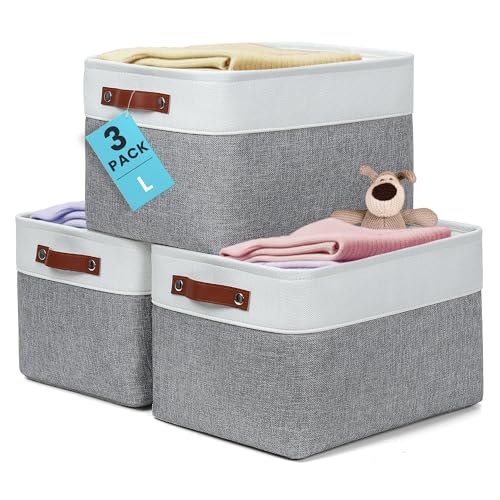
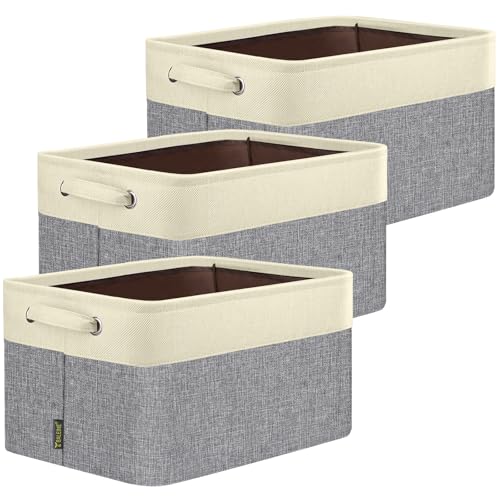
Rectangular baskets around 14 to 16.5 inches long and 9.5 to 12 inches wide are represented by the CHICVITA, OrganiHaus, StorageWorks, Bagnizer, BALEINE, and Fab totes options. These proportions are useful for larger closet shelves, bookcases, and open storage units, but the listed length and width still need to be checked against the furniture.
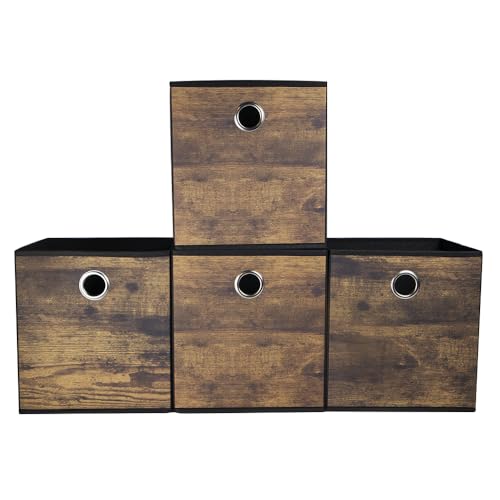
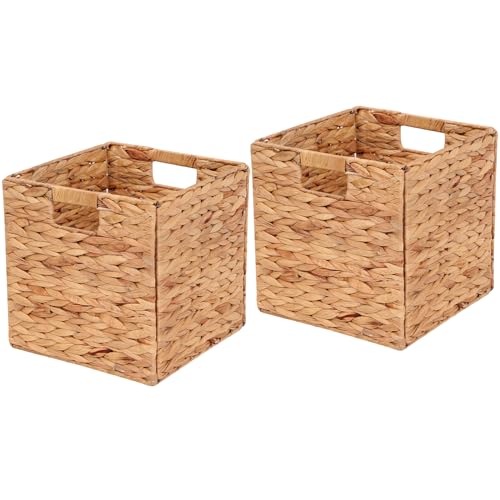
Cube-shaped baskets take a different approach. Folzaelar lists an approximately 10.5-inch square footprint and recommends checking for an opening of at least 11 inches. That makes it a better match for compatible cubby systems than for a long linen shelf. Homsorout uses a trapezoid profile with a lower front, which can make contents easier to see but may not use every inch of a square compartment.
Low, long baskets can be useful when a shelf has plenty of horizontal space but limited height. WGGWE lists an 18.9-inch length and a 7.87-inch height, creating a broad format for folded items, toys, or books. This shape is less suitable when the shelf is short or when you need to store tall objects.
Prioritize structure for reliable shelf use
Fabric alone does not tell you how a basket will hold its shape. Several selected products document internal support. OrganiHaus uses a rigid fiberboard base and internal metal frame. StorageWorks lists an MDF base and metal frame. Bagnizer describes a metal rod frame and MDF bottom, while CHICVITA specifies base plates and a metal frame. These details are useful when a basket may be placed on a shelf while empty or only lightly loaded.
Other products rely on boards or cardboard. Criusia describes stiff plastic boards on all sides and the bottom. Fab totes lists rigid cardboard and reinforced non-woven fabric. Folzaelar and Homsorout both document cardboard support. These designs can be practical and lighter than framed alternatives, but the evidence does not establish that one construction is universally stronger than another.
Consider how often you will remove the basket
Handles matter most when baskets sit above eye level, at the back of a deep shelf, or in a child’s room. OrganiHaus uses structured vegan leather handles, BALEINE lists two handles on each side, and Fab totes provides two leather handles per basket. StorageWorks describes riveted PU handles, while WGGWE lists rivet-reinforced handles. These details indicate intended lifting and carrying points, but they are not a substitute for checking the filled basket’s weight.
For quick access, Homsorout’s lower-front trapezoid design is the clearest documented choice. An open-top design, such as OrganiHaus’s, keeps contents visible and reachable. By contrast, a taller conventional bin can conceal more of the contents and create a tidier visual line. Choose based on whether visibility or concealment is more important.
Decide whether moisture protection is relevant
If a basket will be used in a bathroom, laundry area, or near damp towels, look for an explicitly described lining. CHICVITA documents a waterproof inner lining and positions the baskets for bathroom use. The other selected products describe fabric, linen, canvas, cardboard, boards, or framed construction, but that does not establish waterproof performance. Do not infer moisture resistance merely from a basket’s appearance.
Care instructions also vary. OrganiHaus recommends spot cleaning and says machine washing is not recommended because of the fiberboard base and metal frame. BALEINE describes wiping the linen fabric with a damp cloth. In general, framed or board-supported bins should be cleaned according to their listing rather than treated like loose fabric laundry bags.
Use foldability as a storage feature
Most selected baskets are collapsible or fold flat. This is helpful in guest rooms, dorms, seasonal storage areas, and homes where the contents change. A foldable basket normally needs its bottom board or panel inserted before use; that setup detail is documented for products such as Criusia, Folzaelar, and Fab totes. Foldability saves space when the basket is empty, but it does not mean the basket should be compressed while holding items.
Plan the contents before choosing a pack
Large baskets suit linens, towels, clothing, blankets, and toys. Smaller cube formats are useful for books, craft supplies, office items, or divided household storage. A four- or six-pack can organize an entire shelving unit, while a two-pack may be better when only a pair of compartments needs attention. Count the compartments first, then select the pack size and basket dimensions that fit the actual layout.
Final Recommendation
CHICVITA 30L Fabric Storage Baskets ranks first overall in this specification-based comparison under the published weighted criteria.
CHICVITA 30L Fabric Storage Baskets is the first overall specification-based choice among these best fabric shelf baskets because it combines a large stated capacity, metal-frame support, base plates, foldability, leather handles, and a waterproof inner lining. It is particularly compelling for broad shelves and moisture-prone rooms, provided the 16.8-inch length fits.
OrganiHaus is the better alternative when canvas construction, a rigid internal frame, and high-shelf handling are priorities. StorageWorks is a strong large-format option for everyday textiles, while Bagnizer and BALEINE offer similar 15-inch shelf dimensions with different documented construction and care details. For a smaller footprint, the Criusia 14 x 10 baskets and Fab totes four-pack are sensible choices. Choose WGGWE for a long, low shelf, Homsorout for lower-front visibility, and Folzaelar for compatible square cubbies. Together, these top fabric shelf baskets cover the main shelf shapes and storage tasks documented in the listings.
Frequently Asked Questions
How do I measure for the best fabric shelf baskets?
Measure the inside width, depth, and height of the shelf opening, not just the exterior furniture dimensions. Compare all three measurements with the basket’s stated size and allow clearance for pulling it forward. For cube systems, check the opening size specifically; Folzaelar recommends an opening of at least 11 inches for its approximately 10.5-inch cube format.
Are fabric shelf baskets washable?
Not necessarily. Care instructions depend on the construction. OrganiHaus says to spot clean and does not recommend machine washing because of its fiberboard base and metal frame. BALEINE describes damp-cloth cleaning. Board- and frame-supported baskets should be cleaned using the supplied instructions rather than placed in a washing machine by assumption.
Which selected basket is best for a bathroom shelf?
CHICVITA is the clearest documented choice because its listing specifies a waterproof inner lining and identifies bathroom use. That feature helps distinguish it from baskets whose listings mention fabric or linen without stating waterproof protection. You should still keep the basket within the care and use conditions described by its listing.
Should I choose an open-top or lower-front basket?
Choose an open-top basket when you want contents visible from above and easy to reach. Homsorout’s trapezoid design lowers the front for visibility and access, making it useful for frequently handled clothing or towels. A conventional taller basket may provide a more concealed appearance, but the best fabric shelf baskets depend on whether access or visual tidiness matters more for your shelf.
What construction helps a basket stay upright?
The selected listings document several support methods: metal frames with MDF or fiberboard bases, stiff plastic boards, and thickened cardboard. CHICVITA, OrganiHaus, StorageWorks, and Bagnizer specify framed or reinforced structures, while Criusia and Fab totes describe board-supported designs. These details suggest how the baskets are intended to hold their shape, but the supplied evidence does not establish a universal load limit for every product.