Buying Guide
The best fabric table runners are easier to compare when you separate visual style from practical fit. A runner can be attractive but still be too short, too delicate for your care routine, or too sheer for the amount of tabletop coverage you want. The listings in this comparison cover everyday woven blends, polyester prints, satin event sets, compact solid-color runners, and long gauze designs.
Start with the table dimensions
Measure the tabletop before choosing a runner. Several selected products are approximately 72 inches long and are described for tables seating four to six people. The Artoid Mode sage green polyester, cotton-linen, beige woven, and black braided designs all use that general dining format. The Horbaunal satin runners are also 72 inches long, but their listing describes a fit for tables seating six to eight people.
A 48-inch runner serves a different purpose. The Wolkemer navy blue option is specifically presented for coffee tables, tea tables, and sideboards, so it is a better match for compact furniture than a long dining table. For event tables, the 120-inch styles provide more length and a more noticeable drop or drape. Pureegg identifies its 120-inch runners for standard six- to eight-foot tables, while the wider Vitalizart and Socomi styles can create a flowing arrangement across rectangular or round tables.
Match the fabric to the setting
Polyester is prominent in the everyday options because the supplied listings connect it with reusable use and straightforward washing. Artoid Mode’s sage green runner is made from 100% spun polyester, while the OHOME tropical runner is also 100% polyester. The OHOME listing additionally documents fade resistance, quick drying, heat resistance, and machine washing.
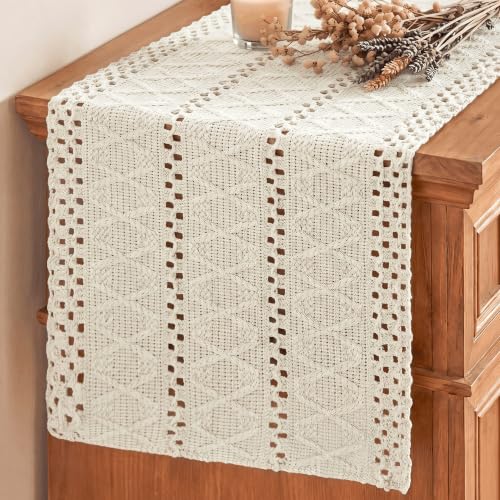
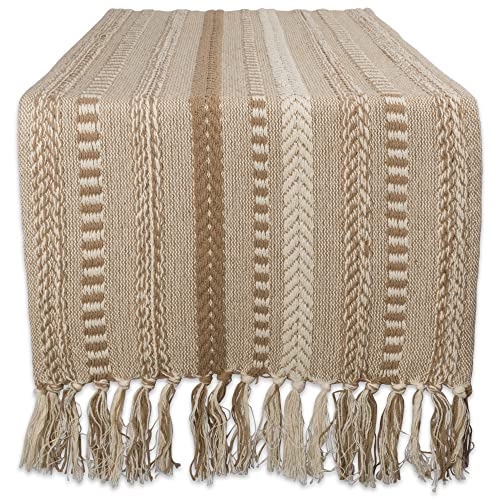
Blended fabrics change the look and texture. The Artoid Mode sage green cotton-linen runner is listed as a polyester-and-linen blend in its care details, with embroidered stripes and a hollow-out design. The beige runner uses an equal polyester-cotton blend, and the black braided option uses 40% cotton and 60% polyester. These choices may appeal when you want a more woven or farmhouse appearance rather than a smooth printed surface.
Satin is a more event-oriented choice. Horbaunal supplies six red runners with a smooth, lustrous appearance. The listing recommends hand washing and hanging dry, so this set may require more maintenance than the machine-washable polyester options.
Cheesecloth and gauze create a softer, more relaxed presentation. Vitalizart, Pureegg, and Socomi all document long, wide runners with a deliberately wrinkled or flowing look. Their listings recommend cold, gentle care and generally discourage ironing when the textured appearance is part of the design. These styles are useful for weddings, showers, birthdays, and rustic or boho tables, but they do not provide the same opaque visual coverage as a solid woven runner.
Consider care before buying
Care instructions are an important practical distinction among the best fabric table runners. Artoid Mode’s selected runners specify machine washing and lay-flat drying. OHOME also specifies machine washing and quick drying. Wolkemer allows hand or machine washing, with low-temperature smoothing if wrinkles appear.
The gauze products require more deliberate handling. Vitalizart specifies hand wash cold and air dry, while Pureegg recommends hand washing in cold water and laying flat to dry. Socomi allows gentle machine washing in a laundry bag or hand washing. The satin set calls for hand washing and hanging dry. Follow the supplied instructions rather than assuming that two fabrics with similar appearances can be maintained the same way.
Decide how much coverage you need
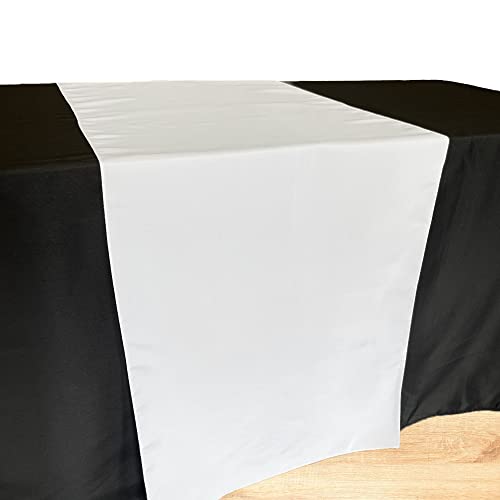
A conventional 12- to 13-inch-wide runner creates a defined central strip and leaves much of the table visible. That format works well when the tabletop itself is part of the decor or when you want room for place settings. The Artoid Mode, Horbaunal, and Wolkemer options use this narrower profile.
The 35-inch-wide gauze styles create more visual fabric and can be gathered, draped, or allowed to hang toward the ends. Pureegg, Vitalizart, and Socomi document this wider format. The extra width can be helpful for event styling, but it also means more fabric to arrange and wash. If you want protection from everyday spills, choose a listing that explicitly describes that purpose, such as the Artoid Mode and OHOME options, rather than assuming that every decorative fabric has identical protective properties.
Choose a design that fits more than one occasion
For flexible home use, neutral beige, sage green, navy, black, and cream-white designs are easier to pair with different dishes and centerpieces. Printed or textured styles can still be versatile when their color palette suits your room. The OHOME tropical print is intentionally event-specific, while the red satin set is oriented toward formal celebrations.
The top fabric table runners in this list are not interchangeable: a compact navy runner, a washable farmhouse blend, and a wide wrinkled gauze runner solve different decorating problems. Prioritize measurements first, fabric and care second, and decorative details third. That order reduces the chance of choosing a runner that looks right in a listing but does not suit the table or maintenance routine.
Final Recommendation
OHOME Tropical Hibiscus Table Runner ranks first overall in this specification-based comparison under the published weighted criteria.
Artoid Mode Sage Green Farmhouse Runner is the first overall specification-based choice among these best fabric table runners because its documented 100% spun polyester construction, 13-by-72-inch dining size, machine-wash care, and stated surface-protection uses form the most balanced package. It is a practical starting point for everyday dining and seasonal decorating.
Choose the Artoid Mode cotton-linen runner if embroidered texture matters more than a fully solid surface. The beige woven or black braided Artoid Mode options offer similarly practical dining proportions with different visual directions. For a small coffee table or sideboard, Wolkemer’s 48-inch navy runner is the more appropriate fit.
For celebrations, the choice depends on presentation. Horbaunal provides six matching satin runners for coordinated red event decor. Vitalizart and Socomi offer wide ivory or dusty-pink gauze with a flowing appearance, while Pureegg supplies two sage green long runners for larger tables or coordinated arrangements. OHOME is the clearest choice when a vivid tropical print and documented heat-resistant, machine-washable polyester are priorities. Together, these top fabric table runners cover everyday meals, compact furniture, formal events, and relaxed outdoor-inspired styling without relying on unverified performance claims.
Frequently Asked Questions
What size table runner should I choose?
Measure the table and compare the result with the runner’s stated length. The 72-inch products are generally described for four- to six-person tables, while Pureegg’s 120-inch runners are identified for six- to eight-foot tables. A 48-inch runner is better suited to smaller furniture such as coffee tables and sideboards.
Are the best fabric table runners machine washable?
Some are, but care varies by material. The selected Artoid Mode runners specify machine washing and lay-flat drying, and OHOME also lists machine washing. The gauze and cheesecloth options generally call for cold, gentle washing, while Horbaunal’s satin runners recommend hand washing and hanging dry.
Which runner works for a wedding or shower?
Long gauze options are designed for that type of styling. Vitalizart, Pureegg, and Socomi document 120-inch cheesecloth or gauze runners and list weddings, showers, and other celebrations among their uses. Their wrinkled texture is part of the intended look, so ironing may not be appropriate.
Is a 48-inch runner suitable for a dining table?
It may be too short for many standard dining tables. The selected Wolkemer product is specifically described for small tables, coffee tables, tea tables, and sideboards. Check your tabletop length and desired overhang before using a shorter runner in a dining setting.
What is the difference between a narrow runner and wide gauze?
The 12- to 14-inch runners create a narrower central accent with more tabletop visible. The approximately 35-inch-wide gauze options provide more fabric for gathering and draping. Neither format is automatically better; the right choice depends on whether you want a defined strip or a fuller event display.