Buying Guide
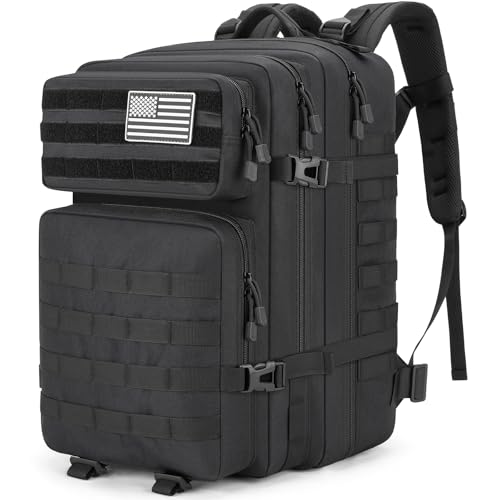
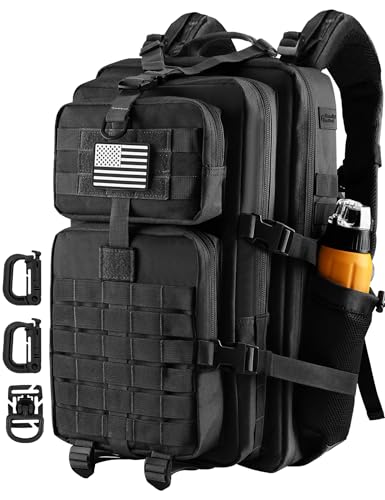
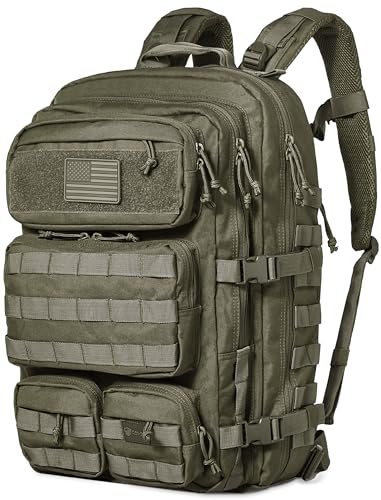
The best fabric tactical backpacks are not defined by appearance alone. The useful differences are in the textile description, capacity, compartment layout, modular attachment system, and support features that determine how a load can be carried. The products above are ranked from supplied listing evidence, so the comparison should be read as a specification guide rather than a hands-on durability or comfort test.
Start with capacity and trip length
Capacity is the clearest divider in this category. The 45L models from Jornova, LHI, G4Free, Hannibal Tactical, and Saboos are described for three-day use or similar outdoor loads. They provide room for clothing, tools, first-aid supplies, and other equipment, but a large compartment can be excessive for a normal commute. The 40L REEBOW GEAR and Maelstrom options offer a slightly smaller format while retaining substantial storage.
Falko Tactical lists 50L, making it suitable when packing room is the main priority. Expandable designs can also be useful when one trip requires a compact load and another requires substantially more space. Expansion does not automatically make a pack easier to carry, however, so loaded dimensions and strap adjustment still matter.
For daily carry, the 34L HIGHLAND TACTICAL Major is a balanced option, while QT&QY’s 25L pack is more compact. QT&QY also documents a dedicated 15-inch device compartment, which is a meaningful distinction for commuting or school use.
Compare organization, not just liters
A large capacity number does not explain how easily gear can be separated. HIGHLAND TACTICAL lists six external pockets and multiple internal slots, giving it a more structured everyday layout. Hannibal Tactical documents two main compartments, two smaller front compartments, and a rear hydration compartment. Maelstrom lists multiple independent dividers and pockets for categorized equipment.
The other large packs emphasize a broad main compartment plus external pockets and attachment areas. Before choosing, consider whether the load contains many small pieces or mostly clothing and soft equipment. More compartments may improve access, but they can also reduce the flexibility of a single open cavity. A wide-opening design, such as the 180-degree opening documented for Falko Tactical or the flat-opening design listed for QT&QY, can make packing and unpacking more straightforward.
Check the fabric claim carefully
Fabric terminology varies across the listings. The selected products document 600D, 900D, or 1000D polyester or Oxford-style fabric, while HIGHLAND TACTICAL describes durable, abrasion-resistant fabric. Several listings also describe a water-resistant coating or water-resistant construction. These statements support consideration for changing outdoor conditions, but they do not establish that a pack is fully waterproof or suitable for prolonged submersion.
Maelstrom documents 900D polyester plus reinforced, double-stitched stress points. G4Free lists 1000D polyester, and the selected compact options list 900D polyester with water-resistant construction or coating. A higher denier number can be a useful specification to compare, but it does not by itself prove better real-world performance because coating, seams, zippers, stitching, and construction also matter. The supplied data does not include laboratory testing.
Decide how much modularity you need
MOLLE webbing allows compatible pouches and accessories to be attached to the outside. G4Free lists webbing across the backpack, while LHI, REEBOW GEAR, Saboos, and QT&QY document exterior attachment systems. Maelstrom specifies a double-layer laser-cut MOLLE panel, and QT&QY describes a two-layer laser-cut design. These layouts may appeal to users who want to change the arrangement of small tools, bottles, or accessory pouches.
Not every tactical-looking pack has documented modular webbing. Falko Tactical emphasizes pockets and access but does not list MOLLE in the supplied evidence. If external customization is central to your use, verify that the specific attachment layout meets your needs rather than assuming it from the product title.
Evaluate carry support for the intended load
Padded shoulder straps and breathable back panels appear across much of the selection. Larger packs add chest or sternum straps, waist belts, compression straps, or combinations of these features. Jornova documents chest and waist straps, while Falko Tactical lists compression, sternum, and waist straps. These components can help stabilize a loaded pack, but the evidence does not establish how they will fit a particular body or how comfortable they will feel over time.
Compression straps are useful when the load changes because they can help reduce unused volume. Removability may matter for commuting: the selected packs document adjustable support systems, while some designs emphasize simpler daypack layouts. Since the evidence does not provide hands-on fit results, choose the support configuration that matches the weight and distance you expect to carry.
Look for task-specific features
A laptop sleeve is valuable for office or school carry. HIGHLAND TACTICAL lists a padded sleeve for most 15-inch laptops, while QT&QY lists a dedicated 15-inch device compartment. Hydration compatibility is more relevant for hiking, hunting, and longer outdoor use. G4Free documents compatibility with a 3L bladder; Hannibal Tactical, LHI, and REEBOW GEAR also document hydration-oriented compartments or compatibility, although a bladder is not included where the listing says so.
External straps can carry soft gear outside the main compartment. G4Free lists bottom straps for a tent, sleeping bag, or rolled mattress, and Hannibal Tactical lists a front Y strap for a sweatshirt or light jacket. HIGHLAND TACTICAL adds a reinforced grab handle and travel-oriented features. These details can matter more than a general tactical label when choosing between similar capacities.
Final recommendation
G4Free 45L Military Tactical Backpack ranks first overall in this specification-based comparison under the published weighted criteria.
Jornova is the first overall specification-based choice among the best fabric tactical backpacks because its 45L capacity, 900D water-resistant fabric, MOLLE system, and chest-and-waist support form the most balanced large-pack package in this comparison. HIGHLAND TACTICAL is a better fit for commuters who need a laptop sleeve and more office-friendly organization. Choose Maelstrom or G4Free for a reinforced, modular outdoor setup; Hannibal Tactical or REEBOW GEAR for hydration-oriented use; and Saboos for compression-focused storage.
Falko Tactical is the logical pick when maximum stated capacity and a wide opening matter most. For a smaller everyday format, QT&QY provides a 25L layout, laptop space, and laser-cut MOLLE. Those are the top fabric tactical backpacks here for distinct use cases, but the final choice should follow your expected load, trip duration, and need for external attachments.
Frequently Asked Questions
How should shoppers choose the best fabric tactical backpacks?
Start with the intended load and trip length, then compare documented capacity, organization, fabric construction, attachment points, and carry support. A 40L to 50L pack suits larger outdoor loads, while QT&QY’s 25L format and HIGHLAND TACTICAL’s 34L format are more suitable for compact or mixed daily carry. Treat water-resistant claims as specification information rather than proof of complete waterproofing.
Are fabric tactical backpacks waterproof?
The selected listings commonly describe water-resistant coatings, water-resistant fabric, or waterproof construction, but those terms are not interchangeable with a verified waterproof rating. Jornova, Maelstrom, G4Free, LHI, and others document protection against water or moisture. None of the supplied evidence provides seam testing, immersion testing, or a formal waterproof rating. Use a liner or dry bags when the contents are especially sensitive to water.
What size is best for a three-day trip?
The 40L to 45L range is the most directly supported choice in this comparison. Jornova, LHI, G4Free, Hannibal Tactical, and Saboos describe capacities around 45L for three-day or similar outdoor use, while REEBOW GEAR and Maelstrom offer 40L. Actual requirements depend on clothing, shelter, food, and equipment.
Do these backpacks include hydration bladders?
The listings generally describe compatibility or a hydration compartment rather than including a bladder. G4Free lists compatibility with a 3L bladder, and Hannibal Tactical, LHI, and REEBOW GEAR document hydration-related storage or compatibility. Check the package contents before assuming a bladder is included. The supplied evidence specifically says a bladder is not included for some models.
Which selected pack is most suitable for a laptop?
HIGHLAND TACTICAL documents a padded sleeve that fits most 15-inch laptops. QT&QY documents a dedicated 15-inch laptop or device compartment and a flat-opening design. The other selected packs may be marketed for work or laptop use, but the supplied evidence does not provide an equally specific sleeve size. If device protection is important, prioritize one of these two documented configurations.