Buying Guide
Choosing among the best glass rice cookers starts with clarifying what “glass” means in the listing. Some products have a transparent glass lid, some use a glass cooking vessel, and others combine glass with ceramic or stainless-steel components. Those designs are not interchangeable, so the right choice depends on whether visibility, microwave use, low-carb cooking, capacity, or broad meal preparation matters most.
Glass lid, glass pot, or glass microwave vessel
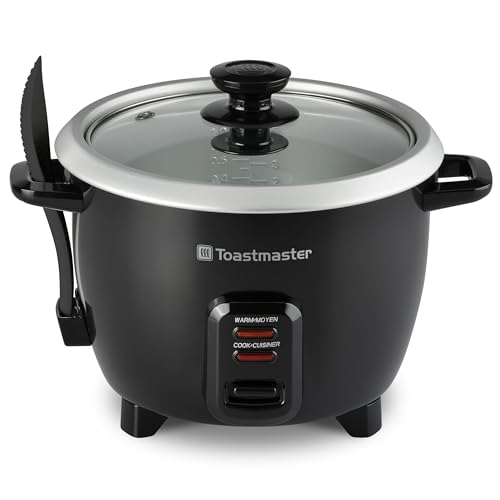
A glass lid is useful when you want to check the rice without lifting the cover. The Toastmaster TM-101RCCN and Zojirushi NHS-10 document tempered or see-through glass lids, while the HARIO GNR-200-B-W adds a heat-resistant lid and whistle notification. These designs preserve a familiar rice-cooker workflow while making the contents easier to monitor.
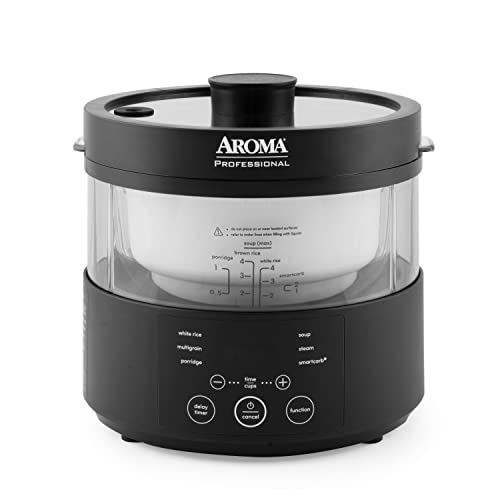
A glass pot offers more direct visibility. The Aroma AMC-800 uses a transparent tempered-glass pot, and the COOK WITH COLOR WGRC1 CRM uses borosilicate glass. The Magnifique MCR52P-CRCG goes further with a removable borosilicate-glass pot that can cook, serve, and store. These are useful options when the material and visible cooking surface are central to your decision.
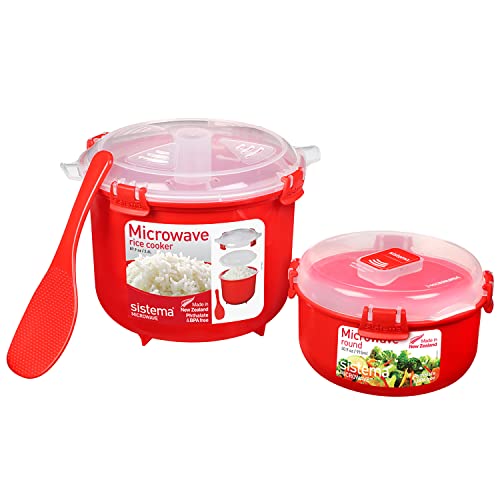
Microwave vessels are a separate category. The HARIO XRCN-2-B is aimed at one to two servings, while the Anyday 62053-C002 is a larger 12-cup option that can move from microwave to fridge, freezer, oven, table, and dishwasher. They do not provide the same automated countertop cooking experience as an electric appliance, but they can reduce appliance clutter.
Match capacity to your household
Capacity claims use different conventions. Some listings state cooked capacity, some state uncooked capacity, and some provide liters or quarts. The Toastmaster is listed at 10 cups cooked, the Aroma AMC-800 at 8 cups cooked, and the Zojirushi NHS-10 at 6 cups. The COOK WITH COLOR cooker explicitly limits uncooked rice to 2 cups, making it more appropriate for smaller households.
For one or two servings, the HARIO XRCN-2-B is the most specifically sized option. For one to three people, the COOK WITH COLOR cooker and toswar 3L model are more flexible because they add low-carb or hotpot functions. Larger households should consider the 5L zyiesrsq model, the 12-cup Anyday vessel, or the 4.5-quart Magnifique appliance, while remembering that large capacity can also mean more storage and counter requirements.
Consider cooking controls
Basic one-touch appliances are easiest to understand. The Toastmaster automatically changes to Keep Warm, and the Zojirushi uses a similarly traditional approach with automatic warming. These models suit shoppers who mainly want rice and occasional steaming without a long menu of settings.
Digital models offer more control. The Aroma AMC-800 has six settings, a delay function, and an LED display. The COOK WITH COLOR cooker adds adjustable hotpot power, while the toswar model provides touch controls, reheat, reservation, and timed low-sugar cooking. The zyiesrsq M07 documents two automatic modes and a 12-hour timer. More controls can expand meal options, but they also make the appliance more specialized than a simple rice-and-warm cooker.
Decide whether specialty cooking matters
Low-carb models use a cook-then-steam or lifting process to separate rice from starchy water. The COOK WITH COLOR, toswar, zyiesrsq, and Aroma AMC-800 listings all document versions of this concept. These products are worth considering when that feature is relevant to your cooking goals; otherwise, a simpler cooker may be easier to use.
Multicookers are useful when rice is only one part of the plan. The Aroma AMC-800 supports grains, porridge, soup, and steaming. The Magnifique includes Rice, Pasta, Oatmeal, Steam, Braise, Proof, Slow Cook, and Keep Warm modes. Anyday focuses on microwave rice, grains, steaming, reheating, and storage. Compare the specific functions you will use rather than choosing solely by the length of a mode list.
Review cleanup and handling details
Glass can be convenient because it is transparent and, in some listings, dishwasher safe or resistant to odor absorption. Anyday explicitly documents dishwasher compatibility, while Magnifique lists a dishwasher-safe glass pot, lid, and steam rack. The HARIO XRCN-2-B describes glass as not absorbing odors, which may appeal to cooks using the vessel for different foods.
Other models use mixed materials. Aroma’s glass pot is paired with a steam system, the COOK WITH COLOR model uses a stainless basket, and Zojirushi uses a removable nonstick pan with a stainless steaming tray. Check which parts actually come into contact with food and whether the removable components match your cleaning preferences.
Final recommendation
Magnifique 4.5-Quart Glass Pot Multi-Cooker ranks first overall in this specification-based comparison under the published weighted criteria.
The final choice among the best glass rice cookers depends on the documented features that match your intended use.
Magnifique 4.5-Quart Glass Pot Multi-Cooker is the first overall specification-based choice in this comparison.
Its removable borosilicate-glass pot, eight documented modes, cooking-to-storage design, and dishwasher-safe components give it the highest weighted editorial result among the selected products. Aroma AMC-800 is a strong alternative for shoppers who specifically want low-carb cooking, a transparent tempered-glass pot, steaming, delay timing, and an 8-cup cooked capacity.
The top glass rice cookers are not identical in design. Choose COOK WITH COLOR WGRC1 CRM for a compact low-carb appliance, Anyday 62053-C002 for large microwave meal prep, Magnifique MCR52P-CRCG for a removable glass-pot multicooker, or HARIO XRCN-2-B for one or two microwave servings. For a traditional electric setup, Toastmaster TM-101RCCN and Zojirushi NHS-10 keep the controls simple while retaining glass-lid visibility.
Frequently Asked Questions
Are all glass rice cookers made entirely from glass?
No. The phrase can describe a glass lid, a glass cooking pot, or a glass microwave vessel. For example, Zojirushi NHS-10 has a see-through glass lid and nonstick inner pan, while Aroma AMC-800 documents a transparent tempered-glass pot. The COOK WITH COLOR WGRC1 CRM uses borosilicate glass with stainless-steel and heat-resistant plastic parts. Read the material description carefully if the cooking surface itself is important.
Which of the best glass rice cookers is suitable for one or two servings?
HARIO XRCN-2-B is the most specifically sized option because its listing states that it cooks one to two servings in a microwave. The COOK WITH COLOR WGRC1 CRM is also compact, but its stated limit is up to 2 cups of uncooked rice and it includes more electric cooking functions. Capacity terminology differs, so compare the serving guidance with your usual batch size.
Can a glass rice cooker also steam food?
Several selected products document steaming. Aroma AMC-800 has a smart steamer function, Zojirushi NHS-10 includes a stainless-steel steaming tray, and Toastmaster TM-101RCCN is a simpler rice-focused option with no separately documented steam program. The Magnifique MCR52P-CRCG and Anyday 62053-C002 also list steaming among their uses. Confirm whether steaming occurs simultaneously with rice cooking or as a separate mode.
What is the difference between a microwave glass rice pot and an electric cooker?
A microwave pot relies on the microwave for heat and generally has fewer controls. HARIO XRCN-2-B is designed for small portions, while Anyday 62053-C002 supports larger microwave batches and storage. Electric models such as Aroma AMC-800, Toastmaster TM-101RCCN, and Zojirushi NHS-10 provide their own heating and automatic keep-warm functions. Choose based on available equipment, batch size, and desired automation.
Are low-carb glass rice cookers appropriate for regular rice?
The selected low-carb models document regular rice capabilities alongside their starch-separation modes. COOK WITH COLOR WGRC1 CRM, toswar 3L, and zyiesrsq M07 list multiple rice modes or support for different rice types. Aroma AMC-800 also supports rice and grains. These appliances may be worthwhile when you want both standard rice cooking and a documented cook-then-steam process, but they can be more complex than a basic cooker.