Buying Guide
The best gluten-free l-lysine supplements are not all designed the same way. The products in this comparison include standalone capsules, tablets, powders, and a combination formula. A useful choice depends on how much information the listing provides about the lysine amount, serving size, ingredients, dietary exclusions, and manufacturing process.
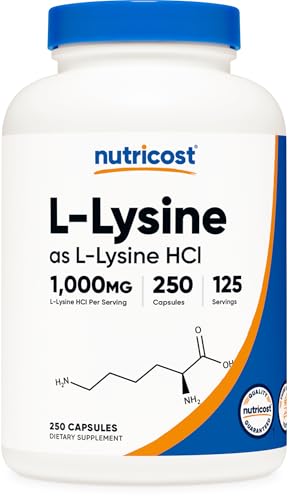
Capsules and tablets are the most compact formats in this group. Nutricost’s 1,000 mg capsule product lists 500 mg per capsule and two capsules per serving, while Vitamatic’s 500 mg product states the amount per vegetarian capsule. Life Extension provides a 620 mg capsule option. These labels make it easier to understand how the product’s listed amount is divided across individual units.
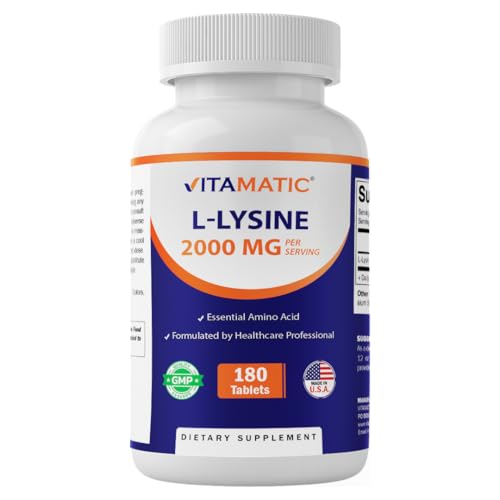
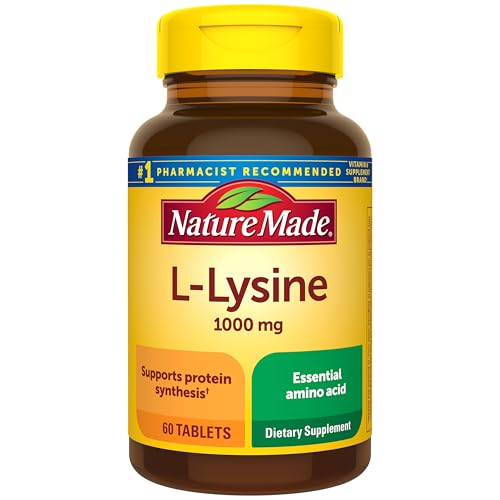
Tablets may be preferable when the serving is especially clear. Nature Made identifies 1,000 mg in one daily tablet. Vitamatic’s 2,000 mg product specifies two tablets per serving. Nutricost’s tablet listing states 1,000 mg per serving but does not state the number of tablets in that serving in the supplied evidence, so shoppers should check the current label for that detail.
Powder is a different design type. Both Nutricost and BulkSupplements.com list unflavored powders with 1-gram servings. Nutricost specifically mentions an included scoop, while BulkSupplements.com describes an L-lysine HCl powder that can be integrated into a shake or beverage. Powder avoids swallowing multiple pills, but it requires measuring and mixing.
Check the amount per serving
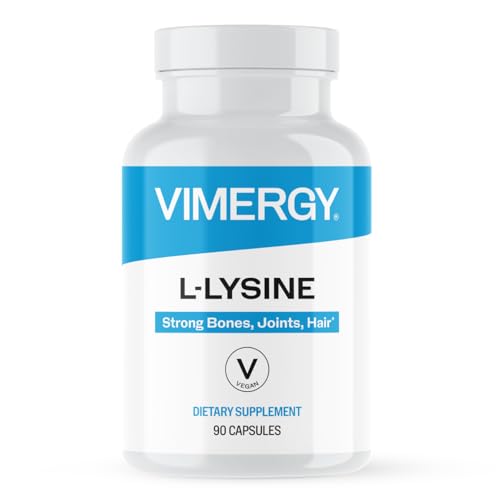
Do not compare a bottle’s headline amount with another product’s per-capsule amount without first checking the serving definition. Nutricost’s capsule formula gives both figures, making the comparison direct. Vitamatic’s 2,000 mg product uses two tablets per serving, and Nature Made lists 1,000 mg in one tablet. Vimergy is different: the supplied listing explains the formula and capsule count but does not provide a clear lysine milligram amount. That missing figure is an important limitation for dose-focused shoppers.
A lower listed amount is not automatically a disadvantage. Life Extension documents 620 mg per capsule, and Vitamatic documents 500 mg per capsule. These options may fit someone who wants the amount divided into smaller units. The relevant question is whether the label explains the amount clearly enough for the intended routine.
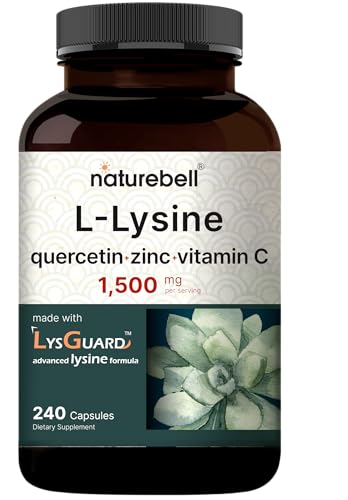
Most selected products emphasize L-lysine as the primary ingredient. NatureBell takes a broader approach with its LysGuard complex: the listing identifies 1,000 mg of L-lysine, 250 mg of quercetin, 200 mg of vitamin C, and 50 mg of zinc per serving. This can appeal to shoppers seeking several named ingredients in one product, but it is not the same as a simple lysine-only formula.
The standalone products are easier to evaluate when the goal is to compare lysine amounts directly. The combination product requires attention to the additional ingredients and their listed amounts. Anyone already taking separate vitamin C, zinc, or quercetin products should review the complete label to avoid unintentionally duplicating ingredients.
Review gluten-free and allergen statements
A product title or feature list that explicitly says gluten-free provides more useful category evidence than a general clean-label statement. The selected products document gluten-free status in their supplied listing data. Several go further. NatureBell lists the product as free from gluten, wheat, soy, dairy, and tree nuts. Vimergy states that its formula contains no gluten, corn, soy, or alcohol. Vitamatic lists wheat, yeast, egg, sugar, artificial colors, flavors, and preservatives among its exclusions.
These statements describe the supplied listing, not an independent dietary certification. People with celiac disease, diagnosed allergies, or strict medical dietary requirements should verify the current package and contact the manufacturer when cross-contact information is important.
A short formula can make label review easier. Vimergy describes a three-ingredient formula and a capsule without gelling agents or unnecessary colors. Among the selected products, Nutricost’s standalone capsules and powders provide relatively direct lysine-focused designs.
Combination formulas are not inherently unsuitable, but they deserve a different kind of review. NatureBell’s added quercetin, vitamin C, and zinc are clearly identified, which helps with comparison. The trade-off is that the product is less minimal than a pure L-lysine capsule or powder.
Manufacturing details can help distinguish otherwise similar listings. Nutricost identifies a GMP-compliant, FDA-registered facility. Vitamatic states that its products are made in the USA in GMP-compliant facilities. BulkSupplements.com describes cGMP production and rigorous third-party testing. NatureBell lists third-party lab testing, and Vimergy states triple third-party verification. Life Extension mentions Certificates of Analysis for its products.
These are documentation points, not the results of an independent laboratory assessment by this guide. Still, they are useful specification fields when comparing products with similar formats and amounts. Where a listing provides fewer details, as with Nature Made in the supplied evidence, the product can still have a clear dose and gluten-free statement but offers less manufacturing information for this comparison.
For pill users, the clearest choices include Nature Made’s one-tablet 1,000 mg format, Vitamatic’s 500 mg vegetarian capsules, and Nutricost’s capsules with both per-capsule and per-serving figures. For powder users, Nutricost supplies a scoop and a 1-gram serving, while BulkSupplements.com offers another unflavored 1-gram option. For a broader ingredient profile, NatureBell documents a four-part complex.
The best gluten-free l-lysine supplements should be judged by the label details that matter to you: dose clarity, ingredient scope, format, exclusions, and manufacturing disclosures. Always follow the product label and consult a qualified healthcare professional about whether supplementation fits your circumstances.
Final Recommendation
Nutricost L-Lysine Powder 500 Grams ranks first overall in this specification-based comparison under the published weighted criteria.
Nutricost L-Lysine 1000mg Capsules is the first overall specification-based choice among these best gluten-free l-lysine supplements because it combines clear per-capsule and per-serving amounts with explicit gluten-free labeling and documented facility standards. Nutricost L-Lysine Powder 500 Grams is the leading powder alternative, with a 1-gram serving and included scoop. Vitamatic L-Lysine 2000 mg Tablets is the clearest high-serving tablet option, while Nature Made L-Lysine 1000 mg is notable for its one-tablet serving.
For a minimal capsule formula, Vimergy documents a three-ingredient vegan and gluten-free design, but the supplied listing does not state the lysine amount. For shoppers who want additional named ingredients, NatureBell’s L-Lysine Complex clearly lists lysine, quercetin, vitamin C, and zinc. These top gluten-free l-lysine supplements cover distinct formats and formula styles, so the final selection should follow the amount and ingredient profile shown on the current label.
Frequently Asked Questions
What should I check first in the best gluten-free l-lysine supplements?
Check that the listing or package explicitly identifies gluten-free status, then confirm the L-lysine amount per capsule, tablet, scoop, or serving. Serving size matters because a 1,000 mg serving may require one tablet, two tablets, or two capsules depending on the product.
Are L-lysine powders different from capsules and tablets?
Yes. The selected powder products are unflavored and list 1 gram per serving. They require measuring and mixing, while capsules and tablets provide pre-portioned units. Nutricost’s powder listing includes a scoop; BulkSupplements.com’s listing does not specify one in the supplied evidence.
Is a lysine complex the same as standalone L-lysine?
No. NatureBell’s complex combines L-lysine with quercetin, vitamin C, and zinc. A standalone product focuses on lysine, while a complex adds other ingredients that should be reviewed individually.
Does gluten-free labeling confirm suitability for every allergy concern?
No. Gluten-free labeling addresses gluten, but allergy and cross-contact needs vary. NatureBell and Vimergy provide additional exclusion details, yet shoppers with medical dietary requirements should verify the current label and manufacturer information.
Which selected product states the clearest one-unit serving?
Nature Made L-Lysine 1000 mg states that one tablet provides 1,000 mg. Other products use different serving structures, including two capsules or two tablets, so their directions should be compared using the full serving information rather than the individual-unit amount.