Buying Guide
The best gluten-free vegetable juice beverages span a wide range of formats, vegetable blends, and ingredient philosophies. A spec-based comparison helps you cut through marketing language and focus on the factors that actually change how a juice fits your routine.
Vegetable Blend Depth
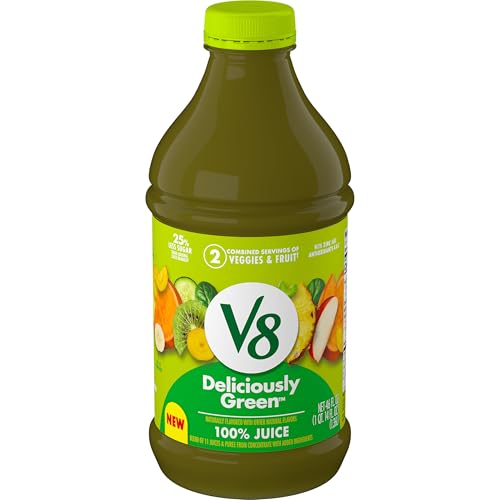
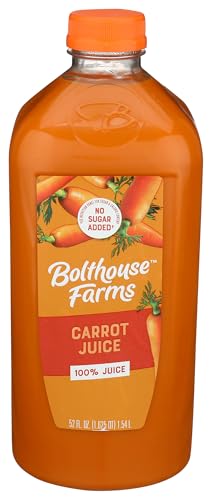
Vegetable blend depth describes how many distinct vegetables appear in a product and how prominently vegetables anchor the formula. Single-vegetable options like 100% carrot juice deliver a focused nutritional profile, while multi-vegetable blends such as the eight-vegetable V8 Original or the cucumber, celery, and spinach base of V8 Deliciously Green deliver more vegetable variety per serving. When comparing products, count the named vegetables in the ingredient description and look for concentrated juice bases rather than diluted blends.
Gluten-free formulation clarity covers how explicitly a product identifies as gluten free on the packaging or in the listing. Listings that call out gluten-free status alongside non-GMO and no sugar added signals give the clearest evidence that the product is suitable for gluten-free diets. Some tomato juice and carrot juice listings do not state gluten-free status directly in the features supplied, so they may require an additional label check before purchase.
Format and portability affects how a juice fits your day, from a 5.5 fl oz single-serve can to a 64 fl oz multi-day bottle. Single-serve cans of 5.5 fl oz, 8 fl oz, 11.5 fl oz, and 12 oz support travel and on-the-go routines, while 46 fl oz, 52 fl oz, and 64 fl oz bottles fit households that drink juice across multiple meals. Consider whether you need to chill a bottle after opening or prefer cans that minimize waste.
Nutrient Density Per Serving
Nutrient density per serving captures how much vegetable content and which vitamins or minerals each serving contributes. Products that document two servings of vegetables per 8 fl oz, mention added fiber, or call out vitamins A, C, and zinc give a clearer picture of nutrient density than products that list only calorie counts. Look for phrases like excellent source or good source of specific vitamins to anchor the nutritional comparison.
Ingredient Cleanliness
Ingredient cleanliness reflects how short and recognizable the ingredient list appears from the supplied description. Products that avoid added sugars, artificial flavors, artificial colors, and artificial sweeteners tend to score higher, especially when the listing calls out no sugar added or 100% juice. Cold-pressed options and formulas with coconut water and prebiotic fiber fall into this category when the description emphasizes clean-label positioning.
Dietary Alignment
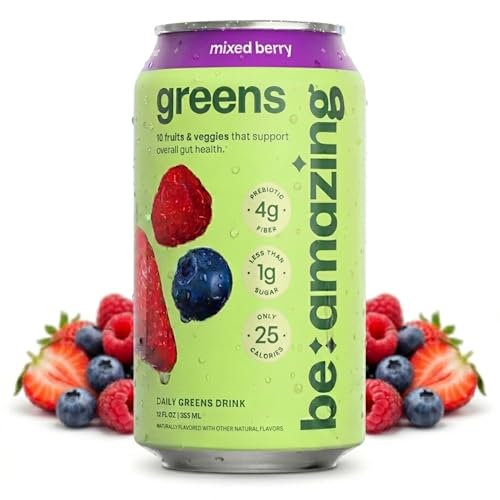
Dietary alignment captures how well a product matches specific dietary patterns beyond gluten-free, including vegan, non-GMO, low sodium, and lower sugar routines. V8 Low Sodium Original explicitly targets reduced sodium, while V8 Deliciously Green documents 25% less sugar than leading 100% juice brands. Be Amazing Greens Drink combines gluten-free and vegan labeling with organic fruits and vegetables, which is useful for buyers managing multiple dietary needs at once.
Final Recommendation
V8 Deliciously Green 100% Fruit and Vegetable Juice, 8 fl oz Can (6 Pack) ranks first overall in this specification-based comparison under the published weighted criteria.
The final choice among the best gluten-free vegetable juice beverages depends on the documented features that match your intended use.
For an everyday, multi-vegetable baseline with clear gluten-free labeling and a portable can format, V8 Original 100% Vegetable Juice, 11.5 fl oz Can (6 Pack) earns the first overall specification-based choice among the top gluten-free vegetable juice beverages. If you prefer a large household bottle with reduced sodium, V8 Low Sodium Original 100% Vegetable Juice, 64 fl oz Bottle is the most specification-aligned counterpart. For a greens-forward flavor with documented lower sugar, V8 Deliciously Green 100% Fruit and Vegetable Juice, 46 fl oz Bottle or its 8 fl oz Can (6 Pack) variant both support the same lower-sugar positioning in different formats. Buyers who want a single-vegetable option can turn to Bolthouse Farms Vegetable Juice Smoothie, 100% Carrot, 52 fl oz Bottle, while frequent travelers and offices may prefer the bulk 24-pack of V8 Original 5.5 fl oz cans or the compact 5.5 fl oz Campbell’s 100% Tomato Juice cans. Mixing these formats covers most weekly routines among the top gluten-free vegetable juice beverages available in the US in 2026.
Frequently Asked Questions
Among the best gluten-free vegetable juice beverages, how do I verify that a vegetable juice beverage is truly gluten free?
Check the product listing or label for an explicit gluten-free callout, and review the ingredient list for wheat, barley, rye, or malt-derived ingredients. Products that document gluten-free status alongside non-GMO and no sugar added statements give the most specification-aligned evidence of intentional gluten-free formulation.
Single-serve cans ranging from 5.5 fl oz to 12 fl oz are the most travel-friendly options in this category. The V8 Original 5.5 fl oz 24-pack, the V8 Deliciously Green 8 fl oz 6-pack, the V8 Original 11.5 fl oz 6-pack, and the Be Amazing Greens Drink 12 oz 8-pack all support on-the-go drinking without opening a large bottle.
Are there gluten-free vegetable juice beverages with lower sugar?
Yes. V8 Deliciously Green 100% Fruit and Vegetable Juice, in both the 46 fl oz bottle and the 8 fl oz can 6-pack, documents 25% less sugar than leading 100% juice brands per 8 fl oz. The V8 Original and V8 Low Sodium Original lines also state no sugar added, while the V8 High Fiber option adds fiber to the standard eight-vegetable blend.
What is the difference between gluten-free vegetable juice beverages and green powders?
This category focuses on ready-to-drink bottled and canned juices, not powdered mixes. The products listed here supply vegetables through actual juices such as tomato, carrot, beet, cucumber, celery, and spinach rather than through a powder that you add to water. Buyers who prefer a pre-made liquid format will find these options easier to compare on a per-serving basis.
Can a single 8 fl oz serving really count as multiple servings of vegetables?
Several products in this comparison explicitly state that one 8 fl oz serving contains two servings of vegetables, including V8 Original, V8 Low Sodium Original, V8 Beet Ginger Lemon, and V8 High Fiber Original. This is a useful way to benchmark how a particular juice fits into your daily vegetable target without depending on side dishes.