Buying Guide
The best heavy-duty keyed padlocks are not selected by body size alone. A lock has to fit the hasp, provide a suitable shackle shape and clearance, and offer construction appropriate to the exposure and access pattern. This comparison uses listing specifications and feature claims, not hands-on testing. Treat the ranking as a way to narrow choices, then confirm the measurements against your hardware.
Start with the hasp and clearance
Measure the hasp opening before choosing a lock. The important dimensions are the shackle diameter, internal shackle height and width, and the space around the lock body. A long shackle can help with offset or thick hardware, but extra exposed length can also be undesirable when a shorter shackle will fit. The Master Lock M1XTLJ has a 2-1/2-inch shackle length and a 1-3/4-inch body, making it a flexible option for gates and fences that need reach. The Master Lock M1XD has a one-inch shackle length and is better suited to compact openings.
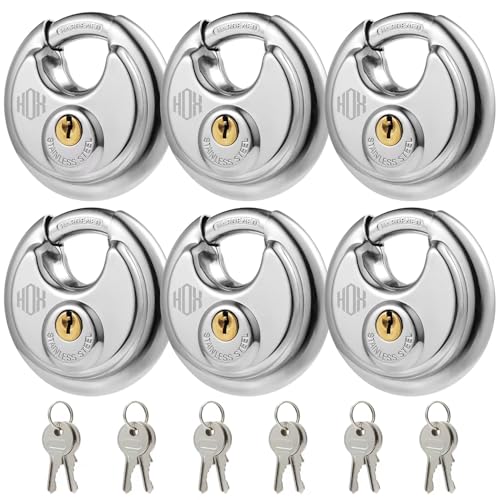
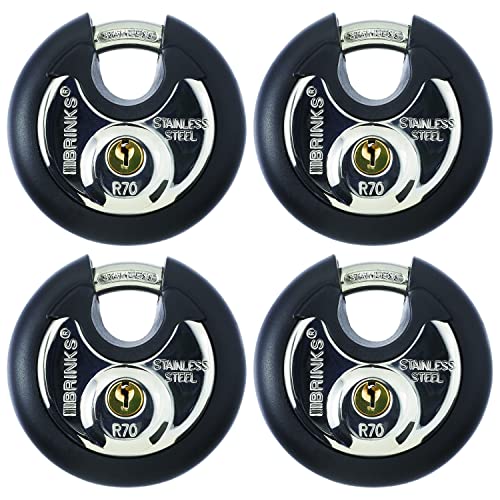
Disc locks require a different check. The BRINKS 70mm model, HOX, and DAYGOS products use round or discus-style bodies that shield much of the shackle. That profile can work well on storage-unit doors and sliding doors, but only when the hasp is shaped to accept a broad, shallow lock body. Measure the opening and available body width rather than assuming a standard padlock will fit.
Compare body and shackle materials
The selected products document several construction approaches. The Master Lock Magnum models use laminated or solid-steel bodies with Tough-Cut octagonal boron-carbide shackles. The M530XTLH is specifically described with a solid-steel body, while the M515XTLH, M1XTLJ, and M1XD use Magnum dual-armor or laminated constructions. These details are useful comparison points, but they do not replace evaluating the complete hasp, door, chain, or installation.
The Nestling 94mm uses a solid brass body and chrome-plated hardened-steel shackle. Its D shape, heel-toe locking, and freely rotating shackle are documented features for container, gate, shutter, and chain use. The BRINKS model specifies a stainless-steel shackle and a discus-shaped body. HOX documents stainless-steel construction, while DAYGOS lists 304 stainless steel, hardened steel, and brass components. Material names indicate the stated design, but the listings do not provide independent laboratory comparisons among these products.
Compare cylinder and locking features
Several Master Lock models specify a four-pin cylinder and dual ball-bearing locking. The listing describes these features as supporting pick and pry resistance. DAYGOS specifies a five-pin brass tumbler cylinder, while BRINKS specifies a four-pin brass tumbler cylinder. Nestling documents a key-retaining cylinder and heel-toe locking. These are meaningful differences in the published specifications.
A keyed padlock is useful when access must be managed without batteries, codes, or an app. It also means that key control matters. The correct choice depends on whether one person needs a single lock, several locks need to share a key, or each lock should use a different key set. Do not assume two products from the same brand use interchangeable keys unless the listing specifically states keyed-alike operation.
Choose keyed-alike or keyed-different access
Keyed-alike sets simplify several access points. The Master Lock M5XTRILH includes three locks using the same keys, and the M5XQLJ extends that concept to four locks. HOX documents six keyed-alike locks, while DAYGOS documents four. The M530XTLH, M515XTLH, and M1XTLJ also provide matching-key multipacks. This arrangement reduces key sorting, but it also means the same key pattern operates every lock in that set.
The Nestling 94mm is described as keyed different and includes five stainless-steel keys. That is a better fit when separate key control is preferred. Its key-retaining design also means the key can only be removed when the lock is locked, according to the supplied listing. Consider who needs access and whether one lost key would affect multiple locations.
Consider outdoor exposure
For outdoor installations, look for explicit weather-related construction in the listing. The M515XTLH, M5XTRILH, and M5XQLJ specify covered keyways and shackles with weather-resistant covers. DAYGOS documents weatherproof, corrosion-resistant 304 stainless steel and a rubber bumper. HOX states waterproof and corrosion-resistant features. BRINKS uses a stainless-steel shackle and rubber bumper, while the Nestling listing describes anti-corrosion and waterproof protection.
A weather-oriented lock still needs sensible installation. Keep the keyway accessible, avoid positioning the lock where water can collect, and follow the manufacturer’s care instructions. Body and shackle protection should be considered alongside the condition of the hasp and the surrounding door or gate.
Pick the right pack size
Pack size should follow the number of compatible locking points, not simply the largest count available. A single M1XD is appropriate when one lock is needed. The M530XTLH and M515XTLH cover two points, M5XTRILH covers three, and M5XQLJ covers four. HOX provides six, while BRINKS and DAYGOS provide four. Larger packs can standardize key access, but they also commit all included locks to the same access plan.
Final recommendation
Master Lock M5XQLJ Magnum 4-Pack ranks first overall in this specification-based comparison under the published weighted criteria.
Master Lock M515XTLH Magnum 2-Pack is the highest-scoring specification-based choice among the returned products.
The Master Lock M515XTLH is the first overall choice among these best heavy-duty keyed padlocks because its documented large laminated body, boron-carbide shackle, four-pin cylinder, dual ball-bearing locking, covered keyway, and keyed-alike two-pack form a balanced package. Buyers who need several outdoor locking points should consider the Master Lock M5XQLJ or Master Lock M5XTRILH. The top heavy-duty keyed padlocks in this comparison differ mainly in fit, body profile, weather features, and key administration, so measure first and choose around the hardware.
Frequently Asked Questions
What should I measure before buying the best heavy-duty keyed padlocks?
Measure the hasp opening, shackle diameter, internal shackle height and width, and clearance around the lock body. Also check whether the door or gate accepts a conventional body or needs a discus-style profile. The Master Lock M1XD has a short shackle, while the Master Lock M1XTLJ offers a longer one; those differences can determine whether the lock fits.
Are keyed-alike padlocks useful for several gates or storage units?
Yes. Keyed-alike sets allow one key pattern to operate multiple locks in the same set. The Master Lock M5XTRILH, Master Lock M5XQLJ, HOX, DAYGOS, and other selected multipacks document this arrangement. Confirm that every lock will use the same access plan before installation, because one key pattern applies across the set.
Are discus padlocks suitable for outdoor storage units?
They can be, provided the storage-unit hasp accepts the broad round body. BRINKS, HOX, and DAYGOS document disc or discus-style designs with reduced shackle exposure. Their body widths and shackle dimensions differ, so compare those measurements with the hasp instead of relying on the general term “disc lock.”
Is a solid-steel body always the best choice?
Not necessarily. The Master Lock M530XTLH documents a solid-steel body, while other selected products use laminated steel, stainless steel, or brass. Body material is only one criterion. Shackle diameter, cylinder design, weather protection, fit, and key control may matter more for a particular gate, shed, locker, or container.
What is the advantage of a key-retaining padlock?
A key-retaining design keeps the key captive until the lock is in the locked position. The Nestling 94mm listing specifically documents this feature. It may help reinforce a locking routine, but buyers should also consider whether the lock’s keyed-different setup matches their need for shared or separate access.