Buying Guide
Choosing the best hypoallergenic bed pillow protectors starts with understanding how each design feature contributes to allergen control, comfort, and durability. Below is a specification-focused walkthrough of the attributes that separate standard covers from true allergen barriers.
Allergen Barrier Construction
The core job of any pillow protector is to keep allergens away from the surface you breathe against. Look for tightly woven fabrics with documented weave density, pore-size specifications, or third-party certifications that demonstrate the cover physically blocks dust mites, pollen, and pet dander.
- Documented weave density: FAUNNA lists a pore size of ≤10 μm, while AllerEase describes tightly woven, expertly-designed fabric intended to block household particles.
- Lab-tested certification: SureGuard is GREENGUARD Gold certified and independently lab tested, and Hospitology Products focuses on reducing substances that can disrupt respiratory function.
- Safety certifications: OEKO-TEX certification, like on the FAUNNA cotton protector, signals that the fabric itself has been tested for harmful substances, which is helpful for sensitive-skin households.
Fabric and Breathability
A barrier only works if you can sleep under it comfortably. Fabric choice drives both breathability and moisture management.
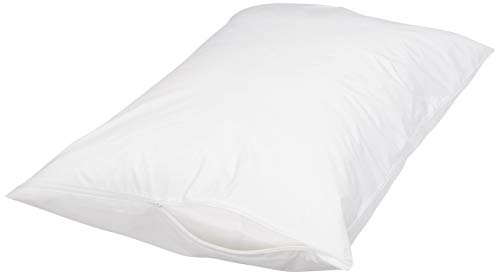
- 100% cotton covers: The SureGuard cotton protector and FAUNNA 600-thread-count cover offer smooth, breathable surfaces, while the Amazon Basics tight-weave cotton delivers a cool, natural feel.
- Polyester knits and jersey: AllerEase, Hospitology, and Utopia Bedding use polyester knits that wick moisture and balance airflow.
- Temperature-balancing technology: AllerEase’s temperature-balancing protectors retain heat when you are cold and release heat when you are hot, borrowing from athletic apparel design.
Encasement and Zipper Integrity
A fully zippered encasement is what separates a real allergen barrier from a simple pillowcase. Zipper design determines whether mites, bed bugs, or particles can slip through the closure.
- Invisi-Zip and premium zippers: SureGuard documents Invisi-Zip technology for a tight seal, and FAUNNA tests its hidden zipper beyond 10,000 uses for quiet, long-term operation.
- Double-hemmed stitching: Utopia Bedding pairs its premium zipper with double-hemmed stitching to keep the pillow fully enclosed.
Waterproof and Fluid Protection
If you listing value with sweat, spills, or pet accidents, a waterproof layer adds meaningful protection beyond allergen blocking.
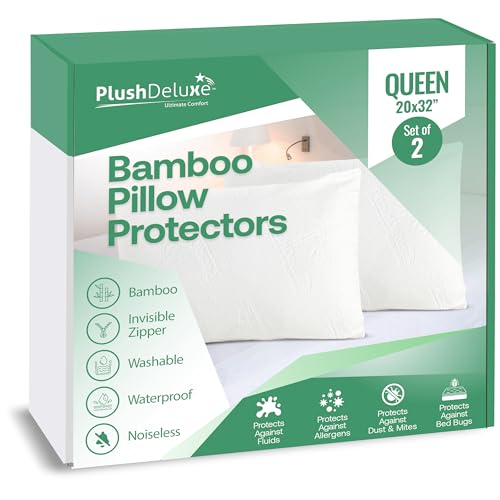
- Polyurethane and TPU membranes: Four Seasons Essentials uses a polyurethane inner lining, Hospitology uses a breathable waterproof membrane, and Utopia Bedding applies a TPU coating on all sides.
- Cotton with waterproof backing: SureGuard combines a smooth cotton surface with a waterproof membrane that still wicks moisture.
- Allergen-only designs: Several allergen-focused models, including the FAUNNA cotton cover and Amazon Basics cotton protector, do not list a waterproof layer, which may suit users prioritizing pure breathability.
Noise and Comfort Finish
Even the most specification-aligned barrier fails if it keeps you awake. Surface texture and stretch influence both comfort and noise.
- Noiseless stretch knits: Four Seasons Essentials emphasizes a stretchable, completely noiseless polyester top to avoid crinkle sounds.
- Smooth cotton finishes: SureGuard and FAUNNA use smooth, woven cotton surfaces designed to retain the natural feel of the pillow.
- Quiet covers: AllerEase’s soft, quiet covers are engineered to avoid the rustling associated with traditional waterproof membranes.
Care and Warranty
Hypoallergenic covers must withstand repeated washing to remain effective. Construction quality and warranty length both indicate how well a protector is built for long-term use.
- Long-term warranties: AllerEase’s lifetime limited warranty and SureGuard’s 10-year quality guarantee lead the field.
- Mid-length coverage: Hospitology Products offers a 5-year limited warranty, while Four Seasons Essentials provides a 3-year limited warranty.
- Care simplicity: Most covers are machine washable; Utopia Bedding recommends washing with the waterproof lining facing inward and avoiding bleach or ironing.
Final recommendation
SureGuard Standard Pillow Protectors, Set of 2 (Cotton, Bed Bug Proof) ranks first overall in this specification-based comparison under the published weighted criteria.
For shoppers who want the best hypoallergenic bed pillow protectors with the most specification-aligned documented barrier, the SureGuard Standard Pillow Protectors, Set of 2 stand out as the first overall specification-based choice thanks to their lab-tested cotton encasement, waterproof membrane, bed bug defense, and 10-year quality guarantee. If you prefer pure allergen blocking without waterproofing, the FAUNNA Cotton Pillow Protectors deliver a documented pore-size barrier in OEKO-TEX-certified cotton, while the AllerEase Standard/Queen Protectors offer allergist-recommended construction backed by a lifetime warranty. Together, these models represent the top hypoallergenic bed pillow protectors in this category, each excelling in a different combination of barrier, comfort, and care attributes.
Frequently Asked Questions
Among the best hypoallergenic bed pillow protectors, what makes a pillow protector genuinely hypoallergenic?
A genuinely hypoallergenic pillow protector uses a tightly woven fabric or membrane that physically blocks dust mites, pollen, pet dander, and other particles. The most specification-aligned designs, like FAUNNA’s pore-size specification or SureGuard’s GREENGUARD Gold certification, document exactly how the barrier works rather than relying on marketing language alone.
Do I need a waterproof layer if I only care about allergens?
Not necessarily. If your main concern is dust mites and dander, an allergen-only cover such as the AllerEase or FAUNNA protectors can be sufficient. If you also want protection from sweat, spills, or accidents, a waterproof design like the SureGuard, Four Seasons Essentials, or Utopia Bedding encasements adds a second line of defense.
How important is zipper design for allergen protection?
Zipper design is critical because any opening allows particles to enter.
Which fabric is best for sensitive skin or hot sleepers?
Cotton covers tend to feel coolest and are often preferred by hot sleepers, with the FAUNNA 600-thread-count and SureGuard smooth cotton covers leading that category. For moisture management with a synthetic hand, AllerEase’s temperature-balancing fabric and Hospitology’s cool knit offer breathability without a waterproof feel.
Are these pillow protectors machine washable?
Yes. Every protector in this list is machine washable, though waterproof designs like Utopia Bedding recommend washing with the waterproof lining facing inward and avoiding bleach or ironing. Following the care guide helps preserve both the barrier and the zipper over time.
Which option is the best all-around pick?
For shoppers prioritizing the top hypoallergenic bed pillow protectors with documented barrier performance and long warranty coverage, the SureGuard Standard Pillow Protectors, Set of 2 combine lab-tested cotton, waterproof protection, bed bug defense, and a 10-year quality guarantee in a single encasement.