Buying Guide
Choosing among the best kosher tea samplers starts with separating certification, tea format, and assortment design. The listings in this comparison describe both bagged and loose-leaf products, so the right match depends on how you brew as well as which flavors you want to explore.
Confirm the kosher statement
Kosher wording varies across the listings. Galil identifies kosher BDMC Tartikov certification, while Stash specifies Kosher Parve. Wissotzky states that its tea chest is certified for year-round use including Passover, and Gardenika identifies KSA kosher status on one sampler. Other listings use a general kosher claim. If a particular certification or holiday-use standard matters to you, compare the exact wording on the current package before selecting a sampler.
Choose tea bags or loose leaf
Individually wrapped bags are the most direct format for offices, guest service, travel, and households that want consistent portions. Bigelow uses foil pouches, and both Wissotzky collections describe individually wrapped bags. Galil also lists individually wrapped tea bags. These formats reduce measuring and make it easier to keep flavors separated.
Loose-leaf sets offer a different experience. Teabloom documents 24 loose-leaf varieties and provides steeping instructions for different tea types. Gardenika’s two loose-leaf sets are built around herbs, spices, and broader Indian tea selections. An infuser, teaspoon, and suitable storage space are useful when choosing loose leaf. The trade-off is more control over portioning in exchange for extra preparation.
Match the assortment to your drinking pattern
A broad mixed collection is useful when several people want different styles. Teabloom covers black, green, white, oolong, and herbal teas. Bigelow lists black, green, decaffeinated, organic, and herbal examples. Yogi combines black, green, and herbal wellness teas. Stash positions its set across the day, with higher- and lower-caffeine options.
More focused samplers can be easier to evaluate. The Wissotzky Herbal Tea Gift Set is caffeine-free and includes six herbal flavors. Sippingly concentrates on nighttime blends, including chamomile, lavender, and passionflower examples. Gardenika’s five-pack is also caffeine-free and centers on herbs and spices. These sets make more sense when you already know the type of tea you want to drink.
Compare flavor distribution
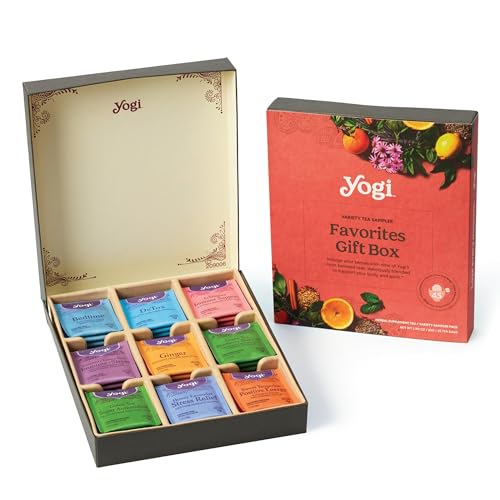
Look at how many bags represent each flavor. Galil lists three bags of each featured flavor, the Wissotzky chest lists 42 bags across six flavors, and the Wissotzky Herbal set lists seven bags of each of six flavors. Yogi lists five bags per flavor across nine flavors. Equal distribution makes it easier to sample each option rather than receiving a few dominant varieties.
The number of named flavors also matters. Sippingly lists 10 flavors in 40 bags, while Gardenika’s larger loose-leaf set identifies nine two-ounce packs. Teabloom offers the largest documented variety in this group with 24 teas, but its loose-leaf format changes how you portion and store each sample.
Consider presentation and storage
Gift presentation is a documented feature for several products. The Wissotzky Artisanal Tea Chest uses six compartments, and the Herbal Tea Gift Set uses a reusable magnetic-closure box. Teabloom describes a tea chest with reusable and recyclable tins. Yogi presents its assortment in a gift box, while Gardenika’s smaller set includes a handmade cotton pouch.
For everyday storage, individually sealed bags or foil pouches help keep each flavor organized. For loose leaf, tins or sealed packs can make it easier to separate varieties. A decorative box may be useful for gifting, but a compact tray or pouch may fit better in a kitchen drawer or desk.
Check caffeine coverage
The listings describe several caffeine patterns. Caffeine-free choices include the Wissotzky Herbal Tea Gift Set, Sippingly’s night-oriented assortment, and Gardenika’s five-pack. Mixed collections include Bigelow, Yogi, Stash, and the Gardenika nine-pack. Teabloom’s 24-variety chest covers multiple tea styles, but the supplied description does not classify every blend by caffeine level.
If you want morning and evening options in one package, choose a mixed assortment with clearly listed categories. If you want to avoid caffeine, select a product whose listing explicitly identifies the full set as caffeine-free rather than assuming an herbal-looking flavor has the same classification.
Use the Final recommendation to narrow the field
The best kosher tea samplers are not all designed for the same brewing routine. Loose-leaf chests favor exploration and infuser use; individually wrapped boxes favor quick, separated servings; focused herbal sets favor a specific time of day or caffeine preference. Compare the certification language, named flavor count, tea format, and packaging details together rather than relying on the bag count alone.
Final Recommendation
Teabloom Exceptional Organic & Kosher Tea Chest ranks first overall in this specification-based comparison under the published weighted criteria.
Teabloom Exceptional Organic & Kosher Certified Loose Leaf Tea Chest is the first overall specification-based choice among these best kosher tea samplers. Its 24 organic varieties and coverage of black, green, white, oolong, and herbal teas give it the broadest documented exploration range, while reusable tins and a tasting menu add useful structure. For bagged tea, Wissotzky Artisanal Tea Chest is a well-documented alternative with six flavors, individually wrapped bags, and a compartmentalized presentation. Choose Bigelow when a larger supply of assorted wrapped bags matters most, or select Sippingly and Gardenika’s five-pack when caffeine-free herbal coverage is the priority. These top kosher tea samplers differ mainly in format and focus, so the final choice should follow your brewing method and preferred tea styles.
Frequently Asked Questions
What should I check first when comparing the best kosher tea samplers?
Check the exact kosher statement, then review the tea format and the named assortment. The listings use different wording, including Kosher Parve, KSA kosher, and certification for year-round use including Passover. If a specific standard is important, verify it on the current packaging.
Are loose-leaf kosher tea samplers harder to use than tea bags?
Loose-leaf sets require measuring and an infuser, while individually wrapped bags are portioned for direct steeping. Teabloom provides steeping guidance for several tea types, and Gardenika identifies its products as loose leaf. Tea bags may be more convenient for offices or travel; loose leaf may suit people who already have brewing equipment.
Which selected sampler has the widest documented variety?
Teabloom Exceptional Organic & Kosher Certified Loose Leaf Tea Chest lists 24 varieties across black, green, white, oolong, and herbal teas. Gardenika’s nine-pack lists nine loose-leaf packs, while Sippingly lists 10 nighttime flavors. The category count is only one factor; format and caffeine coverage also differ.
Which options are explicitly caffeine-free?
The Wissotzky Herbal Tea Gift Set, Sippingly Night Time Tea Sampler, and Gardenika Organic Loose Leaf Tea Sampler are described as caffeine-free. Other selected products combine caffeinated and caffeine-free teas or include several categories without classifying every flavor. Read the product-specific wording when caffeine avoidance is necessary.
Which samplers are suited to gifting?
Wissotzky’s Artisanal Tea Chest uses six compartments, and its Herbal Tea Gift Set has a reusable magnetic-closure box. Teabloom describes a tea chest with reusable tins, while Yogi uses a gift box. Gardenika’s five-pack includes a handmade cotton pouch. Choose the presentation that matches how you plan to store or give the sampler.