Buying Guide
Choosing the best micro usb phone wall chargers starts with the device port. Micro USB is smaller and differently shaped from USB-C, so a USB-C phone cable will not fit a micro USB phone. The products in this comparison are documented for older Samsung, LG, Motorola, Kindle, tablet, camera, gaming, audio, or other small-electronics connections. Confirm the exact port on the device before selecting a charger.
Match the wall adapter to the cable
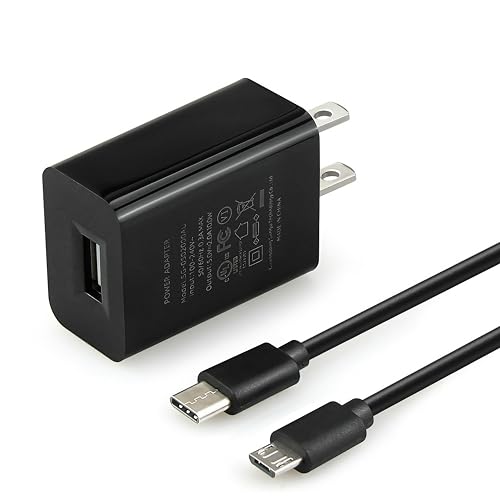
A charger kit has two important interfaces: the wall adapter’s output port and the device-side connector. Traditional kits such as the Flecom, AILKIN, HOOTEK, iHoto, and VIFIGEN options use a USB-A wall output with a separate micro USB cable. The DRMZBRL option instead uses a USB-C wall output and supplies a USB-C-to-micro USB cable. That distinction affects which existing cables can be reused.
The Gonine kit takes a mixed approach. Its adapter is paired with both USB-A-to-micro USB and USB-A-to-USB-C cables, which can simplify a household with older and newer accessories. Smays also documents a cable set with USB-C and micro USB 2 connectors. These designs add connector flexibility, but they do not automatically create two simultaneous charging channels.
Check output claims carefully
Output determines the charging profile the adapter can provide, but the connected device also limits what it can accept. iHoto lists 5V/1A, making it a conventional single-device option. AILKIN and HOOTEK list 5V/2.1A dual-port output, while VIFIGEN lists a maximum 5V/2.1A wall output. The stated maximum may be shared when both ports are occupied, so do not assume each port receives the full figure.
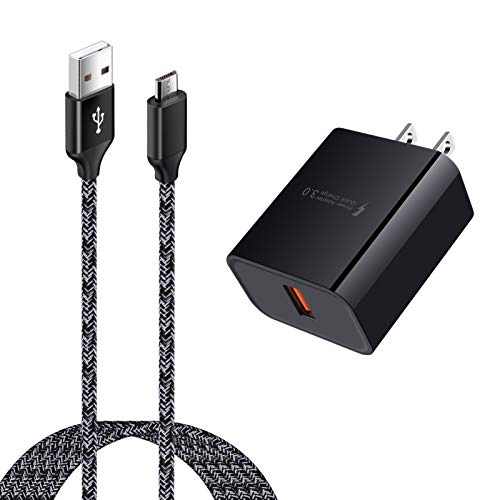
Flecom documents Quick Charge 3.0 support and up to 5V/3A. KAIMENGLONG identifies Samsung Adaptive Fast Charging and Qualcomm Quick Charge 2.0 compatibility. DRMZBRL lists 20W output profiles through its USB-C port, and Gitryin documents up to 40W across its retractable-cable design. These higher-output claims are relevant only when the phone, cable, and charger protocol align. A standard micro USB device may continue to charge at its own supported rate.
Gonine is especially explicit about limits: its adapter is for DC 5V devices and is not intended for 9V, 12V, Quick Charge, or high-power equipment. That clarity is useful when charging an e-reader, remote, speaker, or older phone with a known 5V requirement.
Choose the right cable length
Cable length affects where the phone can rest while connected. The six-foot cables supplied with Flecom, AILKIN, HOOTEK, VIFIGEN, and iHoto are suitable for a bedside table, desk, or sofa where the outlet is not immediately beside the device. DRMZBRL and Gonine provide five-foot cables, while Gitryin’s integrated cable extends to 33.5 inches.
Longer cables are convenient but take more space when stored. Braided designs appear in several selected kits, including Flecom, AILKIN, HOOTEK, VIFIGEN, and iHoto. The listings describe nylon exteriors and, in some cases, reinforced connector transitions or bend-resistance claims. Those are construction details, not a guarantee of service life, so treat them as design differences rather than test results.
Decide whether you need one or two ports
A single-port charger is appropriate when one device is normally connected at a time. The iHoto kit is the clearest example, and the DRMZBRL design focuses on one USB-C output with a built-in micro USB cable. Dual-port models such as AILKIN, HOOTEK, and VIFIGEN can charge two USB devices at once, subject to their stated shared-output limitations.
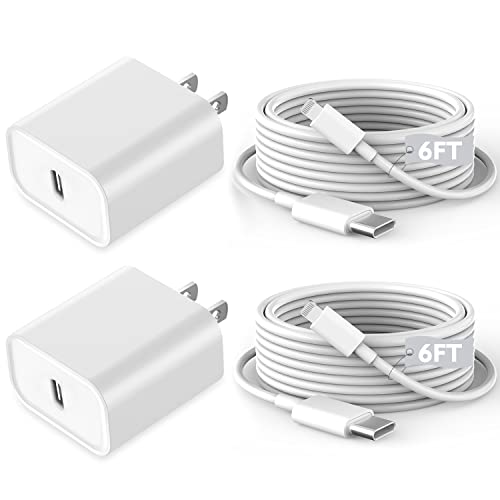
A multi-pack changes the setup in a different way. KAIMENGLONG includes two complete charger-and-cable sets, while VIFIGEN includes two dual-port adapters and two cables. These bundles can place a charger in separate rooms, but they also add components to organize. Gitryin offers another kind of flexibility through a retractable micro USB cable and an extra USB-C port in one compact unit.
Review safety and certification details
Safety documentation varies. AILKIN lists CE, FCC, and RoHS certification and identifies overheat, over-current, over-voltage, over-load, and short-circuit protection. HOOTEK, VIFIGEN, iHoto, and KAIMENGLONG also describe protective functions such as current regulation, overcharging protection, or overheating protection. Gitryin describes GaN-based temperature monitoring and output control.
These statements describe the supplied listing evidence and should not be treated as independent verification. Look for a clear input and output specification that matches the device. A charger with a documented 5V-only limitation, such as Gonine, can be easier to match than one whose operating range is unclear.
Final recommendation
Gitryin 40W GaN Retractable Micro USB Charger ranks first overall in this specification-based comparison under the published weighted criteria.
Gitryin 40W GaN Retractable Micro USB Charger is the first overall specification-based choice for shoppers who prioritize an integrated adjustable cable, an additional USB-C port, and documented output flexibility. It is followed by Flecom for QC 3.0 support and a six-foot braided cable, then KAIMENGLONG for two complete adaptive-charging kits.
Among the top micro usb phone wall chargers, AILKIN and HOOTEK stand out for dual-port designs and long cables. DRMZBRL is the USB-C wall-output alternative, while VIFIGEN provides two dual-port setups. Gonine is the clearest mixed-cable 5V option, iHoto is the simple one-port choice, and Smays covers older mixed-device use. The best micro usb phone wall chargers are ultimately the ones whose port, output profile, and cable format match the device exactly.
Frequently Asked Questions
Among the best micro usb phone wall chargers, are these chargers compatible with every Android phone?
No. The selected products are aimed at devices with micro USB charging ports, and their listings name particular Samsung, LG, Motorola, Kindle, tablet, camera, audio, or gaming products. Phones with USB-C ports need a USB-C cable and suitable charger instead. The best micro usb phone wall chargers cannot change a device’s physical connector.
It is more useful when the outlet is several feet from a desk, bed, or sofa. A shorter integrated cable, such as the one in Gitryin’s retractable design, is easier to store and adjust. Choose based on the distance you need rather than assuming one length is universally preferable.
Can a dual-port charger fast-charge two devices at once?
A dual-port design can connect two devices simultaneously, as documented for AILKIN, HOOTEK, and VIFIGEN. However, the listed output may be shared, and each device must support the relevant charging rate. Check the adapter’s output information and the phone’s charging requirements.
What is the difference between USB-A and USB-C wall outputs here?
USB-A wall outputs are used by many conventional micro USB kits and pair with USB-A-to-micro USB cables. USB-C wall outputs, used by DRMZBRL, require a USB-C-to-micro USB cable. The connector at the wall adapter must match the cable end plugged into it.
Do Quick Charge claims apply to every micro USB device?
No. Flecom, KAIMENGLONG, and DRMZBRL document higher-speed or adaptive charging features, but the phone and cable must support the applicable protocol. A device that only accepts standard 5V charging will not necessarily use the adapter’s highest listed profile.