Buying Guide
This guide compares the best oily face moisturizers using documented oil and shine control, texture and finish, barrier-supporting actives, spf and uv protection, sensitivity and non-comedogenic profile, and format and packaging design.
What makes a moisturizer work for oily skin
The best oily face moisturizers deliver hydration through a lightweight, non-comedogenic base that does not add extra shine. Gel-cream and gel textures tend to absorb quickly and leave a matte or natural finish, which matches the goals of an oily-skin routine. A short ingredient panel focused on humectants, barrier lipids, and oil-balancing actives is a stronger signal of fit than a long list of botanical extras.
AM routines typically benefit from broad-spectrum SPF built into the moisturizer, while PM routines can prioritize stronger actives such as salicylic acid or lipo-hydroxy acid for sebum control. The La Roche-Posay Toleriane Double Repair Matte Moisturizer SPF 30, Cetaphil DermaControl Oil Absorbing Moisturizer SPF 30, Cetaphil Daily Oil-Free Facial Moisturizer SPF 35, and PanOxyl Oil Control Moisturizer SPF 30 with 17% Zinc Oxide all combine daily UV protection with mattifying or hydrating bases for morning use.
Oil control that does not dehydrate
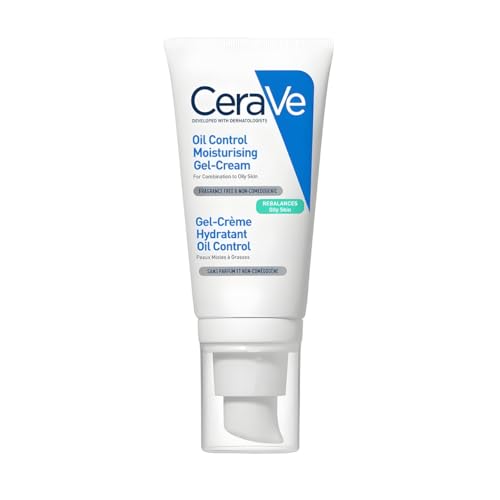
A common misconception is that oily skin should skip moisturizer; in practice, dehydration can trigger more sebum. Look for formulas that pair absorbents or powders with humectants such as hyaluronic acid. The CeraVe Oil Control Gel-Cream with Niacinamide and the CeraVe Ultra-Light Moisturizing Gel with Niacinamide both illustrate this layering, while the La Roche-Posay Effaclar Mat Oil-Free Moisturizer takes a dedicated shine-and-pore approach with perlite and silica.
Barrier support for sensitive, oily skin
Lipid-replenishing ingredients and soothing actives help keep an oily routine tolerable over time. Three ceramides paired with niacinamide appear in several picks, supporting the skin barrier alongside oil control. The Clinique Dramatically Different Moisturizing Gel focuses on barrier strength, while the Cetaphil Gentle Clear Mattifying Acne Moisturizer adds prebiotics and botanicals to its salicylic base.
Targeted actives for pores and breakouts
If visible pores or breakouts are part of the oily-skin concern, actives such as salicylic acid, lipo-hydroxy acid, and BHA can be useful. The Cetaphil Gentle Clear Mattifying Acne Moisturizer uses a 0.5% salicylic acid dose, the La Roche-Posay Effaclar Mat Oil-Free Moisturizer uses LHA with Sebulyse technology, and the medicube Zero Pore One-Day Cream combines BHA, niacinamide, and panthenol in one step.
Pump and tube formats help control dosage with greasy-prone products, while jars can be easier on thicker cream textures. The CeraVe Oil Control Gel-Cream with Niacinamide, CeraVe Ultra-Light Moisturizing Gel with Niacinamide, and medicube Zero Pore One-Day Cream use jar packaging, whereas the Cetaphil Daily Oil-Free Facial Moisturizer SPF 35 and Cetaphil DermaControl Oil Absorbing Moisturizer SPF 30 offer tube or bottle formats that can suit different preferences.
How to compare shine control claims
A matte finish is more reliable when the formula lists specific absorbents, polymers, or powders, or confirmed oil-free, non-comedogenic testing. Among the picks, the La Roche-Posay Toleriane Double Repair Matte Moisturizer SPF 30 emphasizes 48-hour shine control, and the PanOxyl Oil Control Moisturizer SPF 30 with 17% Zinc Oxide uses mineral filters plus a sheer finish to absorb excess oil.
Final recommendation
La Roche-Posay Toleriane Double Repair Matte Moisturizer SPF 30 ranks first overall in this specification-based comparison under the published weighted criteria.
The final choice among the best oily face moisturizers depends on the documented features that match your intended use.
The La Roche-Posay Toleriane Double Repair Matte Moisturizer SPF 30 is the highest-scoring specification-based choice among the top oily face moisturizers in this comparison, thanks to its combination of broad-spectrum SPF 30, 48-hour shine control, and barrier-supportive design in a single, lightweight step. For routines that want a dedicated mattifier without SPF, the La Roche-Posay Effaclar Mat Oil-Free Moisturizer and the CeraVe Oil Control Gel-Cream with Niacinamide offer strong shine- and sebum-focused alternatives. For oily, acne-prone skin, the Cetaphil Gentle Clear Mattifying Acne Moisturizer brings clinically proven salicylic acid into a daily lotion, while the medicube Zero Pore One-Day Cream layers four actives for pore and sebum care. Together, these options form a balanced set of top oily face moisturizers across morning, evening, treatment, and barrier-support roles.
Frequently Asked Questions
Which moisturizer is best for very oily skin without a greasy finish?
The La Roche-Posay Effaclar Mat Oil-Free Moisturizer focuses on dedicated shine control with perlite, silica, and LHA, while the CeraVe Oil Control Gel-Cream with Niacinamide adds silica-based oil rebalancing in a refreshing gel-cream. Either works as a starting point within a routine tailored to the best oily face moisturizers for shine-prone skin.
Should the best oily face moisturizers include SPF?
Including SPF is a personal routine choice, but using a moisturizer with built-in broad-spectrum protection simplifies morning steps. The La Roche-Posay Toleriane Double Repair Matte Moisturizer SPF 30, Cetaphil DermaControl Oil Absorbing Moisturizer SPF 30, Cetaphil Daily Oil-Free Facial Moisturizer SPF 35, and PanOxyl Oil Control Moisturizer SPF 30 with 17% Zinc Oxide all combine UV protection with mattifying or hydrating bases.
Are gel moisturizers better than creams for oily skin?
Gels and gel-creams tend to feel lighter and absorb faster, which many people with oily skin prefer. The CeraVe Ultra-Light Moisturizing Gel with Niacinamide is a clear gel example, while the Clinique Dramatically Different Moisturizing Gel shows that gel textures can also support the moisture barrier over time.
Can oily, acne-prone skin use a barrier-supporting moisturizer?
Yes, combining barrier support with sebum control is a helpful approach for acne-prone skin. The CeraVe Oil Control Gel-Cream with Niacinamide uses three ceramides alongside oil-absorbing powders, and the Cetaphil Gentle Clear Mattifying Acne Moisturizer pairs 0.5% salicylic acid with a prebiotic and botanical base.
How do I choose between a mattifying moisturizer and a hydrating gel?
Match the product to the step you are filling. For shine-prone daytime wear, a mattifier such as the La Roche-Posay Toleriane Double Repair Matte Moisturizer SPF 30 or the La Roche-Posay Effaclar Mat Oil-Free Moisturizer is a strong fit. For layers under sunscreen or makeup, a hydrating gel such as the CeraVe Ultra-Light Moisturizing Gel with Niacinamide or the Clinique Dramatically Different Moisturizing Gel offers weightless support without a heavy finish.