Buying Guide
The best plastic placemats are easiest to compare by the jobs they need to perform: shielding the tabletop, containing spills, handling warm dishes, staying in place, and fitting the table setting. This guide uses the supplied listing specifications and feature descriptions. It does not represent hands-on testing, and it does not summarize customer opinions.
Start with the surface material
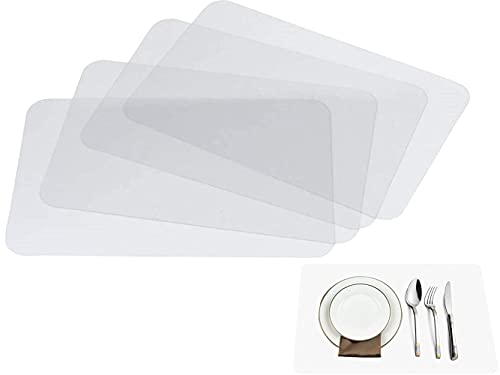
Plastic placemats are not all built the same way. Clear polypropylene designs such as Thstheaven, YoleShy, and ITQUTC are useful when you want tabletop protection without hiding wood, marble, or glass. Their smooth surfaces are described as washable or wipeable, and the clear formats can work beyond the dining table. ITQUTC specifically lists office, painting, and shelf applications, while Thstheaven mentions desks and other household surfaces.
Woven vinyl options create a more textured visual effect. Leetaltree, SHACOS, Artoid Mode, DII, and Onebento use woven vinyl or PVC-based constructions. These can provide a more traditional dining look, with patterns, borders, or neutral colors. The trade-off is care: a spill may be simple to wipe when fresh, but residue can settle into a weave. SHACOS says dried material between the weaves may need soaking, and Artoid Mode lists brushing for stubborn stains.
MOSAYT uses a faux-leather PVC construction, while Jsenvpon uses solid black polypropylene. These smooth or relatively simple surfaces may appeal to shoppers who prefer a less visibly textured mat. Always check the care instructions: MOSAYT is listed as wipe- or rinse-clean and not machine washable, while Onebento is described as foldable and gently washable.
Match heat protection to your meals
If hot cookware is a regular concern, use the documented heat limit as a comparison point rather than assuming every plastic mat offers the same protection. MOSAYT lists resistance up to 212°F/100°C. SHACOS lists up to 185°F/85°C, while Leetaltree lists up to 176°F/90°C. Artoid Mode and Onebento list up to 176°F/80°C, and Thstheaven lists heat resistance up to 80°C.
Several listings do not provide a numerical limit. ITQUTC, YoleShy, DII, and Jsenvpon can still be considered for everyday tabletop protection based on their supplied descriptions, but the available evidence does not support treating them as equivalent to products with a stated temperature rating. MOSAYT also says not to use the mat in a microwave, and SHACOS cautions against very hot items, so a heat-resistant placemat should not automatically be treated as a trivet for every cookware use.
Check dimensions and table coverage
Most selected mats are rectangular and close to standard dinner-place-setting proportions. Artoid Mode provides a 12-by-18-inch format, SHACOS is 18 by 12 inches, and DII is 13 by 17.25 inches. These broader options may suit larger plates or a more generous place setting. YoleShy and Onebento are 17 by 11 or 17 by 12 inches, offering a more compact footprint for ordinary dining tables.
Thstheaven is approximately 15.7 by 11.8 inches, while Jsenvpon is listed at 11 by 16.9 inches. ITQUTC measures 17 by 11 inches. Before ordering, compare the placemat dimensions with the plate, utensils, glassware, and table edge clearance you normally use. A larger mat can offer more visual and spill coverage, but too much width may crowd a narrow table.
Consider stability and storage
The supplied listings use different language for handling. YoleShy, Thstheaven, SHACOS, and some other products describe non-slip or stable placement. SHACOS says the mats stay put under plates and can be rolled for storage. MOSAYT can also be rolled, while Leetaltree and Onebento are described as foldable. These details matter if you store placemats between meals or use them outdoors.
The selected Thstheaven product specifically documents rounded corners. For any placemat, keep the surface flat and clean enough for the stated stability features to work as intended; the listings do not support universal claims about grip on every table material.
Choose a style for the room and occasion
Solid colors are generally easier to coordinate. Jsenvpon’s black finish and Onebento’s caramel option are restrained choices for daily dining. Leetaltree’s beige and DII’s nautical blue offer decorative color without a highly illustrated theme. Artoid Mode adds a gradient blue stripe, while MOSAYT supplies a reddish-brown faux-leather appearance.
Clear mats are the least visually dominant and can work with changing table decor. Patterned or textured mats are more expressive for parties and seasonal settings. The key is to balance appearance with care: printed, woven, and textured designs may need more attention when food reaches grooves or patterned surfaces.
How to use the rankings
The ranking is an editorial comparison of documented material, cleaning, heat, handling, coverage, and design details. It is not a test score and does not use customer ratings, current listing information, purchase activity, or marketplace badges. Higher placement indicates a stronger balance across the published criteria, not a guarantee that one mat fits every table.
Final Recommendation
MOSAYT Faux-Leather Vinyl Placemats ranks first overall in this specification-based comparison under the published weighted criteria.
MOSAYT Faux-Leather Vinyl Placemats is the first overall specification-based choice among these best plastic placemats because its listing combines waterproof and oil-proof care, six-piece coverage, roll-up storage, and the highest documented heat limit in the selection. Choose Thstheaven when you want translucent protection and rounded corners, or ITQUTC when a larger clear set is more useful for dining and work surfaces.
For woven styling, Leetaltree is a balanced neutral option with stated material composition and certification claims, while SHACOS offers a reversible design and broad 18-by-12-inch coverage. Artoid Mode and DII are better suited to shoppers who prioritize decorative table settings. Jsenvpon is the simplest solid-color choice, and Onebento is practical when foldable storage matters. Together, these top plastic placemats cover the main documented differences in material, care, heat information, size, and appearance.
Frequently Asked Questions
What should I look for in the best plastic placemats?
Prioritize the material, dimensions, cleaning method, and any stated heat limit. Smooth clear polypropylene or vinyl can be convenient for wiping, while woven vinyl provides texture and decorative appeal but may need soaking or brushing when residue enters the weave. Also check whether the listing documents non-slip handling, roll-up or foldable storage, and indoor-outdoor use.
Are clear plastic placemats practical for everyday dining?
Yes. Thstheaven, YoleShy, and ITQUTC document clear or translucent designs intended to protect tables while keeping the surface visible. Their listings describe wipeable or washable care and protection from spills or stains. Clear mats may be a good fit when you want the tabletop’s existing finish to remain part of the room’s appearance.
Which best plastic placemats have a stated heat-resistance limit?
MOSAYT lists resistance up to 212°F/100°C. SHACOS lists up to 185°F/85°C, while Leetaltree lists up to 176°F/90°C. Artoid Mode and Onebento list up to 176°F/80°C, and Thstheaven lists up to 80°C. These are technical listing claims, not independent test results, so follow each product’s care guidance and do not assume heat resistance makes a mat suitable for microwave use.
Are woven vinyl placemats harder to clean than smooth plastic mats?
They may require more attention when food dries between the weave. Artoid Mode describes wiping with soap and water and brushing stubborn stains. SHACOS says soaking can soften dried residue. Smooth options such as Thstheaven, YoleShy, and ITQUTC are described as wipeable or washable, which may be more convenient for frequent spill cleanup.
How large should a plastic placemat be?
Measure the place setting and table before choosing. Selected products range from approximately 15.7 by 11.8 inches to 18 by 12 inches, with DII listed at 13 by 17.25 inches. Larger mats can provide more coverage around plates and utensils, but they may crowd a narrow table. Leave enough room for neighboring settings and the table edge.