Buying Guide
The best pocket multitools are not defined by the highest number printed on the package. The useful choice depends on which tools you will carry often, how much weight you accept, and whether you want a plier-based design or a knife-centered format. The products above are ranked from public listing evidence only. No hands-on testing, customer sentiment, or durability testing was used.
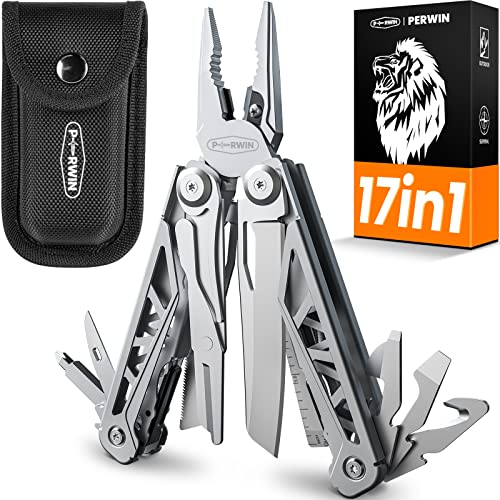
A full-size plier multitool is the most versatile format in this comparison. The Leatherman Wave Plus, Gerber Truss, Leatherman Sidekick, Gerber Suspension NXT, Mossy Oak 21-in-1, and PERWIN 17-in-1 all document pliers together with cutters, blades, drivers, and other repair tools. This layout is appropriate when gripping, cutting wire, turning screws, and opening packages are all plausible tasks.
A compact plier design reduces carry burden. The SOG PowerPint and Gerber Dime document smaller formats, with the Dime going as light as 2.2 ounces in the supplied specifications. These models make sense for keychain, backpack, or light EDC use, but smaller tools may be less suitable when your routine involves larger objects or more demanding repairs. The PowerPint adds a magnetic hex-bit holder, while the Dime emphasizes small precision tools such as tweezers and spring-loaded pliers.
Knife-centered multitools take a different approach. The Leatherman Skeletool CX documents seven functions around a straight-edge blade, pliers, wire cutters, and bit driver. The Gerber Armbar Trade documents a plain-edge blade, frame lock, two-sided bit driver, pry bar, hammer, awl, saw, and bottle opener. These are useful when a blade and driver matter more than a large plier inventory. Neither should be treated as equivalent to a 17- or 21-tool plier multitool simply because both are called multitools.
Count the functions, then inspect what those functions are. The Mossy Oak 21-in-1 and PERWIN 17-in-1 list broad sets that include pliers, cutters, blades, saws, drivers, files, rulers, and opening tools. The Gerber Truss also documents a strong mix, including standard and needle-nose pliers, a wire stripper, saw, scissors, files, multiple drivers, and two blade types.
For household repair, prioritize pliers, wire cutters, Phillips and flat drivers, scissors, and a useful blade. The Wave Plus and Sidekick are especially well aligned with that checklist based on their supplied descriptions. For camping and hiking, a saw, file, bottle opener, lanyard point, sheath, and compact carry format may matter more. The Truss, Suspension NXT, PowerPint, and Mossy Oak models document several of those features.
Do not assume every listed function has the same practical importance. A multitool with many specialty pieces may be less useful to you than a smaller model with the exact driver, cutter, scissors, or blade you use repeatedly. A high count also does not establish strength, comfort, or ease of operation; those factors were not hands-on tested here.
Consider weight and carry method
The supplied weights range from the Gerber Dime at 2.2 ounces to the Mossy Oak 21-in-1 at about one pound. That is a meaningful difference for daily pocket carry. The Skeletool CX, Armbar Trade, and PowerPint occupy lighter positions, while the Wave Plus, Truss, and PERWIN offer broader inventories at higher listed weights.
Look for the carrying hardware that fits your routine. The Dime documents a keychain or lanyard ring, the PowerPint is described as suitable for a pocket or pack, and the Suspension NXT lists both a pocket clip and lanyard point. Several full-size models include or support a sheath. The Truss, Mossy Oak, and PERWIN specifically document sheath-based carry, which may be preferable on a belt or backpack strap when a multitool is too heavy for a trouser pocket.
Dimensions can be as important as weight. The PowerPint lists a 3.2-inch closed length, the Dime 2.75 inches, and the Skeletool CX 3.25 inches. By contrast, the full-size plier tools generally list closed lengths around four inches or more. Treat these figures as listing specifications rather than a guarantee of how a tool will feel in a particular pocket.
Review locking and access details
Locking features can affect how a multitool is carried and handled. The Truss documents a tool lock and butterfly opening. The Suspension NXT also lists a tool lock and butterfly opening, while the PERWIN and Mossy Oak descriptions identify self-locking designs. The Armbar Trade documents a frame lock for its blade. These are useful distinctions when comparing tool retention and access features.
Access is also about the tool layout. The Sidekick lists outside-accessible blades, and the Skeletool CX centers its design around a blade and a small group of essentials. A broad multitool may provide more functions but require more selection among folded tools. A compact knife-centered model may provide quicker access to its main blade or driver, depending on the task. The supplied data supports these design differences, but not a claim about actual opening speed.
Use materials and warranty as supporting evidence
For the selected products, material information helps describe construction but does not prove edge retention, corrosion resistance in use, or overall service life.
Warranty information can still help distinguish documented manufacturer support. The Wave Plus, Sidekick, and Skeletool CX list 25-year Leatherman warranties. Gerber’s Truss, Suspension NXT, Dime, and Armbar Trade list limited lifetime warranty coverage. Read the applicable terms before purchase because warranty language does not cover every form of wear or misuse.
Final recommendation
Mossy Oak 21-in-1 Multitool ranks first overall in this specification-based comparison under the published weighted criteria.
The final choice among the best pocket multitools depends on the documented features that match your intended use.
The Leatherman Wave Plus is the highest-scoring returned product and the first overall specification-based choice. It offers the broadest balance of household, DIY, and outdoor functions, along with replaceable wire cutters and a 25-year warranty. Among the top pocket multitools, the SOG PowerPint is the more compact broad-tool alternative, the Gerber Dime is the lightest mini option, and the Leatherman Skeletool CX is the clearer minimalist choice.
Choose the Gerber Truss or Leatherman Sidekick when you want a conventional plier multitool with a broad everyday tool mix. Choose the Mossy Oak 21-in-1 or PERWIN 17-in-1 when inventory breadth and sheath carry matter more than pocket weight. For a blade-first format, compare the Skeletool CX with the Gerber Armbar Trade: the former includes pliers and wire cutters, while the latter adds a pry bar and hammer but does not document pliers.
Frequently Asked Questions
Start with the tasks you actually expect to perform. For general repairs, look for documented pliers, wire cutters, scissors, a blade, and Phillips and flat drivers. Then check weight, closed length, locking information, carry hardware, and warranty. A high tool count is useful only when the included tools match your routine.
Neither format is automatically better. Full-size models such as the Leatherman Wave Plus and Gerber Truss document more extensive repair coverage, but mini models such as the Gerber Dime and SOG PowerPint are easier to carry. Choose the larger format for broader gripping and repair needs, and the smaller format when weight and availability matter most.
The Gerber Dime is the clearest keychain-oriented selection because its listing documents a 2.75-inch closed length, 2.2-ounce weight, and keychain or lanyard compatibility. The SOG PowerPint is also compact, while the Leatherman Skeletool CX is a lightweight pocket option. Confirm the preferred attachment method and local regulations before carrying a blade.
A lock is a design feature that helps keep a tool open or closed; it is not a guarantee of safe handling. Follow the manufacturer’s instructions and use each tool only for its intended purpose.
Not necessarily. The Mossy Oak 21-in-1 has the largest documented inventory among the selected products, but it also has a listed weight of about one pound. A smaller model may be more useful if it includes the few tools you regularly need. Compare the actual tool list, carry method, dimensions, and locking features rather than relying on the headline count alone.