Buying Guide
Choosing among the best porcelain spoon rests is mainly a matter of matching the dish’s footprint and documented features to the way you cook. Listing terminology varies: some products are identified as porcelain, while others use ceramic or high-fired ceramic language. This comparison treats those products as relevant when the listing clearly presents them as spoon rests and supplies material or kitchen-use details. It does not treat the products as hands-on tested.
Start with the utensil shape
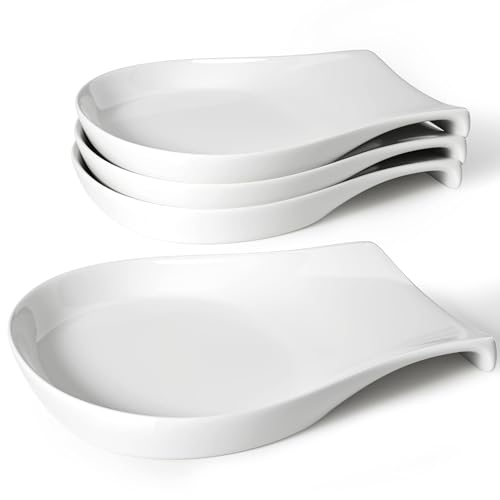
A spoon rest needs enough support for the utensil you plan to place on it. Long, narrow options such as the Hasense and Patelai models measure roughly 8.7 to 9 inches in length, so they are better suited to ladles, spatulas, tongs, and whisks that can extend beyond a compact dish. The MALACASA also provides a relatively generous 6.9-by-4.8-inch platform and explicitly covers utensils from coffee spoons to tongs.
Round or nearly square rests use counter space differently. The MIKIGEY is listed at 9 inches in diameter, giving it a roomy footprint for broad tools. Cormomu measures 6.1 by 5 inches, while DAYYET measures 5.8 by 4.48 inches. These middle-to-large shapes may be easier to position beside a cooktop without requiring the full length of an elongated tray.
Compact designs are useful when the rest is intended for a coffee station, a small saucepan, or a single spoon. Honeydak measures 5.2 inches, and the Selamica dishes measure 4.8 inches. Those sizes can also work as small serving or catch-all dishes, but the supplied evidence does not establish how many large utensils they can hold at once. Check the dimensions against your largest spatula or ladle before choosing.
Check the material wording carefully
Porcelain and ceramic are related but not interchangeable technical terms. The MALACASA, vancasso, and HOMBENE listings make especially direct porcelain claims. Other selected products describe ceramic construction, high-fired ceramic, or ceramic porcelain in their titles and features. For this reason, the material criterion rewards clear documentation rather than assuming every ceramic item has identical composition.
Heat-related language also differs. vancasso documents heat resistance up to 482°F, while several other listings describe the material as heat resistant without giving a temperature. Patelai, HOMBENE, and Selamica provide broader appliance-use statements that include combinations of dishwasher, oven, microwave, or refrigerator compatibility. These claims are useful specification signals, but they should be followed according to the seller’s current care instructions.
Prioritize easy cleanup
A smooth or glossy glazed surface is a common advantage in this group. MALACASA describes a brighter, easy-maintenance surface; Hasense, Patelai, and DAYYET also describe smooth or glossy finishes. Dishwasher compatibility is documented for every selected product through its feature descriptions. A dishwasher-safe claim can simplify routine cleanup, but it does not eliminate the need to consider the dish’s size, glaze details, or decorative trim.
The HOMBENE listing emphasizes a nonporous porcelain surface, while Selamica describes high-fired ceramic that does not absorb stains or odors. These details may matter when the rest regularly catches sauces, oils, or coffee residue. Still, the supplied listings do not provide independent stain testing, so the comparison reports the claims rather than promising a particular cleaning result.
Look for stability and drip control
A spoon rest should keep a utensil from sliding into the counter or stovetop. Cormomu is described as having a flat, wide base, and vancasso is described as having a balanced base. HOMBENE’s listing mentions an arch intended to help prevent tipping. Hasense describes a sturdy construction, while DAYYET is described as nice and heavy. These are relevant design signals for stability.
Shape also influences drip control. A depression or raised contour can help collect residue, but the listings do not provide standardized basin depths or spill testing. Selamica specifically documents a circular depression, and several products describe designs intended to catch drips. If you often rest a sauce-covered ladle, compare the listed shape and width with the utensil bowl rather than relying only on decorative appearance.
Decide whether one piece or a set makes sense
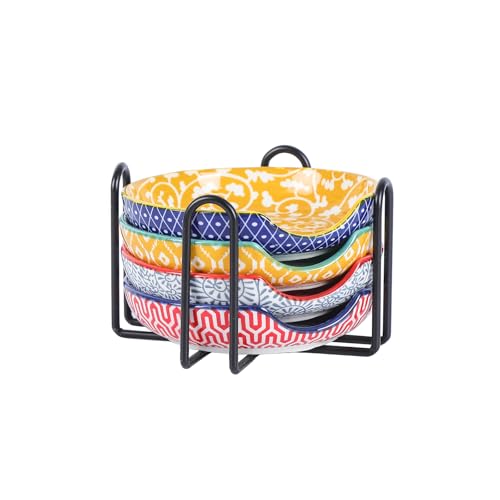
A single rest is usually simpler when one person cooks and the dish will stay beside one stove. MALACASA, Hasense, MIKIGEY, Patelai, Cormomu, DAYYET, and Honeydak fit that use case. Sets are more useful for several burners, entertaining, serving, or keeping a clean replacement available. vancasso includes six rests, HOMBENE includes four, and Selamica includes four rests plus a metal holder.
Storage matters particularly for sets. vancasso and Honeydak are described as stackable, while Selamica’s separate holder is intended to keep its pieces together. A multi-piece purchase can add flexibility, but it also requires more cabinet or shelf room unless the pieces nest or stack securely. Consider where the rests will live when they are not beside the cooktop.
Match the finish to the kitchen
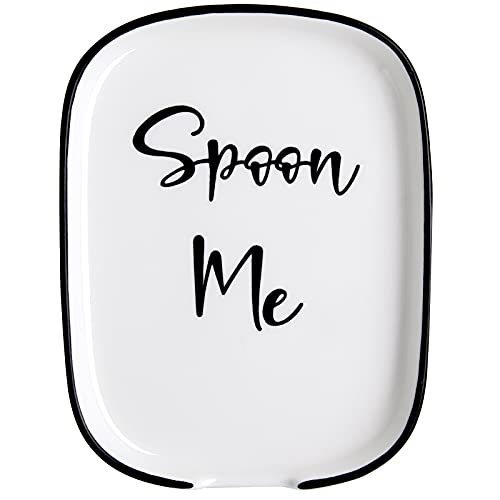
White designs such as MALACASA, Hasense, HOMBENE, Patelai, and DAYYET provide a neutral appearance. Cormomu supplies a black swirl pattern, Honeydak offers blue-and-white chinoiserie styling, and vancasso uses a coordinated blue-and-white floral design. MIKIGEY adds a flower pattern, while Selamica provides assorted colors.
Decorative claims are supported where the listings identify floral, chinoiserie, farmhouse, vintage, or swirl styling. They should not be confused with performance testing. A patterned spoon rest may serve as a small tray or accent dish, but the key purchase questions remain size, care, and stability.
Final recommendation
vancasso SELENE 6-Pack Spoon Rests ranks first overall in this specification-based comparison under the published weighted criteria.
The final choice among the best porcelain spoon rests depends on the documented features that match your intended use.
vancasso SELENE 6-Pack Spoon Rests is the highest-scoring returned product and the first overall specification-based choice. It combines six coordinated 4.8-inch rests with documented heavy-duty porcelain, heat resistance up to 482°F, dishwasher-safe cleaning, stackability, and a balanced base. Those features make it especially useful for entertaining or multiple cooking areas.
Among the top porcelain spoon rests, MALACASA is a suitable single large-format pick, while Hasense is suited to long utensils. Choose HOMBENE when a four-piece porcelain set and broad appliance-use documentation are priorities. MIKIGEY suits shoppers who want a large decorative dish, Patelai emphasizes a classic elongated profile, and Cormomu provides a wide dark finish. DAYYET is a practical farmhouse-style option, Selamica is an organized multi-piece set, and Honeydak is the compact decorative choice.
Frequently Asked Questions
Among the best porcelain spoon rests, what size spoon rest should I choose?
Measure the longest or widest utensil you use most often. Long models such as Hasense and Patelai are suitable starting points for ladles and spatulas, while 4.8- to 5.2-inch options such as Selamica and Honeydak are more compact. The 9-inch MIKIGEY offers a generous listed round footprint, but it also needs more counter space.
Are these porcelain spoon rests dishwasher safe?
The supplied listings describe all ten selected products as dishwasher safe or dishwasher compatible. The wording is clear for vancasso, MALACASA, HOMBENE, Hasense, MIKIGEY, Patelai, Cormomu, DAYYET, Selamica, and Honeydak through their feature descriptions. Decorative finishes may still have specific care guidance, so consult the current product instructions before washing.
Is a set better than a single spoon rest?
A set can be useful for multiple burners, hosting, or placing rests at different work areas. vancasso includes six pieces, while HOMBENE and Selamica include four. A single product such as MALACASA or Hasense may be more appropriate when you want one dedicated rest and less cabinet inventory. Storage features such as stacking or an included holder can make sets easier to manage.
Can a spoon rest also be used as a small dish?
Several selected listings describe secondary uses. MALACASA, Honeydak, Selamica, and HOMBENE mention uses such as trays, serving dishes, sauce dishes, snack dishes, or jewelry holders. These are listing-based intended uses, not independent testing. Confirm that the shape and care instructions suit the alternate purpose before using a rest for food service or storage.
What is the difference between a decorative and utility-focused rest?
A utility-focused rest emphasizes footprint, utensil support, drip containment, stability, and cleaning. Decorative options add patterns or finishes such as Honeydak’s chinoiserie design, Cormomu’s swirl glaze, or MIKIGEY’s flower pattern. Many products combine both roles, so choose the dimensions and documented care features first, then select the appearance that fits your kitchen.
This comparison is based on supplied listing specifications and feature fields. It is not a hands-on test and does not summarize customer sentiment. Marketplace pricing, ratings, current listing information, popularity indicators, and volatile labels were not used as public product evidence.