Buying Guide
The best porcelain wall sculptures are easier to compare when the practical specifications are separated from the decorative language. These products are not interchangeable: some are coordinated sets, some are single flowers, and some are compact accents intended to work together. Start with the wall area, then check the material description, relief, size, and hanging method.
Choose a set or a single sculpture
A multi-piece set is the clearest choice when you want to design an arrangement rather than fill one specific spot. The Zubebe set includes six white peonies in three sizes, while the LIUCOGXI set includes five white peonies with one large, two medium, and two small pieces. The varied dimensions can support a staggered composition, but they also mean more measuring and more wall attachment points.
Single sculptures are more predictable for a small entryway, bedroom section, or office wall. The SEINHIJO flower has a documented 6.7-inch diameter, giving it more standalone presence than the 2.76-inch AMERRY accents. The CEUYGT blue peony is also a straightforward focal piece at 4.72 inches. Remember that the CEUYGT listing specifically cautions that the actual flower may look smaller than the image, so leave room for the real object rather than planning from the photograph alone.
Compare porcelain and ceramic wording
The supplied listings use porcelain and ceramic terminology in overlapping ways. Zubebe describes ceramic porcelain fired at high temperature, LIUCOGXI calls its flowers handcrafted ceramic and porcelain, and SEINHIJO identifies glazed porcelain. Other selected products use ceramic in their titles and descriptions while also calling themselves porcelain wall decor. For this comparison, those material statements are treated as relevant evidence, but they do not establish identical manufacturing processes.
If surface care matters, look for a specific finish claim. Zubebe documents a smooth matte white glaze and says occasional dusting is sufficient in its description. SEINHIJO documents glazed porcelain. LIUCOGXI describes its flowers as waterproof and fade-resistant. Several AMERRY listings describe smooth or high-quality ceramic and resistance to fading, but they do not provide the same level of finish detail. These statements describe the listing evidence, not independently verified durability.
Match scale to the wall
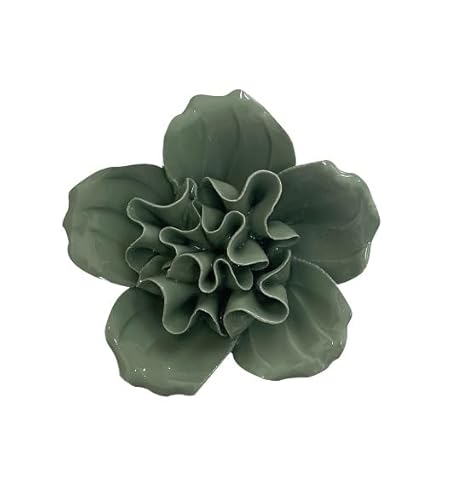
Measure the available area before choosing a flower. The 6.7-inch SEINHIJO piece is a better candidate for a single accent than the 2.76-inch AMERRY Snow Lotus, Rhododendron, succulent, or Camellia. Smaller flowers can be useful where a larger object would crowd shelving, door trim, or adjacent art, but they may need grouping to create a stronger visual field.
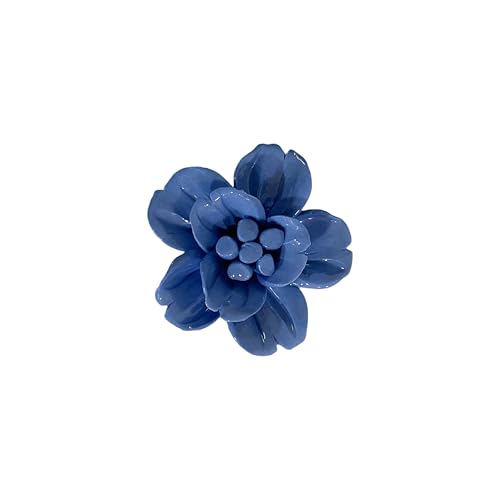
The 3.54-inch AMERRY Carnation and Crape Myrtle occupy a middle position. They can stand alone in a small area or sit between larger and smaller flowers in a layered arrangement. Color also affects perceived presence: the dark blue Snow Lotus and blue CEUYGT peony create more contrast, while white flowers generally read as quieter and more adaptable.
Check installation details
Installation evidence varies considerably. LIUCOGXI specifies a keyhole on the back and says the buyer supplies a small screw or nail. CEUYGT lists a rear hook and thumbtack. The AMERRY succulent and Crape Myrtle listings specify a rear hook for direct hanging. SEINHIJO also lists a hook behind the flower.
For Zubebe, the supplied evidence explains the set and its dimensions but does not state whether hardware is included. The same limitation applies to several individual AMERRY pieces. Do not assume that a decorative object includes a fastener simply because it is described as wall decor. Check the final listing and use hardware appropriate for the wall surface and the object’s documented weight where available.
Consider finish, color, and placement
Choose color based on the surrounding room rather than treating one finish as universally suitable. White Zubebe and LIUCOGXI flowers fit farmhouse, cottage, minimalist, and modern settings according to their descriptions. Green options such as SEINHIJO, the AMERRY succulent, and the deep green Rhododendron support a botanical palette. Blue CEUYGT and Snow Lotus pieces offer cooler, more noticeable accents, while the pink Camellia and light blue Crape Myrtle create softer color variation.
Placement claims are broad across the group. The listings mention living rooms, bedrooms, hallways, kitchens, studies, offices, and other hospitality or event settings. That indicates intended versatility, not a guarantee that every finish will suit every room. For a damp area, give extra weight to products with explicit finish or water-resistance wording, and confirm the manufacturer’s current care instructions.
How this comparison was scored
This is a specification-based comparison using public listing data, not a hands-on test and not a summary of customer opinions. Scores use six category-specific criteria: material evidence, sculptural relief, display scale, installation readiness, finish documentation, and placement flexibility. The weighted editorial average favors products with multiple clearly documented practical attributes. Price, ratings, review information, purchase activity, and marketplace labels were not used in the published scores.
Final Recommendation
Zubebe 6-Piece White Porcelain Peony Set ranks first overall in this specification-based comparison under the published weighted criteria.
The final choice among the best porcelain wall sculptures depends on the documented features that match your intended use.
Zubebe 6-Piece White Porcelain Peony Set is the highest-scoring returned product and the first overall specification-based choice. Its six-piece format, three documented sizes, matte glaze, high-temperature-fired ceramic porcelain description, and detailed peony relief give it the broadest supported use case. LIUCOGXI is the better alternative when clearly documented keyhole mounting matters most. For a single statement flower, SEINHIJO offers the largest documented diameter, while CEUYGT is the stronger pick for a blue focal accent. Among the top porcelain wall sculptures, the right choice depends chiefly on whether you need a coordinated arrangement, a standalone piece, or a compact color accent.
Frequently Asked Questions
How should I choose among the best porcelain wall sculptures for a small wall?
Start with the documented dimensions. The AMERRY Snow Lotus, Rhododendron, succulent, and Camellia are all compact 2.76-inch options, while the Carnation and Crape Myrtle are listed at 3.54 inches. A small flower can fit beside trim or shelving, but grouping several pieces may create more visual weight. If you want one larger accent, the 6.7-inch SEINHIJO flower is the most substantial selected single botanical by stated diameter.
LIUCOGXI gives the most specific installation description: each flower has a keyhole back, and the listing instructs the buyer to use a small screw or nail. CEUYGT lists a rear hook and thumbtack, while the AMERRY succulent and Crape Myrtle specify rear hooks. For products without stated hardware, verify the current listing before mounting.
Are these best porcelain wall sculptures suitable for a bathroom?
The Zubebe listing specifically names bathrooms among possible settings, and LIUCOGXI describes its flowers as waterproof. Those are listing-based claims rather than independent testing. For any room with moisture, consider the documented finish, follow current care instructions, and avoid assuming that every ceramic or porcelain flower has the same water resistance.
Can small floral sculptures be mixed in one arrangement?
Yes, the documented sizes and colors support that approach, but the arrangement should be planned around scale. A larger CEUYGT or SEINHIJO piece can anchor a display, while an AMERRY Camellia, Snow Lotus, Rhododendron, or succulent can fill smaller positions. Keep the grouping visually intentional and confirm each selected piece’s hanging method before laying out the final pattern.