Buying Guide
Selecting the best precision postal scales for a home office, small shop, or warehouse comes down to documented readability, capacity, and the specific workflow features you rely on each day. Below is a practical walkthrough of the key specification areas to compare when reviewing any postal scale listing.
Readability and Precision
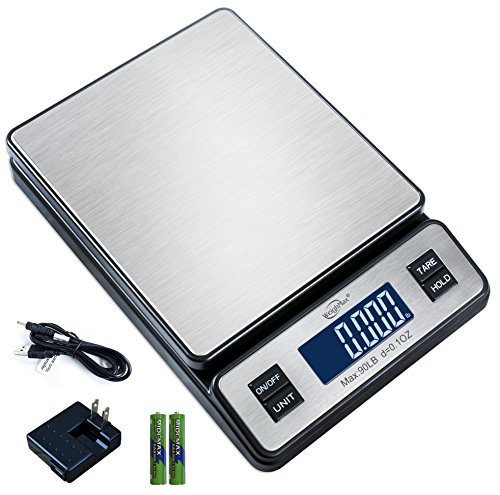
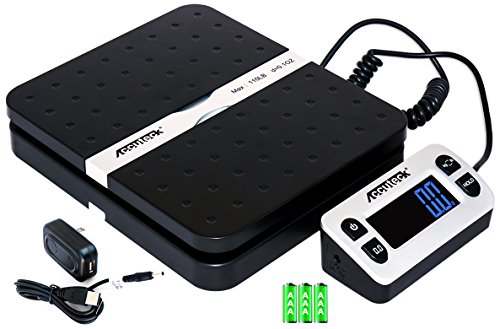
For most mailing tasks, 0.1oz (about 2 to 3 g) precision is the practical baseline. Models such as the Amazon Basics SF-550, Accuteck W-8580, Fuzion PS2-40KG, and Weighmax W-2809 all document 0.1oz readability, while the Yoncon model lists 0.2oz precision and CCWEIGH’s CC004 lists 1oz. If you regularly weigh single stamps’ worth of envelopes or small handmade goods, lean toward the finer 0.1oz options; for heavy freight or luggage-style parcels, coarser readability is acceptable.
Maximum Capacity
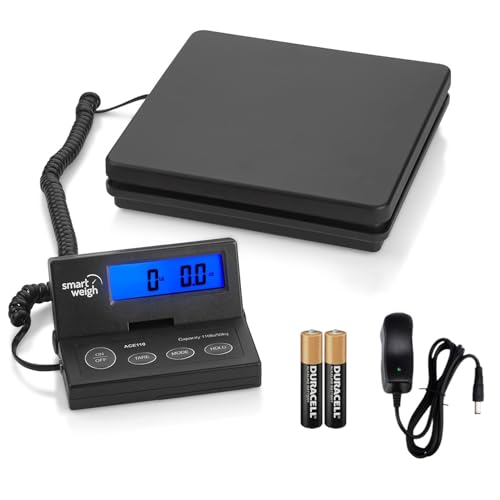
Capacity and precision often trade off. The CCWEIGH CC004 tops the roundup at 440 lb, while the Accuteck W-8580, ACCT AC-Q7, and Smart Weigh ACE110 each document 110 lb. Mid-range models like the Fuzion PS2-40KG and Weighmax W-2809 list 90 lb, and lighter options such as TIPRE’s 66 lb scale and Yoncon’s 66 lb scale suit everyday parcels. Match capacity to your largest typical package plus a safety margin.
Stainless steel platforms appear on the Fuzion PS2-40KG and Weighmax W-2809, while the Amazon Basics SF-550 combines ABS, aluminum, and iron. CCWEIGH uses an ultrathin ABS platform aimed at portability, and the Smart Weigh ACE110 is heavier at 3.9 lb, indicating a more stationary installation. Consider where the scale will sit and whether a stainless or ABS finish suits your environment.
Display Visibility
Backlit LCDs are documented across most models, including the extra-large backlit screens on the Accuteck W-8580, TIPRE ES01, and Yoncon postal scale. The Smart Weigh ACE110 separates its display from the base via a cord, which helps when weighing oversized boxes that block the on-platform screen. If your packing area has variable lighting, prioritize documented backlighting and a large character display.
Measuring Unit Flexibility
Postal work often crosses between ounces, pounds, grams, and kilograms. The Fuzion PS2-40KG, Fuzion PS1-GD, TIPRE ES01, and ACCT AC-Q7 document five units, while the Yoncon scale lists six units including kg:g. Simpler three- or four-unit scales are fine if you only need pounds and ounces, but multi-unit support is helpful when serving international customers.
Power and Calibration Options
Dual power is common: the Accuteck W-8580 documents batteries, USB, and AC adapter; TIPRE uses Type-C plus AAA batteries; Smart Weigh supports batteries and wired power. Factory calibration is standard, and the Fuzion PS2-40KG stands out by documenting user calibration between 3 lb and 80 lb, useful for long-term accuracy maintenance.
Workplace Features
Tare and hold functions are nearly universal in this category, documented on every selected scale. The TIPRE ES01 and Fuzion PS1-GD add foldable flip stands for standing mailers, which can stabilize rigid envelopes during weighing.
Final recommendation
Among the top precision postal scales, the ranked products differ under documented readability & precision, maximum capacity, platform build & footprint, display visibility, measuring unit flexibility, power & calibration options, and workplace features (tare, hold, pcs).
Fuzion 90 lb Postal Scale, Stainless Steel ranks first overall in this specification-based comparison under the published weighted criteria.
For a specification-led choice that combines documented 0.1oz precision, a 90 lb capacity, stainless steel platform, five measuring units, and adjustable user calibration, the Fuzion PS2-40KG stands out as the first overall specification-based option in this comparison. It balances capacity, precision, and platform quality in a way that supports both everyday mailing and occasional inventory tasks.
If you ship heavier parcels, the Accuteck W-8580 and Smart Weigh ACE110 both document 110 lb capacities with remote or foldable displays. For the heaviest freight-style work, the CCWEIGH CC004 documents a 440 lb ceiling, while compact 66 lb scales such as the TIPRE ES01 and Yoncon postal scale work well in smaller packing stations. Across these options, the best precision postal scales remain those whose documented readability, capacity, and feature set align with the packages you actually send.
Frequently Asked Questions
What readability should I look for in the best precision postal scales?
For most mailing and small-parcel tasks, 0.1oz (about 2 to 3 g) readability is the practical minimum and is documented on most of the top precision postal scales in this guide. Heavier-duty scales like the CCWEIGH CC004 list 1oz readability, which is acceptable for freight but coarse for lightweight postage.
How much capacity do I need from a postal scale?
A 60 to 90 lb scale covers typical e-commerce parcels, while 110 lb models such as the Accuteck W-8580 and Smart Weigh ACE110 are useful for mixed or heavy shipments. For warehouse or luggage-style weighing, 440 lb platforms like the CCWEIGH CC004 document the highest documented capacity.
Do I need tare, hold, and piece counting features?
Tare zeroes out container weight and hold locks the reading after a package is removed, both of which are documented on every selected scale. The Yoncon postal scale adds a documented PCS piece counting function for inventory-style tasks alongside weight and tare.
Is a stainless steel platform important for postal scales?
Stainless steel is documented on the Fuzion PS2-40KG and Weighmax W-2809 and tends to resist wear from repeated parcel placement. ABS platforms like the Amazon Basics SF-550 and CCWEIGH CC004 keep weight down, which can matter for portable or shared workspaces.
Should I prefer dual power options on a postal scale?
Dual power, documented on models like the Accuteck W-8580, TIPRE ES01, and Smart Weigh ACE110, lets you run from AC when stationed at a desk and from batteries or USB when packing away from an outlet. If you ever pack on the go or at events, dual power is a worthwhile documented specification.