Buying Guide
Choosing the best portable line-in speakers starts with the connection rather than wireless features. Every selected model documents a wired audio path, usually through a 3.5mm jack. That makes these speakers useful with older phones, tablets, laptops, MP3 players, CD players, game devices, and other equipment that may not offer modern wireless options. The key differences are the type of input, the amount of sound output described, the battery information, and the physical design.
Check the line-in connection first
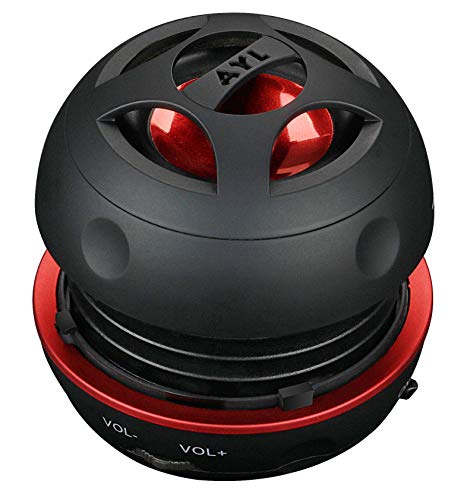
A standard 3.5mm AUX input is the most common choice in this comparison. Models such as the Pursio PS8, Milcraft SK-V3, FIYAPOO ZNAS1-N3, AYL SPK001, EAVO, Digipure Dgp-mini-spk-5w, and Leadsound F10 all document compatibility with ordinary 3.5mm audio sources. This is the simplest arrangement: connect the source, switch on the speaker when needed, and play audio without wireless pairing.
The OneNine Mini Portable stands apart because it documents both 3.5mm and 6.35mm interfaces. That extra connection can matter for certain musical instruments and other equipment using the larger plug. If your source has only a 3.5mm headphone output, a single-input model may be enough. If you regularly change between consumer audio equipment and an electric wind instrument, the OneNine offers the widest documented connection range in this group.
Some products use a permanently attached plug or cable instead of a socket. The YAGOUBY YA3.5MM is built around direct plug-in operation, while the WQAPVHBG pillow speaker uses a one-meter cable. These arrangements reduce the number of separate pieces, but they also make cable placement and source distance more important. Check where the audio jack sits on your device before choosing a fixed-plug design.
Match the speaker to your listening space
Compact line-in speakers are generally intended for personal listening, desks, nightstands, travel, or small rooms. The smallest selected products include the 50g YAGOUBY, the 20g WQAPVHBG pillow speaker, the three-ounce AYL, and the 0.09-pound Leadsound F10. Their low listed weights make them easy to place in a bag or carry with a playback device.
The WQAPVHBG is the most specialized option. Its listing describes soft sound, a 2.4-inch diameter, 0.6-inch thickness, and placement beside a pillow. That makes it more appropriate for quiet bedside listening than for a gathering.
For a desk or nightstand, the Digipure model may be easier to position than a tiny direct-plug amplifier because its compact square body is described for desks, nightstands, bags, home, office, and travel. The Pursio PS8 also adds a silicone stand that helps prevent rotation. Those features can be more useful in daily placement than a difference in weight.
Output figures help establish the intended scale, but they do not provide a complete prediction of sound quality. The selected listings specify 5W for the OneNine, Pursio, and Digipure models; 3.5W for FIYAPOO; and 3W for Milcraft, AYL, EAVO, and Leadsound. These figures support a basic output comparison, but they are not hands-on measurements.
The Milcraft listing adds a 27mm, 8-ohm driver and SNR above 90dB. FIYAPOO also lists an SNR above 90dB, while Leadsound documents a 27mm, 8-ohm speaker. Those details give more context than a wattage number alone. In contrast, the YAGOUBY and WQAPVHBG listings do not provide a wattage figure, so they are better selected for their form factor and intended use than for a documented output specification.
A speaker described as an amplifier for a phone may be useful when the device’s built-in speaker is too quiet for personal listening. However, the supplied evidence does not establish room-filling performance, maximum loudness in testing, or sound quality under different conditions. Claims such as four times or six times amplification should be treated as listing claims, not independent measurements.
Understand battery claims
Rechargeable operation makes a wired speaker easier to use away from an outlet, but battery evidence varies considerably. AYL lists up to 10 hours at medium volume, and Milcraft lists more than 10 hours of continuous playback. FIYAPOO states 40 to 50 hours at 10 percent volume, so that unusually long figure is tied to a specific low-volume condition. It should not be compared directly with an all-purpose runtime claim.
The OneNine, EAVO, and YAGOUBY listings each state up to four hours of playback, while Pursio and Digipure document built-in batteries without giving a runtime. Leadsound also documents a rechargeable battery but no duration. When endurance is central to your decision, prefer the models with a stated listening condition and runtime rather than assuming that a larger-looking battery will last longer.
Charging details also differ. FIYAPOO lists a 45-minute full charge through micro USB. AYL includes a standard USB cable, and Pursio includes a Type-C-to-micro converter. Several other products use micro USB or do not provide enough charging detail to compare directly. The WQAPVHBG pillow speaker is a wired, non-battery design in the supplied evidence, so it avoids charging but remains tied to the connected source.
Consider device compatibility
Most of the selected speakers support common 3.5mm sources, but the wording differs. The AYL and Milcraft listings name iPhones, iPads, laptops, MacBooks, Samsung devices, PCs, and MP3 players. EAVO includes PSP compatibility, while the Pursio listing specifically mentions gaming console controllers with headphone outputs. The OneNine adds 6.35mm compatibility for a wider range of equipment.
Before choosing, confirm that your source actually has an analog audio output. A USB-C charging port is not automatically a line-in connection, and a device without a headphone jack may require an adapter. The supplied listings establish speaker-side compatibility, not compatibility with every adapter or digital-only device.
How this comparison was scored
The ranking uses only supplied product titles, features, and specifications. Line-in connectivity receives 25 percent because wired source support defines this category. Portability and compact design receive 20 percent, battery runtime and charging receive 20 percent, documented audio output receives 20 percent, and device compatibility receives 15 percent. These are editorial specification scores, not test results. No customer sentiment or hands-on performance claims are used.
Final recommendation
FIYAPOO ZNAS1-N3 3.5mm Mini Speaker ranks first overall in this specification-based comparison under the published weighted criteria.
FIYAPOO ZNAS1-N3 3.5mm Mini Speaker is the first overall specification-based choice.
The final choice among the best portable line-in speakers depends on the documented features that match your intended use.
For the top portable line-in speakers with extended stated endurance, choose Milcraft for more than 10 hours or FIYAPOO for its low-volume 40-to-50-hour claim. Choose OneNine when both 3.5mm and 6.35mm inputs matter. Pursio is a useful option when included connection accessories and a stand matter most.
The AYL SPK001 is a lightweight alternative with up to 10 hours of playback and a three-year warranty. EAVO, Leadsound, and Digipure are straightforward choices when standard 3.5mm compatibility and rechargeable operation are the priorities. YAGOUBY is suited to situations where low weight matters more than output detail. For bedside listening, the WQAPVHBG pillow speaker is the most purpose-built option, with a one-meter cable and soft-sound positioning.
Frequently Asked Questions
What are the best portable line-in speakers for an older MP3 player?
The Pursio PS8, AYL SPK001, Milcraft SK-V3, and Leadsound F10 all document compatibility with MP3 or MP3/4 players through a 3.5mm connection. Check whether your player uses a standard headphone-style jack before connecting.
Do these speakers require Bluetooth?
No. The selected models are evaluated for wired line-in use. Several, including the YAGOUBY YA3.5MM and WQAPVHBG pillow speaker, are presented as direct plug-in designs. A wired connection can be useful when the source lacks Bluetooth or when you want to avoid wireless pairing.
The OneNine Mini Portable documents both 3.5mm and 6.35mm audio interfaces. That makes it a flexible choice in this comparison for sources using either standard consumer audio plugs or the larger instrument-style connection.
Which speaker is designed for bedside listening?
The WQAPVHBG Mini Wired Pillow Speaker is specifically described for placement beside a pillow. It has a 3.5mm plug, a one-meter cable, a 20g listed weight, and soft-sound positioning. Its design is intended for quiet personal listening rather than broad-area playback.
Are the stated battery times directly comparable?
No. Runtime claims use different conditions, including medium volume, 10 percent volume, or unspecified playback settings. FIYAPOO’s 40-to-50-hour claim is tied to 10 percent volume, while AYL and Milcraft provide different conditions. Use these figures as listing-based guidance rather than treating them as test results.