Buying Guide
Selecting among the best powersports carburetor rebuild kits starts with exact application matching, not a general resemblance between carburetors. A kit for a Yamaha YZ125, for example, should not be treated as interchangeable with a kit for a Yamaha YFM400 Kodiak simply because both list gaskets, jets, and float-valve parts. Confirm the vehicle brand, model, displacement, production year, and original carburetor before comparing the component lists.
Match the complete application
Application fit is the most important screening step. The Outlaw Racing OR2548 identifies the Yamaha TT-R230 and 2005-2009 years. The All Balls 26-10061 identifies the Honda XR400R 400 and 1996-1997 years. ATV listings follow the same pattern: the Hi-Caliber HC-SH288CK separates the Yamaha YFM 450 Grizzly years from the YFM 450 Wolverine years, while the Outlaw Racing OR2750 is tied to the Yamaha YFM400 Kodiak from 2000-2004.
Use the exact model designation rather than relying only on engine size. Two 400-class ATVs can use different carburetors, and a model name may cover multiple revisions. If the listing identifies a stock or OEM carburetor, compare that wording with the carburetor currently installed on the vehicle. For an older machine, also check whether the kit is intended for the US-market configuration when that limitation is stated.
Review what is actually included
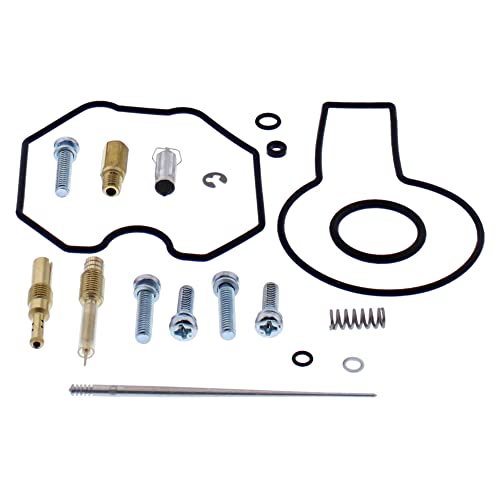
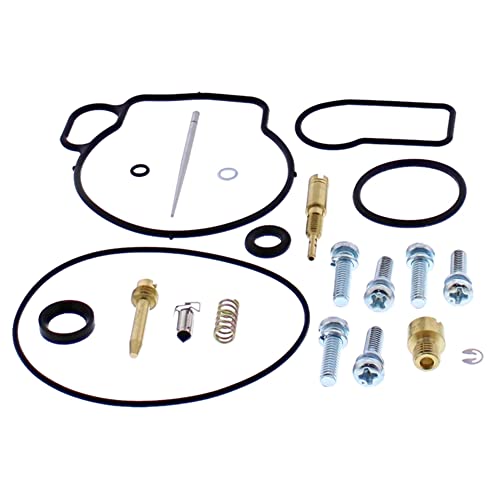
The most useful listings name the service parts individually. Several All Balls kits list O-rings, gaskets, jets, a needle, mixture screw, float-bowl screws, and a float-valve needle and seat. Outlaw Racing describes gaskets, O-rings, a float valve, and jets, while the Hi-Caliber listings focus more broadly on precision-machined components without giving a complete internal-parts inventory.
That difference matters when planning a rebuild. A kit with a named float valve may address a common wear item, but it does not automatically include every pressed-in passage or carburetor component. All Balls specifically excludes the needle jet and other pressed-in jets from the listed kit coverage. Treat that exclusion as a service-planning detail rather than assuming the kit replaces every part inside the carburetor.
The Tusk KLX110 listing uses qualified language: depending on the application, the kit may include OEM-size jets, a slide needle, gaskets, O-rings, float-valve components, and other parts. This is useful category information, but it also means the exact contents should be verified for the specific KLX110 version before installation.
Jetting documentation separates the top powersports carburetor rebuild kits from listings that only state general compatibility. The Outlaw Racing TT-R230, YZ125, and YFM400 Kodiak listings identify stock jetting. All Balls provides OEM jet sizes and slide needles for the Honda XR400R and Yamaha TTR50 kits. The CRF250X listing names jets and a needle and notes an extended fuel mixture screw for FCR MX-style kits.
Stock or OEM-size parts are most relevant when the carburetor, intake, exhaust, and engine remain in the configuration associated with the listed application. They may not be appropriate for a modified setup. Do not infer a specific jet number when the listing only says that jets or stock jetting are included. If tuning changes are part of the repair, confirm the supplied parts against the service information for the vehicle.
Check rubber and construction details
Rubber material documentation can help distinguish otherwise similar rebuild listings. All Balls identifies NBR rubber for the O-rings and rubber gaskets in several kits, including the GS500F, YZ250, and XVS1100 listings. Outlaw Racing gives the same NBR description for the TT-R230, YZ125, and YFM400 Kodiak kits. NBR is therefore a documented material feature in this comparison, not an assumption about every kit.
Hi-Caliber describes its components as precision machined, and Tusk describes manufacture to OEM specifications. Those statements provide useful construction context, but they do not replace an itemized contents check. A concise listing can still fit the vehicle, while offering less evidence about the exact seals, jets, or float parts inside the package.
Account for use and compliance notes
Some listings carry use or compliance limits. The All Balls GS500F and YZ250 descriptions state off-road use only and note that components are based on US models. The Tusk KLX110 listing identifies the kit as non-CARB compliant. These details can affect whether a kit is appropriate for a particular vehicle and use context, so read them alongside fitment rather than treating them as incidental metadata.
The best powersports carburetor rebuild kits in this comparison are specification-based selections, not tested rankings. The scores reflect the quality and completeness of the supplied listing evidence: exact application details, named components, jetting information, material notes, and clarity about scope. They do not establish installation success or carburetor condition.
Final recommendation
Outlaw Racing OR2548 for Yamaha TT-R230 ranks first overall in this specification-based comparison under the published weighted criteria.
The final choice among the best powersports carburetor rebuild kits depends on the documented features that match your intended use.
Outlaw Racing OR2548 for Yamaha TT-R230 is the highest-scoring returned product and the first overall specification-based choice. Its listing combines precise 2005-2009 fitment, OEM-carburetor confirmation, stock jetting, named rebuild components, and NBR rubber documentation. For the Honda XR400R, All Balls 26-10061 is especially compelling when OEM jet sizes and a slide needle are priorities. The All Balls CRF250X, TTR50, and YFS200 kits offer similarly detailed model-specific coverage.
For ATVs, compare the exact year range before choosing between the Hi-Caliber Yamaha applications, the Outlaw Racing YFM400 Kodiak kit, and the cross-brand LTZ400/KFX400 option. The top powersports carburetor rebuild kits are not universally interchangeable, so the final decision should follow the vehicle and carburetor identification. Verify omissions such as pressed-in jets, and confirm whether stock jetting matches the machine’s current configuration.
Frequently Asked Questions
What should I verify before choosing the best powersports carburetor rebuild kits?
Verify the manufacturer, complete model name, displacement, production year, and carburetor type. Then compare the listing’s stated fitment with the vehicle and inspect the included-parts description. If the kit is described for an OEM or stock carburetor, confirm that the carburetor has not been replaced or substantially modified. Also note any US-model, off-road-use, or compliance statement supplied with the listing.
Do these kits include every jet inside a carburetor?
Not necessarily. The All Balls listings specifically state that the needle jet and other pressed-in jets are not included. Other listings may say that jets are included without identifying every jet passage or pressed-in component. Read the individual contents carefully and plan for separate service parts if the existing carburetor needs more than the listed seals, metering parts, float valve, and hardware.
Is stock jetting suitable for a modified motorcycle or ATV?
Stock jetting is documented for several selected products, including the Outlaw Racing TT-R230, YZ125, and YFM400 Kodiak kits. Those parts are associated with the stock application described by the listing. A modified intake, exhaust, engine, or carburetor may require a different setup, so do not assume stock components are correct for a changed configuration. Compare the kit’s jetting information with the vehicle’s service requirements.
What does NBR material documentation tell me?
NBR is identified for O-rings and rubber gaskets in several All Balls and Outlaw Racing listings. It documents the material used for those listed rubber components. It does not establish that every part in a kit uses NBR, nor does it confirm compatibility outside the stated application. Use the material note as one comparison detail alongside fitment and the actual component list.
Why do some listings provide less detail than others?
Public product listings vary in how much technical information they publish. Hi-Caliber, for example, identifies precision-machined components and specific ATV applications but does not enumerate each internal part in the supplied evidence. Tusk provides a qualified list of possible components by application. When details are limited, verify the exact contents and part number before installation rather than filling gaps with assumptions.