Buying Guide
Resin bowls cover several distinct formats, from shallow key catchalls to large fruit displays. The best resin decorative bowls are not necessarily the biggest or most ornate; they are the ones whose dimensions, finish, and documented use match the surface and contents you have in mind. Because this comparison uses public listing specifications rather than hands-on testing, treat descriptive claims as product information and verify any detail that is especially important to your purchase.
Match the bowl to the surface
Start with the available tabletop area. A compact 5-inch bowl such as the 47th & Main is better suited to a shelf, desk, or small nightstand. The 8.65-inch OGANGART and 9.44-inch Hanobe models offer more room for keys and small objects without demanding the footprint of a large centerpiece. Measure the surface before choosing a 10-inch or larger model.
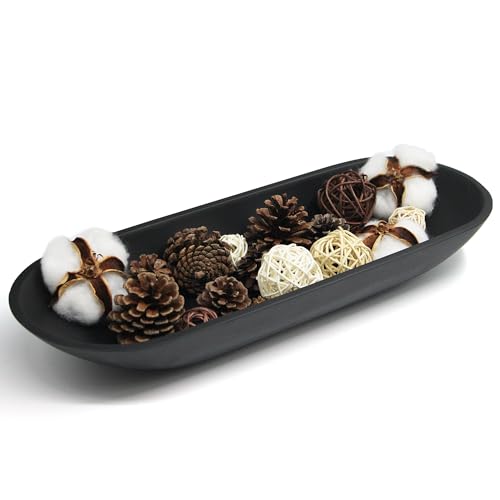
Long bowls create a different visual effect. The LIN CHUAN model measures nearly 16 inches wide and is specifically described as a long decorative bowl or dough bowl. It can spread a display across a dining table or console, but its shallow 2.24-inch height means it is better for fruit, keys, watches, and other relatively low contents than for deep storage.
Choose depth and capacity by use
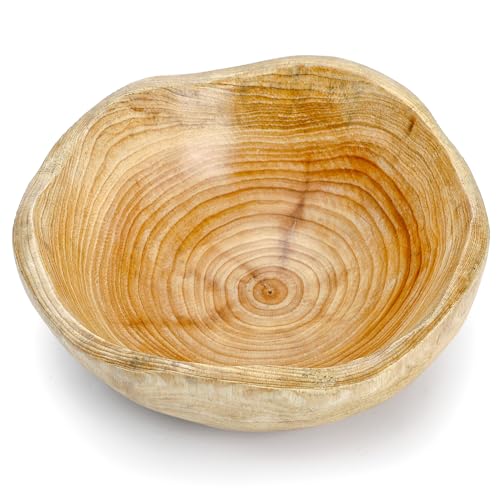
For fruit or a prominent display, deeper and taller shapes can be more practical. YMXYJM is listed at 4 inches high and is intended for fruit, beads, candles, moss balls, and seasonal accents. Deobath has the same listed height and a pedestal format that raises the contents visually. WUUAHOME is described with unusually large dimensions, so it may suit a spacious kitchen island or broad table more than a narrow console.
Shallow bowls are often preferable for entryways because keys, wallets, and sunglasses remain visible. Hanobe and OGANGART both document catchall uses, while KIBAGA combines a 10-inch footprint with fruit, vegetables, trinkets, and wrapped snacks. Braxio also lists keys and wallets, but its food limitation matters: the product is not intended for direct contact with unwrapped or perishable food.
Compare resin construction and surface claims
Resin is used here to create lightweight decorative forms that resemble stone, ceramic, or handmade sculpture. Several listings describe a smooth or durable surface, and some mention resistance to chipping, bumps, cracks, scratches, or wear. These are listing claims rather than independently verified test results. Look for the specific construction information that matters to your room and routine.
KIBAGA explicitly describes its resin as food-safe, giving it a clearer position for wrapped snacks or food-related display. By contrast, Braxio expressly excludes direct contact with unwrapped or perishable food. For the other bowls, the supplied evidence supports decorative storage or display, but it does not establish food-safety approval. When in doubt, use a liner, wrapped items, or non-food décor.
Pick a finish that supports your décor
Neutral finishes are the easiest to coordinate. Beige options from YMXYJM, Deobath, Gandeer, and Hanobe are described for modern, minimalist, farmhouse, rustic, or neutral interiors. Black LIN CHUAN offers a stronger contrast, while Braxio’s off-white finish and fluted edges fit a contemporary or art-deco setting. OGANGART’s brown color and textured ruffle edge provide a warmer accent.
Shape can matter as much as color. Ruffle and scalloped profiles appear in KIBAGA, Braxio, Gandeer, OGANGART, and Hanobe. A pedestal base gives Deobath a raised presentation, while WUUAHOME uses a leaf-shaped silhouette. For a quieter accent, the stone-inspired surface of 47th & Main keeps the visual interest restrained.
Check cleaning and stability details
Cleaning guidance varies. KIBAGA specifies soap and water while advising against dishwashers and abrasive cleaners. WUUAHOME also lists soap-and-water cleaning, and LIN CHUAN’s long bowl is described as easy to refresh with a damp wipe. Other listings describe smooth or easy-to-clean surfaces without providing a complete care routine. Follow the supplied instructions rather than assuming resin is dishwasher-safe.
Stability is especially useful for entryway and kitchen placement. LIN CHUAN documents four anti-slip pads, and WUUAHOME describes a stable foot. These features may help reduce movement, but they do not replace checking that the bowl sits level on your particular surface. Large or tall designs should be positioned where they will not obstruct traffic or edge space.
Use a simple selection checklist
Before buying, confirm five points: the bowl’s actual footprint, whether its depth fits your intended contents, whether the finish works with nearby décor, whether food contact is documented, and how the surface should be cleaned. Also review inconsistent listing data carefully. Gandeer has conflicting size information, and Deobath presents conflicting finish descriptions. Those products can still be useful choices, but the uncertainty makes verification worthwhile.
Final Recommendation
KIBAGA Marble-Style Ruffle Resin Bowl ranks first overall in this specification-based comparison under the published weighted criteria.
KIBAGA is the highest-scoring returned product and the first overall specification-based choice among the best resin decorative bowls. Its documented food-safe resin, 10-inch format, marble-style finish, and broad use guidance give it the most specification-aligned balance for buyers who want one bowl for fruit, wrapped snacks, trinkets, or centerpiece styling. For a long table, choose the LIN CHUAN long black bowl; for a stone-inspired neutral look, YMXYJM is a flexible alternative. The top resin decorative bowls differ mainly in footprint, profile, and documented care, so choose according to the surface and contents rather than appearance alone.
Frequently Asked Questions
Among the best resin decorative bowls, are resin decorative bowls suitable for food?
The evidence varies by product. KIBAGA is described as food-safe, while Braxio specifically says it is not suitable for direct contact with unwrapped or perishable food. For the remaining selections, the supplied information supports decorative or organizational use but does not establish food-contact approval. Use only the food guidance documented for the exact bowl.
What size bowl works best for an entryway?
A shallow bowl between roughly 8 and 10 inches can provide visible space for keys, wallets, and sunglasses without dominating a console. Hanobe and OGANGART fit that general role, while the 5-inch 47th & Main bowl is better for a smaller surface or lighter storage. Measure the console depth and leave room for nearby objects before deciding.
How should resin decorative bowls be cleaned?
Use the care instructions supplied for the individual product. KIBAGA specifies soap and water and advises against dishwashers and abrasive cleaners. WUUAHOME lists soap-and-water cleaning, and the LIN CHUAN long bowl is described as suitable for a damp wipe. If no precise method is supplied, a gentle wipe is a cautious approach.
Do pedestal or ruffle bowls take up more space?
The footprint depends on the bowl, not only its decorative style. Deobath’s pedestal bowl measures 10.5 by 10.5 inches, while the long LIN CHUAN bowl extends to nearly 16 inches. Ruffle bowls such as Braxio and KIBAGA also occupy substantial table area. Check length, width, and height together before ordering.
Which design works as an empty centerpiece?
Gandeer is explicitly described for empty sculptural display, while YMXYJM, Braxio, and WUUAHOME are also presented as decorative centerpieces. A textured or shaped bowl can remain visually useful without contents, but the best choice depends on whether you prefer ruffles, a leaf-inspired silhouette, a pedestal, or a stone-like surface.